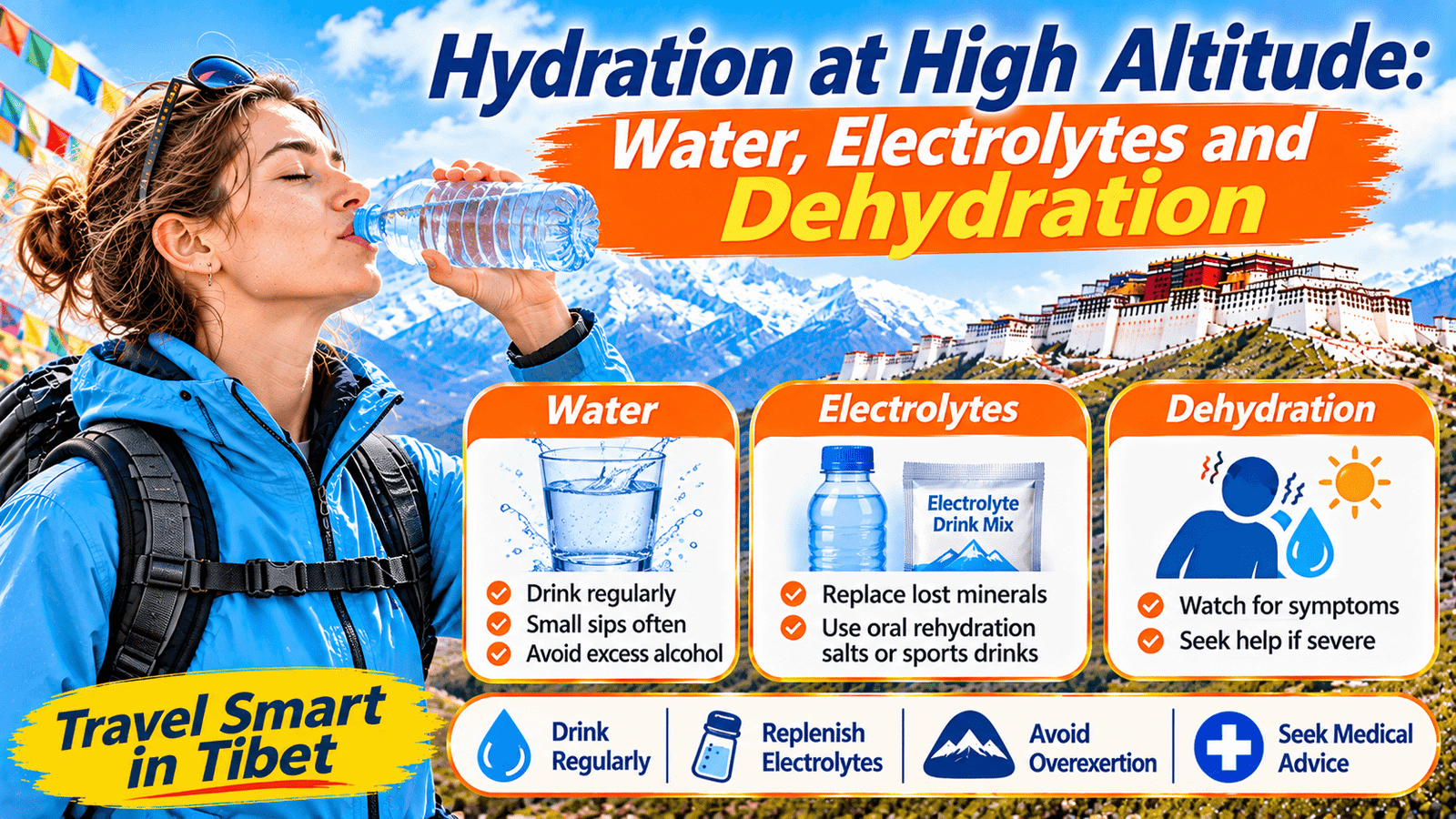
Staying hydrated is an important part of travelling safely at high altitude. In Tibet, visitors may experience dry air, cold temperatures, strong sunshine and long road journeys. Walking, trekking and other physical activities can increase fluid loss further.
Some travellers also experience headaches, tiredness, nausea or dizziness during acclimatization. These symptoms can overlap with dehydration and acute mountain sickness (AMS), making it important to understand the difference.
Drinking enough water helps maintain normal body functions and replace fluid losses. However, drinking extra water does not prevent altitude sickness. Forcing excessive amounts can be dangerous because it may lower the sodium concentration in the blood.
This guide explains why hydration matters in Tibet, how to recognize dehydration, when electrolyte drinks are useful and how to drink safely during high-altitude travel.
1. Why Is Hydration Important at High Altitude?
The environment at high altitude can increase water loss through several routes.
Dry air and breathing
Cold high-altitude air generally contains little moisture. When you breathe, the body warms and humidifies the air before it leaves the lungs. This process causes water loss through respiration.
During exercise, breathing becomes faster and deeper, increasing the amount of moisture lost.
Increased urination
Some people experience increased urination after arriving at altitude. Changes in breathing, fluid balance and kidney function during acclimatization can contribute to this response.
This does not mean that every traveller needs to drink large amounts of additional water. Fluid needs differ from person to person.
Sweating during activity
Even in cold weather, walking uphill, carrying a backpack or trekking can cause sweating. People sometimes underestimate fluid loss because sweat evaporates quickly in dry air.
Vomiting and diarrhoea
Digestive illness can cause substantial losses of water and electrolytes. This is particularly important during remote travel, where access to medical care may be limited.
2. How Much Water Should You Drink at High Altitude?
There is no single daily water requirement that applies to every traveller.
Your fluid needs depend on:
- Body size
- Physical activity
- Temperature
- Wind and humidity
- Clothing
- Food intake
- Sweating
- Individual health
- Vomiting or diarrhoea
A practical approach is to drink regularly and respond to thirst. During long walks or strenuous activity, take opportunities to drink rather than waiting until you feel extremely thirsty.
Do not force yourself to finish a fixed number of litres simply because you are travelling at altitude.
A practical hydration routine for Tibet
| Situation | Practical approach |
|---|---|
| Resting in Lhasa | Drink regularly according to thirst and meals |
| Sightseeing outdoors | Carry water and take regular drinking breaks |
| Long road journey | Keep safe drinking water available and drink when needed |
| Hiking or trekking | Drink during breaks and adjust to exertion, temperature and sweating |
| Heavy sweating | Replace fluid and consider electrolytes if losses are substantial |
| Vomiting or diarrhoea | Use appropriate oral rehydration solution and seek medical advice when necessary |
The aim is to avoid dehydration, not to maximize water intake.
3. How Can You Recognize Dehydration?
Dehydration occurs when the body loses more fluid than it replaces. Symptoms can range from mild to severe.
Common signs include:
- Thirst
- Dry mouth
- Reduced urine output
- Darker urine
- Fatigue
- Light-headedness
- Headache
- Reduced exercise performance
More serious dehydration can cause marked weakness, fainting, confusion, rapid heartbeat or very little urine. These symptoms require prompt medical assessment.
Does urine colour show whether you are hydrated?
Urine colour can provide a rough indication of hydration, but it is not a perfect test.
Dark urine may occur when urine is concentrated, but colour can also be affected by food, vitamins and medication. Clear urine does not automatically mean that you have achieved ideal hydration.
Consider urine colour together with thirst, activity, fluid intake and how you feel.
Can body weight help estimate fluid loss?
For prolonged exercise, comparing body weight before and after activity can provide an estimate of net fluid loss.
A short-term loss of 1 kg is roughly equivalent to a net fluid deficit of 1 litre, although food intake, clothing, sweating and other factors can affect the measurement.
A body-weight decrease of more than approximately 2% during exercise may indicate that fluid replacement has not kept pace with losses. This is a sports and exercise monitoring reference, not a target or a diagnostic test for altitude illness.
4. Dehydration or Altitude Sickness: How Can You Tell the Difference?
This distinction matters because dehydration and AMS can produce overlapping symptoms.
| Symptom | Dehydration | Acute Mountain Sickness |
|---|---|---|
| Thirst and dry mouth | Common | May occur, but not defining |
| Reduced or dark urine | Can occur | Not a defining symptom |
| Headache | Possible | Common |
| Nausea | Possible | Common |
| Fatigue | Common | Common |
| Dizziness | Possible | Possible |
| Difficulty walking straight | Not a typical simple dehydration sign | A serious warning sign for possible HACE |
| Breathlessness at rest | Not explained by ordinary dehydration | A warning sign for possible HAPE or another emergency |
Symptoms alone may not be enough to distinguish these conditions. A person can also be dehydrated and have AMS at the same time.
Do not assume that a headache or nausea at altitude will disappear after drinking water. If symptoms develop after ascent, stop going higher and assess the person carefully.
Seek urgent medical assistance for breathlessness at rest, a persistent cough with worsening breathing, confusion, unusual drowsiness or difficulty walking straight.
5. Can Drinking More Water Prevent Altitude Sickness?
No. Drinking extra water has not been established as a way to prevent AMS.
Adequate hydration helps avoid dehydration, but AMS is primarily related to the body’s response to reduced oxygen pressure at altitude. Drinking water does not replace the need for gradual ascent and acclimatization.
Forcing large quantities of water can cause a dangerous condition called hyponatraemia, in which the sodium concentration in the blood becomes too low.
What is hyponatraemia?
Sodium is an important electrolyte that helps regulate fluid balance and normal nerve and muscle function.
When a person drinks excessive amounts of water, particularly during prolonged exercise, the blood sodium concentration can fall. This may cause:
- Headache
- Nausea
- Vomiting
- Confusion
- Unusual behaviour
- Seizures in severe cases
Some of these symptoms overlap with altitude illness. Severe hyponatraemia is a medical emergency.
The safest approach is to drink according to thirst and replace fluid losses sensibly. Do not use excessive water intake as an altitude-sickness prevention strategy.
6. Do You Need Electrolyte Drinks at High Altitude?
Electrolytes are minerals that carry electrical charges in body fluids. Important electrolytes include sodium, potassium, chloride and magnesium.
They support fluid balance, nerve signalling and muscle function.
Electrolyte drinks can be useful when substantial fluid and salt losses occur, but they do not prevent AMS.
When might electrolyte drinks be useful?
Consider them when you have:
- Heavy sweating during prolonged activity
- Long hikes or climbing days
- Poor food intake combined with substantial exertion
- Significant fluid losses from vomiting or diarrhoea, using an appropriate rehydration product
Travellers who are eating normally and not losing substantial fluid through sweating or illness generally do not need electrolyte products routinely.
Sports drinks and oral rehydration salts are different
These products have different purposes.
| Product | Main purpose |
|---|---|
| Sports drink | Replacing fluid and some carbohydrates and sodium during prolonged exercise and sweating |
| Oral rehydration salts (ORS) | Replacing water and electrolytes lost through diarrhoea or vomiting |
ORS contains a carefully balanced mixture of glucose and salts to support intestinal water absorption. It is not simply another type of sports drink.
If diarrhoea or vomiting is severe, persistent or accompanied by signs of serious illness, seek medical care rather than relying only on a drink.
7. Hydration During Cold Weather and Trekking
Cold weather can make it easy to forget to drink. You may not feel as thirsty as you do in hot conditions, even while losing water through breathing and activity.
For trekking and outdoor travel in Tibet:
- Carry enough safe drinking water for the planned journey.
- Drink during breaks and according to thirst.
- Avoid waiting until you are extremely thirsty.
- Use an insulated bottle if water may freeze.
- Replace fluid losses after prolonged sweating.
- Consider an electrolyte drink during extended strenuous activity when losses are substantial.
- Keep oral rehydration salts available for appropriate use during diarrhoea or vomiting.
Do not drink untreated water from streams, lakes or roadside sources unless it has been made safe using an appropriate treatment method.
8. Hydration on Common Tibet Travel Routes
Lhasa
Lhasa is already at high altitude. Visitors should keep water available during sightseeing, particularly when walking around the Potala Palace, Jokhang Temple and Barkhor area.
Take breaks, avoid rushing and drink regularly according to thirst.
Everest Base Camp
The journey to Everest Base Camp involves prolonged exposure to high altitude and often cold, dry conditions. Carry sufficient safe drinking water and plan for access to fluids during road travel and outdoor stops.
Do not assume that water will always be readily available at remote viewpoints or along the route.
Mount Kailash
The Mount Kailash pilgrimage involves several days of travel and, for those undertaking the kora, demanding walking at high elevation. Hydration planning should account for exertion, weather, food availability and the remoteness of the route.
Drink during breaks, carry water and avoid forcing excessive amounts. A guide and driver should understand the group’s water and emergency arrangements before the trek begins.
9. What Drinks Are Suitable at High Altitude?
Good everyday choices include:
- Safe drinking water
- Warm water
- Light soups
- Milk, if tolerated
- Tea in moderate amounts
- Suitable oral rehydration solution when needed
Tea and soup contribute to fluid intake, but their suitability depends on individual tolerance and the amount of caffeine or salt they contain.
Do not rely on alcohol as a source of hydration. Avoid alcohol during the early acclimatization period.
Frequently Asked Questions
Should I drink more water when travelling to Tibet?
You may need more fluid during exercise, sweating or illness, but there is no universal high-altitude water target. Drink regularly according to thirst and conditions.
Does drinking lots of water prevent altitude sickness?
No. Excessive water intake does not prevent AMS and can cause hyponatraemia.
Are electrolyte drinks necessary in Lhasa?
Most travellers who are eating normally and doing light sightseeing do not need electrolyte drinks routinely. They may be useful when fluid and salt losses are substantial.
Is clear urine a sign of good hydration?
Not necessarily. Urine colour is only a rough guide and can be affected by food, vitamins and medication.
Can dehydration cause a headache at altitude?
Yes. Dehydration can cause headaches, but a headache after ascent may also be a symptom of AMS. Do not assume that drinking water alone will solve it.
Should I carry ORS when travelling in Tibet?
It can be useful to carry oral rehydration salts for appropriate use during diarrhoea or vomiting. Follow the product instructions and seek medical care for serious or persistent symptoms.
Can I drink water from mountain streams in Tibet?
Do not assume that natural water is safe. Use bottled, boiled, filtered or otherwise appropriately treated water.
Conclusion
Hydration is an important part of high-altitude travel, particularly in Tibet’s dry environment and during long journeys or trekking days. Breathing dry air, sweating, increased urination and gastrointestinal illness can all contribute to fluid loss.
Drink regularly according to thirst and activity. Use electrolyte products when substantial fluid and salt losses occur, and use ORS for appropriate diarrhoeal or vomiting-related losses.
Most importantly, do not force excessive water intake in an attempt to prevent altitude sickness. Recognize warning signs, stop ascending when symptoms develop and seek medical help when necessary.
Medical Disclaimer: This article provides general educational information and does not replace medical advice. Confusion, seizures, fainting, severe weakness, breathlessness at rest or difficulty walking straight require urgent medical assessment.