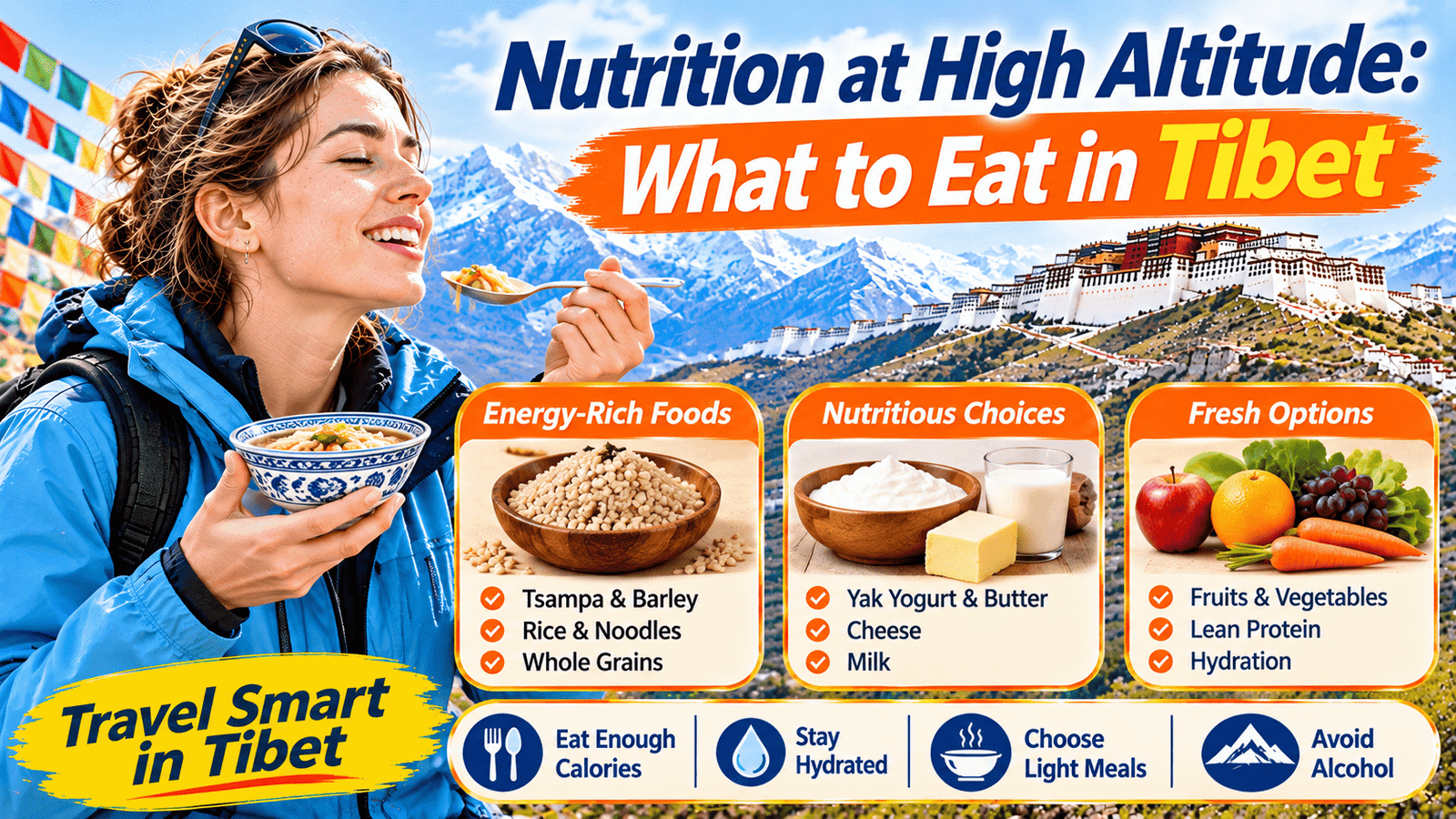
Eating well is an important part of preparing for a high-altitude journey. When traveling in Tibet, visitors may spend several days above 3,000 metres and travel to destinations such as Lhasa, Shigatse, Everest Base Camp, Namtso Lake and Mount Kailash.
At high altitude, the body receives less oxygen with each breath. Walking and other physical activities can feel more demanding, while cold weather and dry air add to the challenge. At the same time, some travellers experience reduced appetite, nausea or digestive discomfort during the first days of acclimatization.
A balanced diet helps maintain energy, supports muscle recovery and provides nutrients needed for normal body functions. However, no particular food or diet has been proven to prevent acute mountain sickness (AMS). Gradual ascent and appropriate acclimatization remain the most important preventive measures.
This guide explains what to eat at high altitude, how to manage reduced appetite and which foods are practical during a Tibet tour.
Why Nutrition Matters at High Altitude
At altitude, the body must work harder to deliver oxygen to its tissues. Physical activity may feel more difficult, and prolonged walking or trekking can increase energy requirements.
Several factors can affect eating habits:
- Reduced appetite: Some travellers feel less hungry during the first few days.
- Higher activity demands: Walking, climbing and carrying luggage require energy.
- Cold weather: Maintaining body temperature uses energy.
- Digestive discomfort: Nausea or an unsettled stomach may make large meals difficult.
- Dry conditions: Breathing dry air and exercising can increase fluid losses.
A study conducted at approximately 4,559 metres found that average food intake during one meal fell from about 952 kcal at low altitude to around 643 kcal on the second day at altitude. Intake moved closer to the low-altitude level by the fourth day.
The practical lesson is that travellers should not rely entirely on their usual meal routine. Smaller, more frequent meals may be easier to manage.
Carbohydrates: An Important Source of Energy
Carbohydrates provide readily available energy for walking, trekking and other physical activities. They do not directly prevent altitude sickness.
Carbohydrates are particularly useful during prolonged activity because the body can obtain more energy from a given amount of oxygen when using carbohydrate rather than fat as its main fuel.
Useful carbohydrate-rich foods include:
- Rice
- Noodles
- Bread
- Oatmeal and porridge
- Potatoes
- Bananas
- Dried fruit
- Energy bars
These foods are practical for travellers because they are familiar, easy to prepare and generally simple to digest.
How much carbohydrate do you need?
Sports nutrition guidance commonly uses different carbohydrate targets according to activity level. The source material for this guide discusses approximate ranges of:
| Activity level | Illustrative carbohydrate intake |
|---|---|
| Low activity | 3–5 g per kg of body weight per day |
| Long hiking or climbing days | Around 6 g per kg per day or more, depending on workload |
For a person weighing 60 kg, 3–5 g/kg equals approximately 180–300 g of carbohydrate per day. A target of 6 g/kg equals approximately 360 g.
These are sports nutrition reference ranges, not requirements for every tourist. Actual needs depend on body size, activity, appetite, health and individual tolerance. A traveller spending a quiet day in Lhasa does not need the same intake as someone completing a long mountain trek.
Should you eat more carbohydrates to prevent AMS?
No. Some studies have examined changes in oxygen-related measurements after carbohydrate consumption, but changes in blood oxygen measurements do not prove that a food prevents AMS.
Eat enough carbohydrates to support your activity, but do not treat a high-carbohydrate diet as an altitude-sickness remedy.
Protein: Support for Muscles and Recovery
Protein helps maintain muscle tissue, repair the body after exercise and support normal immune function.
Good protein sources include:
- Eggs
- Milk and yogurt
- Fish
- Lean meat
- Tofu
- Soy products
- Beans and lentils
For people undertaking extended endurance activities, sports nutrition references often discuss protein intakes in the approximate range of 1.2–2.0 g/kg/day. This is not a universal target for sightseeing travellers, and individual needs vary.
A study at approximately 4,300 metres followed participants for 21 days. Increasing protein intake from around 1.0 g/kg/day to 2.0 g/kg/day did not prevent the loss of lean body mass when overall energy intake remained insufficient.
This illustrates an important point: eating more protein cannot compensate for consistently eating too few total calories.
Try to include a moderate protein source with regular meals rather than relying on one very large serving.
There is no established evidence that animal protein is inherently better than plant protein for preventing AMS. A varied diet with sufficient total energy and protein is a practical approach.
4. Fat: A Concentrated Source of Energy
Fat provides more energy per gram than carbohydrates or protein. It can help travellers meet their energy needs, especially during long outdoor activities when carrying food is inconvenient.
Useful sources include:
- Nuts and seeds
- Vegetable oils
- Dairy products
- Eggs
- Fish
- Meat
There is no established high-altitude diet that requires everyone to eat a high-fat or low-fat diet. Very fatty meals may also feel uncomfortable for people experiencing nausea or poor appetite.
A balanced approach is to eat carbohydrates for activity, include protein regularly and obtain additional energy from a moderate amount of dietary fat.
5. Iron: Important for Red Blood Cell Production
Iron is needed to make haemoglobin, the protein in red blood cells that carries oxygen.
When the body experiences low oxygen at altitude, the kidneys increase production of erythropoietin (EPO). This hormone stimulates the bone marrow to produce more red blood cells. Iron is necessary for this process.
However, red blood cell adaptation takes time. Eating iron-rich foods immediately before arriving in Tibet will not prevent AMS during the first few days.
Foods containing iron
| Food | Approximate serving | Approximate iron |
|---|---|---|
| Oysters | 85 g | 8 mg |
| White beans, canned | 1 cup | 8 mg |
| Beef liver | 85 g | 5 mg |
| Lentils | ½ cup | 3 mg |
| Cooked spinach | ½ cup | 3 mg |
| Firm tofu | ½ cup | 3 mg |
| Lean beef | 85 g | 2 mg |
| Sardines | 85 g | 2 mg |
These are approximate food-composition values; actual amounts vary by product and preparation.
Iron from animal foods is generally absorbed more easily than non-haem iron from plant foods. Eating plant-based iron sources with vitamin C-rich foods, such as tomatoes, citrus fruit or peppers, can improve absorption.
Should you take iron supplements before Tibet?
Not automatically. Iron supplements are useful when deficiency is present or when a healthcare professional recommends them. Excess iron can be harmful.
People with a history of anaemia, heavy menstrual bleeding or other risk factors for iron deficiency may wish to discuss a blood count and ferritin test with a healthcare professional before a demanding high-altitude trip.
6. What Should You Eat During the First Few Days in Tibet?
Some travellers have reduced appetite after arriving in Lhasa or another high-altitude destination. Large meals may feel uncomfortable, particularly when accompanied by nausea or fatigue.
Instead of forcing yourself to eat three large meals, try smaller portions more frequently.
Practical choices include:
- Warm noodle soup
- Rice with vegetables and eggs
- Porridge or oatmeal
- Bread
- Bananas
- Yogurt
- Milk
- Tofu
- Light soups
- Nuts or energy bars
A simple routine is to eat three smaller meals and add two or three snacks during the day if needed.
Warm foods may be especially appealing in cold weather. Choose familiar foods that you tolerate well rather than experimenting with a completely new diet during the first days of acclimatization.
If you experience persistent vomiting or cannot keep fluids down, seek medical advice. Do not assume that all nausea is simply a normal response to altitude.
7. Traditional Tibetan Foods: What Can Travellers Eat?
Tibetan food offers several practical options for visitors who want warm, filling meals during a high-altitude journey.
- Tsampa: Tsampa is roasted barley flour, traditionally mixed with butter tea or other liquids. It provides carbohydrates and can be a convenient source of energy.
- Tibetan noodle soup: Warm noodle soup is a useful meal in cold conditions. Depending on the ingredients, it can provide carbohydrates, protein and fluid.
- Momo: Momo are Tibetan-style dumplings, often filled with vegetables or meat. They provide energy and can be a convenient meal during sightseeing.
- Yak meat: Yak meat is a traditional food in many Tibetan areas and provides protein and iron. It is usually served cooked in dishes such as soups or stews.
- Yak yogurt: Yogurt provides protein and calcium. Fermented dairy products can be part of a balanced diet, although they should not be considered a proven treatment for altitude sickness.
- Butter tea: Butter tea is made with tea, butter and salt. It provides fluid, salt and energy from fat. It is culturally important and may be offered during visits to Tibetan homes.
However, butter tea is not a substitute for drinking enough safe water, and it has not been shown to prevent AMS. Its salt and fat content may also make it unsuitable in large quantities for some people.
8. Caffeine, Alcohol and Smoking
Coffee and tea
Caffeine does not prevent altitude sickness. However, people who regularly drink coffee or tea may prefer to maintain their usual moderate intake rather than stopping suddenly, as caffeine withdrawal can cause headaches.
Avoid using excessive caffeine to push through fatigue or poor sleep.
Alcohol
Avoid alcohol during the first 48 hours after arriving at altitude, and be cautious for longer if you are still acclimatizing or experiencing symptoms.
Alcohol can worsen sleep quality, contribute to dehydration and make it harder to recognize changes in your condition. It should never be used to help someone sleep at altitude.
Smoking
Smoking reduces the blood’s oxygen-carrying capacity because carbon monoxide from tobacco smoke binds to haemoglobin. Avoid smoking during high-altitude travel.
9. Do Supplements Prevent Altitude Sickness?
Several foods and supplements have been studied for possible effects on altitude-related symptoms. The evidence varies.
| Product | What the evidence suggests |
|---|---|
| Quercetin | One randomized trial reported a lower incidence of AMS, but the result needs independent confirmation |
| Probiotics | A very small study of a specific eight-strain formulation reported preliminary findings; ordinary yogurt is not equivalent |
| Ginger | May help some forms of ordinary nausea, but does not prevent or treat AMS |
| Antioxidant supplements | Results are inconsistent |
| Beetroot and dietary nitrate | No established AMS prevention benefit |
| Oxygenated or alkaline water | No reliable evidence that these products prevent AMS |
| Ketone supplements | Research findings are mixed and do not establish routine preventive use |
A promising result from one small study is not enough to establish a supplement as standard treatment. Supplements may also interact with medicines or cause side effects.
Do not start several new supplements immediately before a trip. Discuss concentrated products with a healthcare professional, particularly if you take regular medication.
10. A Practical High-Altitude Eating Plan
| Travel situation | Practical food approach |
|---|---|
| First day in Lhasa | Choose familiar, moderate-sized meals such as rice, soup, noodles or porridge |
| Reduced appetite | Eat smaller portions more frequently |
| Full sightseeing day | Carry water and easy snacks such as bananas, bread or energy bars |
| Long road journey | Pack food that is easy to store and tolerate |
| Trekking or climbing day | Include carbohydrate-rich snacks and regular meals |
| Recovery after activity | Eat a meal containing carbohydrates and protein |
| Vegetarian travel | Use tofu, beans, lentils, dairy, eggs and other suitable protein sources |
Frequently Asked Questions
What is the best food to eat at high altitude?
There is no single best food. Rice, noodles, porridge, potatoes, eggs, yogurt, tofu, vegetables and other familiar foods can provide useful energy and nutrients.
Does eating more carbohydrates prevent altitude sickness?
No. Carbohydrates provide energy and may be useful during physical activity, but they are not an established AMS prevention method.
Is butter tea good for altitude sickness?
Butter tea is a traditional Tibetan drink that provides fluid, salt and energy. It has not been proven to prevent or treat altitude sickness.
Should I take iron before travelling to Tibet?
Only when it is appropriate for your health and iron status. Iron does not prevent early AMS, and unnecessary supplementation can be harmful.
Should I eat less meat at high altitude?
There is no universal requirement to avoid meat. Choose foods that suit your digestion and dietary preferences, and make sure your meals provide adequate energy and nutrients.
Can ginger tea treat altitude sickness?
Ginger may help some people with ordinary nausea, but it does not treat the underlying causes of AMS, HAPE or HACE.
Does drinking more water prevent altitude sickness?
No. Adequate hydration helps prevent dehydration, but excessive water intake does not prevent AMS and can cause dangerously low blood sodium.
Conclusion
Good nutrition helps travellers maintain energy, support muscle recovery and cope with the physical demands of high-altitude travel in Tibet. Carbohydrates are useful for activity, protein supports tissue maintenance, dietary fat provides concentrated energy and iron supports red blood cell production over time.
During the first days at altitude, smaller and more frequent meals may be easier to tolerate. Traditional foods such as tsampa, noodle soup, momo, yak meat and yogurt can fit into a balanced diet.
Remember that food and supplements cannot replace acclimatization. If you develop worsening headache, breathlessness at rest, difficulty walking or confusion, seek medical assistance and arrange appropriate descent rather than trying to manage the problem with food or drink.
Medical Disclaimer: This article is for general educational purposes and does not replace individual medical or nutritional advice. People with anaemia, diabetes, kidney disease, heart disease, gastrointestinal conditions or other medical concerns should discuss their travel diet with a qualified healthcare professional before visiting high altitude.
Suggested Internal Links
- Altitude Sickness in Tibet: Complete Guide for Travelers
- Altitude Sickness Medicines: Acetazolamide, Dexamethasone and Nifedipine
- How to Prevent Altitude Sickness
- Hydration at High Altitude: Water, Electrolytes and Dehydration
- How the Human Body Adapts to High Altitude
- Blood Oxygen Levels at High Altitude
- Tibet Travel Checklist: Essential High-Altitude Gear