
Blood oxygen Levels is one of the measurements travelers often check when visiting high-altitude destinations such as Lhasa, Everest Base Camp and Mount Kailash. A fingertip pulse oximeter is small, inexpensive and easy to carry, making it a useful tool for monitoring changes during a Tibet journey.
However, interpreting the number requires care. Blood oxygen saturation normally decreases as altitude increases, even in healthy people. A reading that would be unusual at sea level may be expected at a high elevation. Equally, a seemingly acceptable reading does not guarantee that someone is free from altitude sickness.
The safest approach is to interpret SpO₂ alongside current altitude, symptoms, changes over time and measurement quality.
What Does Blood Oxygen Levels SpO₂ Mean?
SpO₂ stands for peripheral oxygen saturation. It estimates the percentage of hemoglobin in the blood that is carrying oxygen.
A fingertip pulse oximeter uses light to estimate this percentage through the skin. Most devices also display your pulse rate.
Several related measurements describe oxygen in the blood:
| Measurement | Meaning |
|---|---|
| SpO₂ | Oxygen saturation estimated by a pulse oximeter |
| SaO₂ | Oxygen saturation in arterial blood |
| PaO₂ | Partial pressure of oxygen in arterial blood |
| CaO₂ | Total oxygen content of arterial blood |
These measurements are related but not interchangeable. A pulse oximeter estimates oxygen saturation; it does not directly measure the total amount of oxygen delivered to the body’s tissues.
For example, two people can have the same SpO₂ but different blood oxygen content because their hemoglobin levels differ. Circulation and heart function also affect oxygen delivery.
Why Does Blood Oxygen Levels Decrease at High Altitude?
The percentage of oxygen in the atmosphere remains approximately 20.9% at high altitude. The important change is atmospheric pressure.
As elevation increases, air pressure decreases. This lowers the partial pressure of oxygen available with each breath, reducing the pressure that drives oxygen from the lungs into the bloodstream.
At approximately 3,050 metres, inspired oxygen pressure is around 69% of its sea-level value. During acute exposure, healthy people may have arterial oxygen saturation around 88–91%, although individual readings vary.
This helps explain why oxygen saturation in Lhasa, at approximately 3,650–3,700 metres, is usually lower than at sea level. Readings may also decrease further at Everest Base Camp and other destinations above 5,000 metres.
The body begins adapting by increasing breathing. Over the following days, acclimatization improves the body’s response to reduced oxygen availability.
Is There a Normal SpO₂ Range at High Altitude?
There is no single SpO₂ number that applies to every traveler at every elevation.
A reading depends on several factors:
- Current altitude.
- How recently the person arrived.
- Whether the person is acclimatized.
- Individual lung and heart function.
- Hemoglobin concentration.
- Whether the measurement was taken during rest, exercise or sleep.
- The accuracy of the device.
A healthy person who has just arrived at high altitude may have a different reading from someone who has spent several days acclimatizing at the same elevation.
Why fixed altitude charts can be misleading
Online charts sometimes provide a single expected oxygen saturation for each altitude. These can be useful as broad illustrations, but they should not be treated as medical reference limits.
Two healthy travelers at the same elevation may have noticeably different readings. A person with an underlying respiratory or cardiovascular condition may also have a different baseline.
The CDC describes expected SpO₂ ranges at different elevations, but these ranges are guides rather than diagnostic cutoffs.
Do not use an altitude chart to decide whether it is safe to continue ascending. Symptoms and clinical assessment matter more than a single number.
4. Why Can SpO₂ Change During the Day?
Oxygen saturation is not always constant, even when you remain at the same altitude.
After walking or exercise
SpO₂ may temporarily decrease after strenuous activity, particularly at high altitude. Allow the body to rest before comparing readings taken at different times.
During sleep
Breathing patterns can change during sleep at altitude. Periodic breathing and temporary reductions in ventilation may cause oxygen saturation to fluctuate or fall below daytime resting readings.
A nighttime reading should therefore not be compared directly with a daytime reading without considering the different conditions.
During acclimatization
As the body adjusts to altitude, oxygen saturation may change over several days. A gradual improvement can be reassuring, but it does not guarantee protection against altitude illness.
5. How to Measure SpO₂ Correctly
A poor measurement can create unnecessary concern or false reassurance. Follow these steps for more consistent readings.
- Rest first. Sit quietly for about five minutes when practical.
- Warm your hands. Cold fingers and poor circulation can interfere with the signal.
- Prepare your finger. Remove nail polish or artificial nails if they appear to interfere with the sensor.
- Position the device correctly. Follow the manufacturer’s instructions.
- Stay still. Avoid measuring while walking, shaking or shivering.
- Wait for a stable result. Do not rely only on the first number displayed.
- Repeat unexpected readings. Rewarm your hand and reposition the sensor if necessary.
- Record the context. Note the altitude, time, symptoms, recent activity and whether supplemental oxygen is being used.
When monitoring a group, try to compare readings taken under similar conditions. A resting measurement is more useful when compared with another resting measurement than with a reading taken immediately after a steep climb.
What can affect pulse oximeter accuracy?
Several factors can affect the result:
- Cold fingers.
- Poor peripheral circulation.
- Movement or shivering.
- Incorrect sensor placement.
- Nail polish or artificial nails.
- Strong ambient light.
- Device quality and intended use.
- Skin pigmentation.
The US Food and Drug Administration warns that pulse oximeters have limitations and that readings should be considered alongside symptoms and other clinical information. Some consumer wellness devices have not been evaluated for medical decision-making.
Pulse oximeters may also become less accurate at very low oxygen saturation levels. Small numerical differences should not be overinterpreted in severe hypoxia.
6. Can SpO₂ Diagnose Altitude Sickness?
No. SpO₂ can support an assessment, but it cannot diagnose or rule out acute mountain sickness, high-altitude pulmonary edema or high-altitude cerebral edema.
| Condition | How SpO₂ may help | What matters most |
|---|---|---|
| AMS | May be within the expected range or slightly lower | Recent ascent, headache, nausea and fatigue |
| HAPE | A reading unusually low for the altitude may support concern | Breathlessness, cough and declining exercise ability |
| HACE | Low oxygen may be present | Unsteady walking, confusion and altered consciousness |
A traveler with acute mountain sickness may have a reading that appears normal for the elevation. Someone with a serious neurological problem may also have a reading that does not immediately look alarming.
In suspected HAPE, oxygen saturation substantially lower than expected for the altitude can be an important warning sign. However, symptoms and clinical assessment remain essential.
What Should You Do If Your SpO₂ Is Low?
Low reading without obvious symptoms
If you feel well but receive an unexpectedly low reading:
- Check your current elevation.
- Warm your hands and repeat the measurement.
- Make sure the device is positioned correctly.
- Record the result and compare it with readings taken under similar conditions.
- Seek medical advice if the reading remains unexpectedly low for the altitude.
Do not automatically compare a high-altitude reading with the usual sea-level range.
Falling readings or new symptoms
If your oxygen saturation is falling and you develop symptoms:
- Stop ascending.
- Reduce physical activity.
- Keep warm and rest.
- Assess headache, nausea, breathlessness, cough, walking stability and mental state.
- Seek medical advice if symptoms persist or worsen.
Do not use a particular SpO₂ number as permission to continue climbing when symptoms suggest altitude illness.
Emergency warning signs
Seek emergency assistance immediately if someone develops:
- Significant or worsening breathlessness, especially at rest.
- A marked decline in exercise ability accompanied by respiratory symptoms.
- Blue or grey lips or fingernails.
- New unsteady walking or loss of coordination.
- Confusion, unusual drowsiness or altered consciousness.
Stop ascending, minimize exertion, arrange urgent descent or evacuation, and provide supplemental oxygen if available and appropriate. Do not delay emergency action while waiting for a particular reading.
Should You Carry a Pulse Oximeter When Traveling in Tibet?
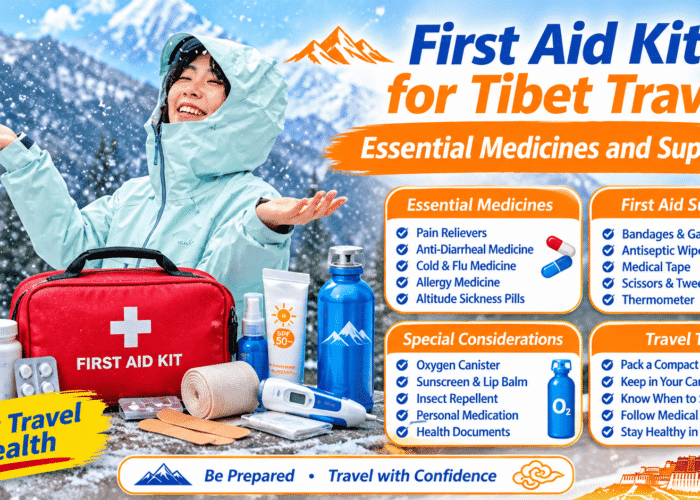
A pulse oximeter can be useful for travelers visiting high-altitude areas, especially on longer journeys through remote regions.
It can help you:
- Record changes during acclimatization.
- Compare readings at different elevations.
- Monitor a person with an existing medical condition when advised by a clinician.
- Provide additional information when seeking medical assistance.
However, it should not replace a guide’s observation, a medical assessment or an emergency plan.
For a journey from Lhasa to Everest Base Camp or Mount Kailash, the most important safety measures remain gradual acclimatization, sensible physical activity, appropriate sleeping elevations and a clear plan for descent.
Frequently Asked Questions
What is a normal SpO₂ in Lhasa?
There is no universal normal value for every traveler in Lhasa. Oxygen saturation is generally lower than at sea level, and readings vary with acclimatization, health, sleep and measurement conditions.
Is 90% oxygen saturation normal at high altitude?
A reading around 90% can occur in healthy people at some high elevations. Whether it is appropriate for a particular traveler depends on altitude, symptoms, baseline health and the reliability of the measurement.
Can I have altitude sickness with normal SpO₂?
Yes. A pulse oximeter cannot diagnose or rule out acute mountain sickness. Pay attention to headache, nausea, fatigue, breathlessness and neurological symptoms.
Does a higher SpO₂ mean I am fully acclimatized?
Not necessarily. A higher reading may be reassuring in context, but it does not prove complete acclimatization or guarantee protection against altitude illness.
Should I use oxygen whenever my SpO₂ falls?
Not automatically. Oxygen use should be based on symptoms, clinical assessment and the circumstances. Serious altitude illness requires urgent medical assistance and often descent, not simply oxygen at the same elevation.
Conclusion
A pulse oximeter can provide useful information during a Tibet journey, but its readings need to be interpreted carefully. Blood oxygen saturation normally falls as altitude increases, and individual readings vary.
The most reliable approach combines altitude, symptoms, trends and measurement quality. Never let a reassuring number override serious symptoms, and never delay descent or medical assistance because a pulse oximeter appears normal.
Medical Disclaimer: This article is for general educational purposes and does not replace professional medical advice, diagnosis or treatment. Travelers with heart, lung or other significant medical conditions should consult a qualified clinician before high-altitude travel. Severe or rapidly worsening respiratory or neurological symptoms require urgent medical or rescue assistance.
References
- CDC Yellow Book 2026: High-Altitude Travel and Altitude Illness.
- Wilderness Medical Society Clinical Practice Guidelines for the Prevention, Diagnosis, and Treatment of Acute Altitude Illness: 2024 Update.
- US Food and Drug Administration: Pulse Oximeters and Oxygen Concentrators—What to Know About Home Oxygen Therapy.
- US Food and Drug Administration: Pulse Oximeters—Accuracy and Limitations.
Suggested Internal Links
- Altitude Sickness in Tibet: Complete Guide for Travelers
- Acute Mountain Sickness (AMS): Symptoms and Treatment
- High-Altitude Pulmonary Edema (HAPE)
- High-Altitude Cerebral Edema (HACE)
- How to Prevent Altitude Sickness
- Oxygen at High Altitude: Benefits, Flow Rates and Safety
- Tibet Travel Checklist: Essential High-Altitude Gear