Traveling in Tibet often involves long road journeys, high mountain passes, remote landscapes and destinations far from major hospitals. A small, well-organized first aid kit can help you manage minor problems such as headaches, blisters, small cuts, dry skin and digestive discomfort.
A first aid kit cannot prevent altitude sickness or replace professional medical care. However, carrying the medicines and supplies you personally need can make a journey more comfortable and help you respond to minor problems while traveling.
This guide explains what to pack for a Tibet trip, including practical supplies for Lhasa, Everest Base Camp, Mount Kailash and other high-altitude destinations.
Why Bring a First Aid Kit to Tibet?
Medical facilities and pharmacies are available in larger towns and cities, including Lhasa and Shigatse. However, access to medical care can be more limited during long journeys through remote areas.
A private vehicle may travel for several hours between towns. During a Mount Kailash pilgrimage or an Everest Base Camp tour, you may also spend time at high elevations where physical exertion, cold weather and dry air can make ordinary health problems more difficult to manage.
A personal kit helps you prepare for:
- Minor cuts, scrapes and blisters
- Headaches and ordinary aches
- Digestive discomfort and diarrhea
- Motion sickness on winding mountain roads
- Dry lips, irritated skin and nosebleeds
- Minor allergies and insect bites
- Small problems that may occur during trekking or sightseeing
Your kit should reflect your medical history, itinerary, trip length and the availability of medical care along your route.
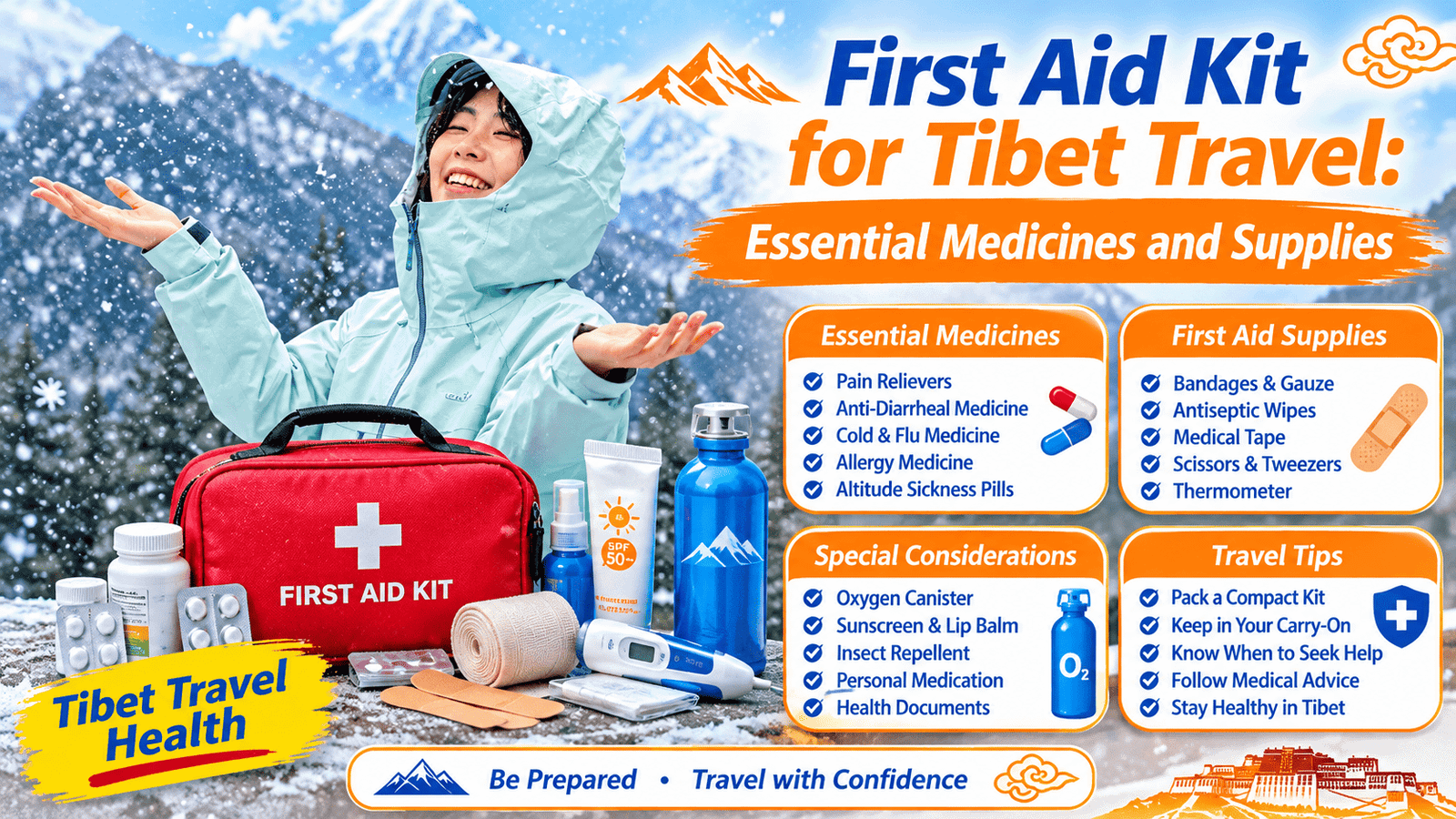
1. Basic First Aid Supplies
These items are useful for common minor injuries.
| Item | What it is used for |
|---|---|
| Adhesive bandages | Covering small cuts and scrapes |
| Sterile gauze pads | Covering larger wounds |
| Medical adhesive tape | Securing dressings |
| Antiseptic wipes | Cleaning around minor wounds |
| Blister pads or hydrocolloid dressings | Protecting areas affected by shoe friction |
| Elastic bandage | Supporting a minor sprain while arranging assessment |
| Small scissors | Cutting tape and dressings |
| Tweezers | Removing small splinters |
| Disposable gloves | Reducing direct contact with blood or wound fluids |
| Digital thermometer | Checking body temperature |
For trekking, blister prevention is particularly useful. Wear properly fitted, broken-in footwear and suitable socks before starting a long walk. Carry blister dressings in an accessible pocket rather than at the bottom of your luggage.
Do not attempt to treat deep wounds, serious burns, suspected fractures or major injuries with a basic travel kit alone.
2. Medicines for Common Travel Problems
You may wish to discuss a small selection of over-the-counter medicines with a doctor or pharmacist before departure.
Depending on your health history, a personal kit may include:
- Pain and fever relief: A medicine suitable for you, such as paracetamol or acetaminophen.
- Allergy medicine: An appropriate antihistamine if you have a history of seasonal allergies or mild allergic reactions.
- Digestive medicines: Products for occasional indigestion or heartburn, if you normally use them.
- Diarrhea supplies: Oral rehydration salts and, where appropriate, a suitable medicine for uncomplicated, non-bloody diarrhea.
- Motion sickness medicine: A product recommended by your pharmacist if you are prone to nausea on winding roads.
- Throat lozenges: Useful for temporary relief from throat irritation in cold, dry air.
- Saline nasal spray: May help relieve nasal dryness and irritation.
- Skin care products: Moisturizer, lip balm and an appropriate anti-itch product.
Some medicines can cause drowsiness, dizziness or other side effects. This matters when traveling on mountain roads, walking at altitude or participating in activities that require balance and attention. Check the label and ask a healthcare professional before using them.
Do not take several medicines with overlapping ingredients without checking their contents.
3. Personal Prescription Medicines
If you take regular prescription medicines, bring enough for the entire trip and a reasonable extra supply in case of delays.
Keep medicines in their original, clearly labeled packaging. Carry them in your hand luggage rather than relying entirely on checked baggage.
Before departure:
- Check whether your medicines can be legally carried into China.
- Carry copies of prescriptions, preferably showing generic medicine names.
- Ask your doctor about safe storage requirements.
- Check whether any medicine needs refrigeration.
- Keep a written list of your medical conditions, allergies and regular medicines.
- Bring spare glasses or contact lenses if you depend on them.
If you use insulin, an inhaler, an epinephrine auto-injector or another essential medical device, discuss travel arrangements with your healthcare provider in advance.
4. Altitude-Related Medical Preparation
Tibet’s high elevation is one of the most important health considerations for visitors. Lhasa is approximately 3,650 metres above sea level, while Everest Base Camp and the Mount Kailash region involve substantially higher elevations.
A first aid kit does not replace proper acclimatization. Travelers should plan a gradual ascent, avoid strenuous activity during the first days and know when symptoms require medical assessment.
If you are considering altitude medication, discuss it with a healthcare professional before traveling.
- Acetazolamide: May be prescribed to help prevent acute mountain sickness in appropriate travelers.
- Dexamethasone: May be prescribed for selected altitude-illness situations, but it does not replace gradual acclimatization.
- Other emergency medicines: Certain medicines may be appropriate for specific medical circumstances, but they should not be carried or used without professional instructions.
Do not use someone else’s prescription medicine. Do not treat severe headache, breathlessness at rest, confusion or difficulty walking as a problem that can simply be solved with tablets.
Suspected serious altitude illness requires urgent medical assessment and, when indicated, descent and oxygen.
5. Sun and Cold-Weather Protection
The strong sunlight, dry air and cold conditions in Tibet make basic skin and eye protection especially important.
Pack:
- Broad-spectrum sunscreen, preferably SPF 30 or higher
- SPF lip balm
- UV-protective sunglasses
- Moisturizer for dry skin
- Saline nasal spray
- Warm gloves and suitable layers
- A hat that protects the face and neck
At high elevations, sunlight can be intense even when the air feels cold. Snow and other bright surfaces can reflect ultraviolet radiation, increasing exposure.
For winter travel, bring suitable clothing rather than relying on medicines or topical products to protect you from cold-related injuries.
6. Additional Supplies for Remote Routes
If your itinerary includes trekking, remote mountain roads or several nights away from larger towns, consider adding:
- A headlamp with spare batteries
- Oral rehydration salts
- A compact emergency blanket
- A reusable water bottle
- Hand sanitizer
- A suitable face mask or respirator
- Water-treatment supplies if your route requires them
- A small personal medical information card
An oxygen saturation monitor may be useful for recording measurements in some situations, but it cannot diagnose or rule out altitude sickness. Symptoms and clinical assessment matter more than a single oxygen reading.
A more extensive group medical kit should be assembled and managed by people with appropriate first-aid or medical training.
7. Keep Important Medical Information Accessible
Carry a digital and paper copy of:
- Emergency contact details
- Medical conditions and significant medical history
- Known medication allergies
- Current prescription medicines
- Travel insurance information
- Relevant prescriptions and medical certificates
If you have a serious chronic condition, discuss your planned route and maximum sleeping altitude with your doctor before booking the trip.
8. How to Organize Your Travel First Aid Kit
Use a compact, water-resistant bag and separate supplies into clearly labeled sections.
For example:
- Wound care: Bandages, gauze, tape and blister dressings.
- Medicines: Personal prescriptions and approved over-the-counter products.
- Daily protection: Sunscreen, lip balm and moisturizer.
- Emergency information: Medical summary, prescriptions and insurance details.
Check expiry dates before leaving. Avoid carrying loose, unidentified tablets in plastic bags. Keep medicines away from extreme heat, freezing temperatures and moisture unless their storage instructions specifically allow it.
Frequently Asked Questions
Do I need a first aid kit for a trip to Tibet?
Yes. A small personal kit is useful, particularly if your itinerary includes Everest Base Camp, Mount Kailash, trekking or long journeys through remote areas.
Can I buy medicines in Lhasa?
Pharmacies and medical facilities are available in Lhasa, but the availability of specific brands and medicines can vary. Bring your regular prescription medicines and any essential products you may have difficulty replacing.
Should I bring altitude sickness medicine?
Discuss this with your doctor before departure. Whether preventive medication is appropriate depends on your itinerary, ascent profile, medical history and individual risk.
Should I bring oxygen instead of a first aid kit?
No. Oxygen and first aid supplies serve different purposes. Oxygen may be part of an emergency response in some circumstances, but it does not replace acclimatization, medical assessment or descent when serious altitude illness is suspected.
What is the most important item for a Mount Kailash pilgrimage?
There is no single item that suits everyone. Proper trekking footwear, blister protection, personal prescription medicines, suitable clothing and a plan for altitude-related emergencies are all important.
Internal Links to Add
- Altitude Sickness in Tibet: Complete Guide for Travelers
- Tibet Travel Checklist: Essential High-Altitude Gear and Safety Tips
- Oxygen at High Altitude: Benefits, Flow Rates, Duration and Safety
- Altitude Sickness on the Mount Kailash Pilgrimage
- Dry Air in Tibet: Effects on Skin, Eyes, Nose and Throat
Medical Disclaimer
This article provides general travel-health information and is not a substitute for professional medical advice. Medicines and first aid supplies should be selected according to your health history, allergies, age and itinerary. Consult a qualified healthcare professional before starting, stopping or changing medication.
References
- CDC Yellow Book 2026: Travel Health Kits.
- CDC Travelers’ Health: Traveling Abroad with Medicine.
- CDC Travelers’ Health: Pack Smart.
- CDC Yellow Book 2026: High-Altitude Travel and Altitude Illness.