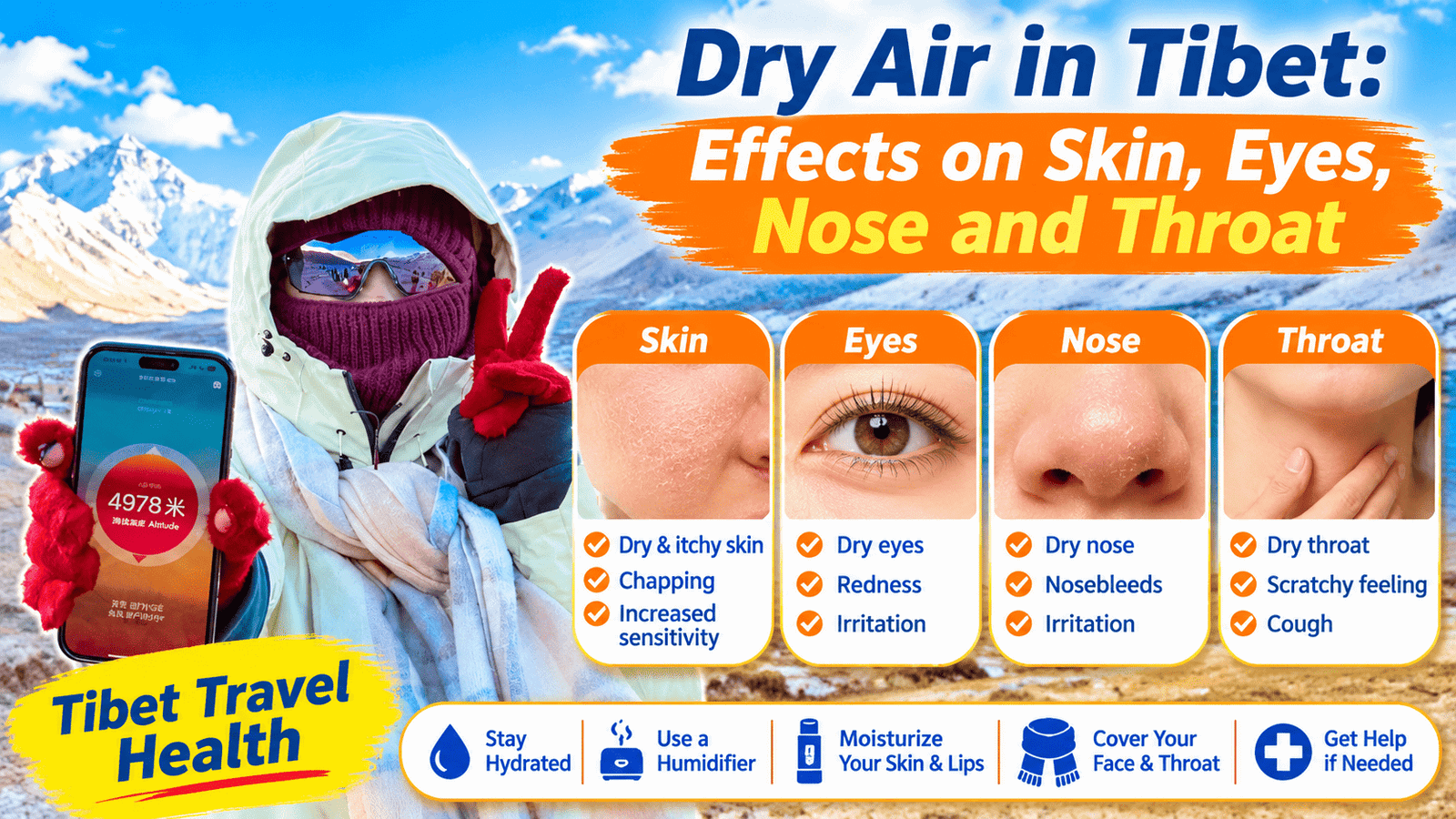
Many travelers notice that their skin, lips, nose and throat become dry after arriving in Tibet. Some experience cracked lips, flaky skin, a dry nose, occasional nosebleeds or irritated eyes. Others wake up with a dry mouth or scratchy throat. These problems are common in dry environments. Tibet’s climate, high elevation, wind and indoor heating can contribute to moisture loss and irritation.
Although these symptoms are often mild, they can make a journey uncomfortable, particularly during long sightseeing days or winter travel. Understanding why the air feels dry and how to protect your body can help you travel more comfortably.
Why is the air so dry in Tibet?
Tibet is a high-altitude region with large variations in temperature, rainfall and humidity. Many areas have a dry climate, particularly during colder seasons.
Several factors contribute to dryness.
1. Low humidity
Humidity describes the amount of water vapor in the air. When the air contains relatively little moisture, water can evaporate more easily from exposed surfaces, including skin and the lining of the nose and mouth.
This can contribute to dry skin, cracked lips and irritated nasal passages.
2. High elevation
- High elevation changes atmospheric conditions, but altitude itself should not be treated as the only cause of dryness.
- The local climate, humidity, wind, temperature and indoor environment all influence how dry a person feels.
3. Strong winds
- Wind increases moisture loss from exposed skin and can worsen irritation around the nose, lips and cheeks.
- People who spend long periods outdoors may notice more dryness than those who remain indoors.
4. Cold weather and indoor heating
During cold weather, heating systems can make indoor air feel even drier. Travelers may move between cold outdoor conditions and warm hotel rooms, exposing their skin and airways to different environments.
5. Long periods outdoors
Walking, trekking and sightseeing in dry, windy conditions can increase discomfort. Mouth breathing during exercise may also make the mouth and throat feel dry.
How does dry air affect the body?
Low humidity can affect several parts of the body, especially surfaces that are exposed to the environment.
1. Dry skin
The skin’s outer barrier helps retain moisture. When the air is dry, moisture loss can increase.
Common symptoms include:
- Tight or rough skin
- Flaking
- Itching
- Cracked hands
- Dry patches around the nose and cheeks
- Irritation after washing
Cold weather and frequent hot showers can make the problem worse.
2. Dry lips
The lips are particularly vulnerable because their outer surface is delicate and can lose moisture easily.
Symptoms may include:
- Tightness
- Peeling
- Small cracks
- Stinging
- Pain when eating or speaking
Wind and UV radiation can worsen the problem. Dryness and sunburn can occur together.
3. Dry nose and nosebleeds
The inside of the nose is covered by a delicate lining that helps warm and humidify the air we breathe. Dry conditions can irritate this lining and make it more vulnerable to small cracks and bleeding.
Travelers may notice:
- Dryness inside the nostrils
- Crusting
- Mild irritation
- Small amounts of blood when blowing the nose
- Repeated minor nosebleeds
Nosebleeds are not always caused by dry air. Injury, infection, allergies, medications and other medical conditions can also contribute.
4. Dry and irritated eyes
Low humidity and wind can increase tear evaporation and worsen dry-eye symptoms.
Possible symptoms include:
- Gritty or sandy sensations
- Burning
- Redness
- Itching
- Blurred vision that improves after blinking
- Watery eyes despite dryness
UV exposure, dust, contact lenses and prolonged screen use may contribute to eye discomfort during Tibet travel.
Persistent pain, light sensitivity or blurred vision should not automatically be attributed to dry air.
5. Dry mouth and throat
Dry air and mouth breathing can leave the mouth and throat feeling uncomfortable.
Travelers may experience:
- Dry mouth after sleeping
- Scratchy throat
- Increased thirst
- Mild throat irritation
- Discomfort when swallowing dry foods
A persistent sore throat, fever, cough or difficulty swallowing may indicate an infection or another medical problem rather than simple environmental dryness.
How to protect your skin in Tibet
Use a gentle moisturizer
- Choose a fragrance-free cream or ointment rather than a light lotion if your skin is very dry.
- Apply it after washing while the skin is still slightly damp. Pay particular attention to the cheeks, hands, elbows and areas exposed to wind.
Avoid very hot showers
- Hot water can remove natural oils from the skin and worsen dryness.
- Use lukewarm water and avoid long showers.
Use gentle skincare products
- Choose mild cleansers and avoid products that cause stinging or irritation.
- If your skin becomes very dry, temporarily reduce strong exfoliating products or other irritating treatments.
Protect exposed skin
- Wear gloves, a scarf and suitable clothing when outdoors. A protective outer layer can reduce wind exposure.
How to protect your nose
Dry nasal passages can be uncomfortable, particularly during sleep and in heated rooms.
Helpful measures include:
- Use a commercially prepared saline nasal spray when needed.
- Avoid picking or rubbing the inside of the nose.
- Blow your nose gently.
- Keep indoor air at a comfortable humidity level where possible.
- Avoid excessive exposure to smoke, dust and other irritants.
If you experience frequent nosebleeds, ask a healthcare professional about suitable nasal moisturizers.
Avoid inserting ordinary skin creams or petroleum-based products deep into the nostrils unless a clinician recommends them. Products used inside the nose should be appropriate for that purpose.
What should you do if your nose bleeds?
If you develop a nosebleed:
- Sit down and lean slightly forward.
- Pinch the soft part of the nose just above the nostrils.
- Keep continuous pressure for 10–15 minutes without repeatedly checking.
- Breathe through your mouth.
- Avoid leaning backward or lying flat.
Seek urgent medical care if bleeding is heavy, follows a significant injury, causes weakness or breathing difficulty, or does not stop after sustained pressure. Recurrent nosebleeds should also be assessed.
How to protect your eyes
Dry air, wind and dust can make the eyes uncomfortable.
Try these measures:
- Wear protective sunglasses outdoors.
- Avoid direct exposure to strong wind and dust.
- Take breaks from screens.
- Blink regularly when concentrating.
- Consider preservative-free lubricating eye drops if appropriate.
- Follow contact-lens hygiene instructions.
- Avoid rubbing irritated eyes.
If you have persistent eye pain, significant redness, light sensitivity or blurred vision, seek medical assessment.
How to reduce dry mouth and throat irritation
- Drink fluids regularly according to thirst.
- Take small sips of water during outdoor activities.
- Avoid excessive alcohol.
- Avoid cigarette smoke and other irritants.
- Use a clean humidifier if indoor air is particularly dry.
- Consider sugar-free lozenges if your throat feels dry.
Do not force yourself to drink excessive amounts of water. Maintaining normal hydration is important, but overhydration can also be harmful.
Should you use a humidifier in Tibet?
A humidifier can add moisture to dry indoor air and may help relieve dry skin, irritated nasal passages and throat discomfort.
If you use one:
- Follow the manufacturer’s cleaning instructions.
- Empty and refill it as directed.
- Use suitable clean water.
- Avoid allowing the room to become damp.
- Monitor indoor humidity where possible.
A relative humidity of approximately 30–50% is a commonly recommended indoor range. Excessively high humidity can encourage mold and dust mites.
A humidifier is optional. Many travelers can manage mild dryness with moisturizers, saline sprays, eye lubrication and regular fluid intake.
Dry air and dehydration: Are they the same?
No. Dry air and dehydration are different problems, although they can occur together.
Dry air refers to low moisture content in the surrounding environment. It can affect the skin and the moist surfaces of the eyes, nose and throat.
Dehydration occurs when the body loses more water than it takes in. It may result from inadequate fluid intake, vomiting, diarrhea, sweating or other causes.
Dry lips or a dry nose do not automatically mean that you are dehydrated.
Signs of dehydration can include thirst, dark urine, reduced urination, dizziness and unusual tiredness. Severe dehydration requires medical attention.
Dry air and altitude sickness: What is the difference?
Some travelers confuse environmental dryness with altitude sickness because both may cause discomfort during a Tibet trip.
| Symptom | Dry-air irritation | Altitude sickness |
|---|---|---|
| Dry lips | Common | Not a defining symptom |
| Dry nose | Common | Not a defining symptom |
| Nosebleeds | Can occur | Not a defining symptom |
| Dry or gritty eyes | Can occur | Not a defining symptom |
| Headache | Not a typical direct sign | Common in acute mountain sickness |
| Nausea | Not a typical direct sign | Can occur |
| Dizziness and unusual fatigue | Not typical of simple dryness | Can occur |
A traveler can have both conditions at the same time. Headache, nausea, dizziness or unusual weakness after ascending to altitude should be assessed in the context of possible altitude illness.
Practical dry-air care kit for Tibet
Consider packing:
- Fragrance-free facial moisturizer
- Body cream or ointment
- SPF lip balm
- Saline nasal spray
- Suitable lubricating eye drops
- Gentle facial cleanser
- Soft tissues
- Sunglasses
- A scarf or face covering
- A reusable water bottle
Keep frequently used items in your day bag, especially when traveling to remote destinations.
Frequently asked questions
Why does my nose become dry in Lhasa?
Low humidity, wind and indoor heating can irritate the nasal lining. Saline spray and gentle nasal care may help.
Can dry air cause nosebleeds?
Yes. Dryness can make the nasal lining more vulnerable to irritation and small cracks. However, repeated or heavy nosebleeds need medical assessment.
Does drinking more water cure dry skin?
Not necessarily. Drinking enough fluids supports normal hydration, but dry skin is also influenced by humidity, washing habits and the skin barrier. Moisturizer is often more directly helpful.
Can I use a humidifier in my hotel room?
If the hotel permits it and the device can be cleaned properly, a humidifier may help. Keep humidity moderate and follow the manufacturer’s maintenance instructions.
Why are my eyes watery when they feel dry?
Dry-eye irritation can trigger reflex tearing. The eyes may produce watery tears even when the tear film is not adequately protecting the surface.
Is dry air worse in Tibet during winter?
Many travelers find dryness more noticeable during cold weather, especially when indoor heating is used. Local humidity and weather conditions vary by destination and season.
Should I worry about a dry throat at night?
Mild dryness may be related to low humidity or mouth breathing. Persistent pain, fever, cough, breathing difficulty or difficulty swallowing should be medically assessed.
Final advice
Dry air can affect your skin, lips, eyes, nose and throat during a Tibet journey. High elevation, low humidity, cold weather, wind and indoor heating can all contribute to discomfort. Prepare simple protective products before departure: moisturizer, SPF lip balm, saline nasal spray and suitable eye drops. Use gentle skin care, avoid excessive hot showers and maintain normal hydration.
If symptoms are severe, persistent or accompanied by fever, significant bleeding, vision changes or breathing problems, seek medical advice rather than assuming dry air is the only cause.
Medical disclaimer: This article provides general health information and is not a substitute for professional medical advice, diagnosis or treatment. Seek medical assessment for recurrent nosebleeds, persistent eye symptoms, severe skin problems or ongoing throat discomfort.
Suggested internal links
- Dry Skin, Dry Nose and Nosebleeds in Tibet: Causes and Care
- Windburn in Tibet: Symptoms, Prevention and Skin Care
- Frostbite in Tibet: Early Symptoms, First Aid and Prevention
- Best Sun Protection for Tibet: Sunscreen, Clothing and Daily Prevention
- Hydration at High Altitude: Water, Electrolytes and Dehydration
References
- Mayo Clinic, Humidifiers: Ease Skin and Breathing Symptoms.
- American Academy of Dermatology (AAD), Cold Weather and Your Skin.
- AAD, Dry Skin: Overview.
- American Academy of Ophthalmology (AAO), What Can Cause Dry Eye?
- U.S. Environmental Protection Agency (EPA), Use and Care of Home Humidifiers.