Tibet’s high-altitude environment can bring freezing temperatures, strong winds and sudden changes in weather. Visitors may spend long periods outdoors at mountain viewpoints, lakes, trekking routes and remote camps. Without suitable clothing and shelter, the body can lose heat faster than it can produce it.
A dangerous drop in the body’s core temperature is called hypothermia. It is a medical emergency that can affect anyone exposed to cold for long enough, especially when clothing becomes wet or the person is exhausted. Hypothermia is not simply feeling cold. It can affect the brain, coordination, breathing and heart function. Early recognition and prompt action are essential.
This guide explains how hypothermia can develop during Tibet travel, how to recognize it and what to do while waiting for medical help.
What is hypothermia?
Hypothermia occurs when the body’s core temperature falls below 35°C (95°F). The human body normally maintains a relatively stable internal temperature. In cold conditions, it tries to conserve heat through changes in blood circulation and muscle activity, including shivering.
If heat loss continues and the body cannot produce enough heat, its internal temperature falls. As the condition becomes more severe, normal body functions begin to slow. Hypothermia can develop outdoors, inside a poorly heated building or in a vehicle if someone remains exposed to cold for a prolonged period.
Why can hypothermia happen in Tibet?
Several factors can increase the risk during a Tibet journey.
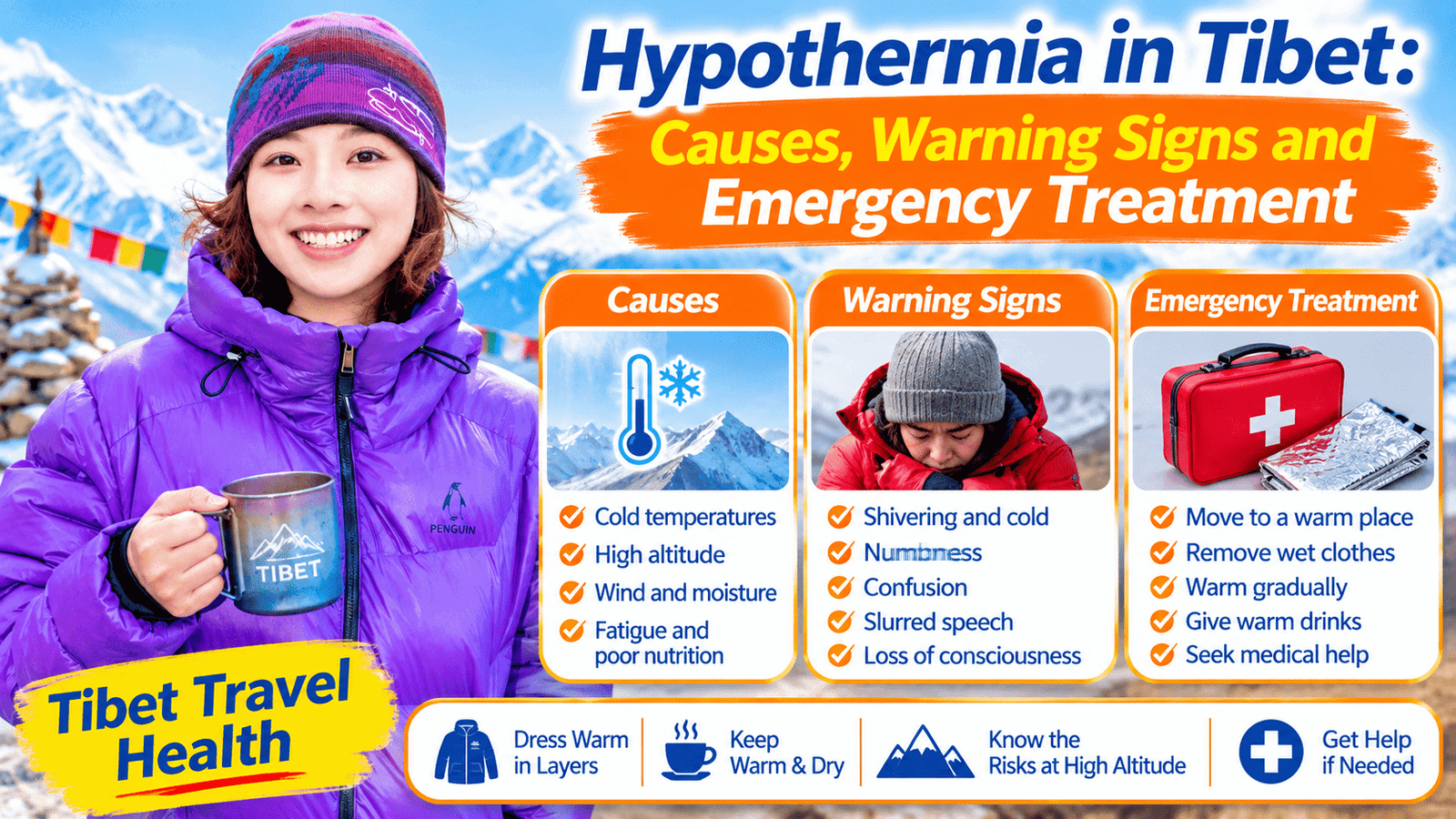
1. Low temperatures
Winter conditions across the Tibetan Plateau can be extremely cold, especially at higher elevations and remote mountain locations.
2. Strong wind
Wind removes the thin layer of warm air near the skin and increases heat loss from exposed areas. A person may become dangerously cold even when the thermometer reading does not appear exceptionally low.
3. Wet clothing
Rain, snow, sweat or spilled water can make clothing wet. Wet garments lose insulating effectiveness and can accelerate heat loss.
4. Long outdoor exposure
Travelers may remain outside for extended periods while taking photographs, waiting for a sunrise or walking along a remote route.
5. Inadequate clothing
A thin jacket, insufficient insulation, wet socks or uncovered head and hands can leave the body unable to retain enough heat.
6. Exhaustion and inadequate food intake
Long journeys, strenuous walking and insufficient food may leave a traveler less able to cope with cold conditions.
7. Alcohol and certain medical conditions
Alcohol can impair judgment and interfere with the body’s response to cold. Some medical conditions, medicines and older age can also increase vulnerability.
Symptoms of hypothermia
Symptoms depend on how much the body’s core temperature has fallen. They may become more difficult to recognize as the condition worsens.
Early warning signs
- Shivering
- Cold, pale skin
- Tiredness
- Unusual hunger
- Reduced coordination
- Difficulty concentrating
- Slower or less clear speech
More serious symptoms
- Persistent or severe shivering
- Slurred speech
- Confusion
- Poor balance
- Unusual behavior
- Slow or shallow breathing
- Increasing drowsiness
Severe hypothermia
In severe cases, a person may:
- Stop shivering
- Become unconscious
- Have very slow or difficult breathing
- Develop a dangerously slow heart rate
- Become unresponsive
A person who stops shivering is not necessarily recovering. In severe hypothermia, shivering may stop as the body loses its ability to respond.
Why is hypothermia especially dangerous at high altitude?
Tibet travel often combines cold exposure with physical exertion, remote roads and long distances between medical facilities. At high altitude, travelers may also experience headache, fatigue, dizziness and poor sleep from altitude-related conditions. These symptoms can make it harder to identify a developing cold emergency.
Confusion, severe weakness, loss of coordination or unusual drowsiness should never be dismissed as ordinary travel fatigue. Hypothermia and altitude illness can also occur at the same time. A person with concerning symptoms needs prompt medical assessment rather than an assumption that only one condition is responsible.
What should you do if someone develops hypothermia?
Hypothermia is a medical emergency. Arrange urgent medical assistance while beginning safe first aid.
Step 1: Move the person out of the cold
- Move them into a warm building or sheltered vehicle. If this is not possible, protect them from wind and insulate them from the cold ground.
- Handle a severely hypothermic person gently.
Step 2: Call for emergency medical help
- Seek emergency assistance immediately if you suspect hypothermia, particularly when the person is confused, unusually sleepy, has slurred speech or has slow breathing.
- Do not leave the person alone.
Step 3: Remove wet clothing
- If possible, carefully remove wet clothing and replace it with dry garments. Avoid unnecessary movement or rough handling.
Step 4: Warm the centre of the body
- Wrap the person in dry blankets, sleeping bags or warm clothing. Give particular attention to the chest, neck, head and groin.
- Use warm, dry layers and body heat where appropriate.
Step 5: Give a warm drink only if the person is fully alert
- A warm, sweet, non-alcoholic drink may be offered if the person is fully awake and can swallow normally.
- Do not give food or drink to someone who is confused, very drowsy or unconscious because of the risk of choking.
Step 6: Monitor breathing and responsiveness
Watch the person’s breathing and level of consciousness while waiting for help. If they become unresponsive and are not breathing normally, begin CPR if you are trained or follow the emergency operator’s instructions.
What should you avoid when treating hypothermia?
Incorrect warming methods can cause additional harm.
- Do not rub or massage the person’s arms and legs.
- Do not place the person in a very hot bath.
- Do not apply a heat lamp or intense direct heat.
- Do not give alcohol.
- Do not force a confused or unconscious person to drink.
- Do not make a severely hypothermic person walk around to warm up.
The priority is to obtain medical help, prevent further heat loss and warm the body carefully.
How can you prevent hypothermia during Tibet travel?
Wear several layers
A practical clothing system includes:
- Base layer: Helps manage moisture next to the skin.
- Insulating layer: Traps warm air and helps retain body heat.
- Outer layer: Protects against wind, snow and rain.
Adjust your layers during physical activity so that you do not become excessively sweaty.
Keep clothing dry
Carry spare socks and gloves on long outdoor trips. Replace wet clothing as soon as practical.
Protect your head, hands and feet
Wear a warm hat, insulated gloves, suitable socks and well-fitting boots. Protect the face and neck when the wind is strong.
Eat regularly
Long outdoor activities require energy. Eat regular meals and carry suitable snacks on remote routes.
Take breaks in sheltered places
Do not wait until you are extremely cold before going indoors or returning to a warm vehicle.
Watch for early symptoms
Pay attention to persistent shivering, clumsiness, unusual tiredness and difficulty speaking. These signs should prompt immediate action.
Plan for changing weather
Mountain weather can change quickly. Check conditions before departure and avoid unnecessary exposure during severe weather.
Hypothermia prevention on popular Tibet routes
- Everest Base Camp: Temperatures can be very low, particularly at night and during early morning visits. Carry insulated layers, gloves, a warm hat and spare dry clothing.
- Namtso Lake: The exposed lakeside environment can be cold and windy. Keep outdoor stops manageable and return to shelter if you begin shivering continuously.
- Mount Kailash: Pilgrims should prepare for changing weather and long walking days. Carry adequate insulation and do not continue when cold exposure becomes unsafe.
- High mountain passes: Strong winds and sudden weather changes can make short stops uncomfortable or dangerous. Wear protective clothing before leaving the vehicle.
Hypothermia and frostbite: What is the difference?
| Feature | Hypothermia | Frostbite |
|---|---|---|
| Main problem | Core body temperature becomes dangerously low | Skin and underlying tissues freeze |
| Common symptoms | Shivering, confusion, slurred speech, drowsiness | Numbness, tingling, pale or hard skin |
| Main areas affected | Whole body | Fingers, toes, nose, ears and cheeks |
| Severity | Medical emergency | Can cause permanent tissue damage |
| First priority | Warm the body core and obtain emergency help | Protect the affected tissue and obtain medical care |
Both conditions can happen together. If someone is hypothermic and has frostbite, warming the body core is the immediate priority.
Frequently asked questions
What temperature is considered hypothermia?
Hypothermia is generally defined as a core body temperature below 35°C (95°F).
Can hypothermia happen in Tibet during summer?
Yes. Cold exposure can occur in any season at high elevations, particularly during bad weather, strong winds, rain or overnight outdoor activities.
Does shivering always mean hypothermia?
Not necessarily. Shivering is a normal response to cold, but persistent shivering accompanied by tiredness, confusion, poor coordination or slurred speech may indicate hypothermia.
Should I give a hypothermic person hot tea?
Only if the person is fully awake and can swallow safely. Offer a warm, non-alcoholic drink. Do not give drinks to someone who is confused, very drowsy or unconscious.
Can a person have hypothermia without shivering?
Yes. Shivering may stop in severe hypothermia. This is an emergency warning sign, not evidence that the person is getting better.
Is hypothermia related to altitude sickness?
They are different conditions, but both can occur during high-altitude travel. Confusion, severe weakness and breathing problems require medical assessment rather than being assumed to be normal altitude adjustment.
Final advice
Hypothermia is a serious cold-related emergency that can develop when the body loses heat faster than it can produce it. Cold temperatures, wind, wet clothing and prolonged outdoor exposure increase the risk during Tibet travel. Wear suitable layers, keep clothing dry, eat regularly and take breaks in warm shelter. If someone becomes confused, unusually sleepy, uncoordinated or develops slurred speech after cold exposure, seek emergency medical help immediately.
Medical disclaimer: This article provides general health information and is not a substitute for professional medical advice, diagnosis or treatment. Suspected hypothermia is a medical emergency and requires urgent medical attention.
Suggested internal links
- Frostbite in Tibet: Early Symptoms, First Aid and Prevention
- Windburn in Tibet: Symptoms, Prevention and Skin Care
- Dry Air in Tibet: Effects on Skin, Eyes, Nose and Throat
- Tibet Travel Checklist: Essential High-Altitude Gear and Safety Tips
- Altitude Sickness in Tibet: Complete Guide for Travelers
References
- NHS, Hypothermia.
- CDC, Preventing Hypothermia.
- MedlinePlus, Hypothermia: First Aid.
- American Heart Association, First Aid Guidelines: Cold Emergencies.