
Travelling across Tibet requires preparation for more than altitude alone. Strong ultraviolet radiation, cold temperatures, changing weather, long distances and limited medical facilities in remote areas can all affect your journey.
A suitable packing list should cover altitude-related health concerns, sun protection, basic medical supplies, drinking water, food, communication equipment and any special requirements of your itinerary.
The equipment you need for a short Lhasa sightseeing tour will differ from what you need for an Everest Base Camp journey or the Mount Kailash pilgrimage. This guide provides a practical checklist and explains how to prepare for common problems.
Tibet High-Altitude Travel Checklist: Quick Overview
| Travel stage | Main preparations |
|---|---|
| Before departure | Plan acclimatization, check personal health needs, prepare medicines, sun protection, first aid and suitable clothing |
| During the journey | Monitor symptoms, physical activity, food and fluid intake, weather and equipment |
| If symptoms develop | Stop ascending when altitude illness is suspected; arrange medical assistance, oxygen and descent when necessary |
| After returning | Seek medical assessment for persistent breathing, neurological, eye, skin, cold-injury or other concerning symptoms |
Before Departure: Five Categories of Essential Preparation
Before leaving for Tibet, organize your equipment into five categories:
- Altitude illness preparation and monitoring
- Ultraviolet protection
- Basic medical supplies
- Drinking water and food
- Equipment for special travel conditions
Plan your route and emergency arrangements
Before departure, identify:
- Your planned sleeping altitudes
- Places where you can stop if someone becomes unwell
- Nearby lower-altitude locations
- Medical facilities along the route
- Available vehicles and evacuation arrangements
- How the group will contact outside assistance
Your sleeping altitude, ascent rate and acclimatization days should be considered when planning the itinerary.
For remote journeys, do not assume that mobile phone coverage, oxygen supplies, medical facilities or emergency transport will always be available.
Altitude Sickness Preparation and Monitoring
Essential equipment: A pulse oximeter, prescribed altitude-related medicines and supplemental oxygen when included in an appropriate medical and travel plan.
Supplemental oxygen
Supplemental oxygen can be important in managing certain altitude-related emergencies and may be used for specific medical or travel needs.
Before departure:
- Confirm what oxygen equipment will be available.
- Check the supply, regulator and delivery equipment.
- Understand how the equipment operates.
- Confirm that the planned supply is adequate for its intended purpose.
- Arrange an alternative emergency plan if the equipment fails or runs out.
Small portable oxygen cans cannot replace sustained oxygen delivery when medically required. Do not assume that oxygen will be readily available at every remote stop on the Everest or Kailash routes.
Oxygen does not replace descent and medical treatment for serious HAPE or HACE.
Pulse oximeter
A fingertip pulse oximeter estimates peripheral oxygen saturation (SpO₂).
It can help you observe changes during travel, but it cannot diagnose or rule out AMS, HAPE or HACE.
When measuring:
- Rest for several minutes.
- Warm cold fingers.
- Keep the hand still.
- Remove nail polish if it interferes with the reading.
- Wait for a stable measurement.
- Record the reading together with altitude and symptoms.
Readings vary with altitude, circulation, temperature, movement, device quality and other factors. Some devices may also be less accurate for people with darker skin pigmentation.
Do not use a single SpO₂ number as a universal safety threshold. Symptoms and changes over time matter.
Altitude-related medicines
Bring personal prescription medicines and any altitude-related medicine prescribed for your individual circumstances.
Before departure:
- Discuss your itinerary and health history with a healthcare professional.
- Understand when and how your prescribed medicine should be used.
- Check possible side effects and interactions.
- Carry enough for the planned journey, including a reasonable contingency supply.
- Keep medicines in their original packaging when practical.
Do not borrow prescription medicines from other travellers or use medication as a substitute for acclimatization.
4. Sun Protection and Eye Protection
High-altitude sunlight can be intense, even when temperatures are low. Snow and ice can reflect UV radiation and increase exposure to the face and eyes.
Sunscreen
Pack:
- Broad-spectrum SPF 30 or higher sunscreen
- Water-resistant SPF 50 or SPF 50+ for extended outdoor activities
- SPF lip balm
- A small container for daily use
Apply sunscreen to exposed skin and reapply approximately every two hours during continuous outdoor exposure, and sooner after heavy sweating, swimming or wiping the skin. Follow the product instructions.
Sunglasses and snow goggles
Choose eyewear with verified UVA and UVB protection, ideally labeled UV400 or equivalent.
For snow-covered areas, glaciers and exposed mountain environments, consider wraparound sunglasses or suitable snow goggles with good side coverage.
Check:
- UV protection
- Frame coverage
- Lens transmission for the expected light conditions
- Anti-fog performance
- Compatibility with prescription glasses
Dark or polarized lenses do not automatically provide adequate UV protection.
Hat and face covering
A wide-brimmed hat, cap, scarf or face covering can reduce direct exposure to the face and neck.
For cold and windy conditions, choose materials that are comfortable, breathable and suitable for the activity.
5. Basic Medical Supplies
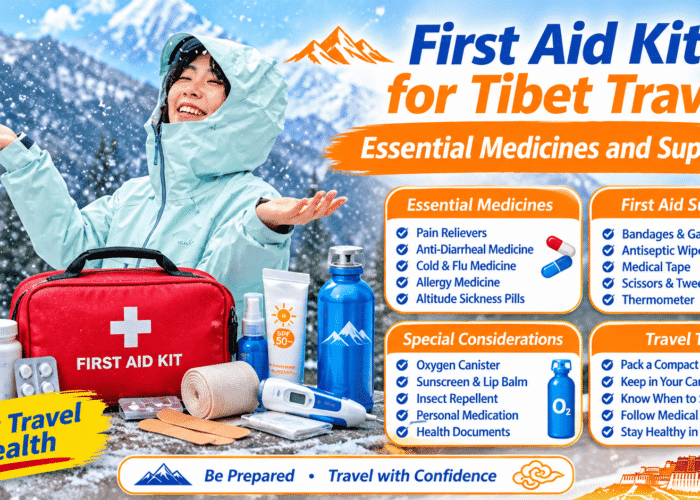
A compact first-aid kit is useful for trekking, self-driving trips and outdoor activities in remote areas.
Basic first-aid kit
Consider packing:
- Adhesive bandages
- Sterile gauze
- Medical tape
- Antiseptic wipes
- Small scissors
- Blister dressings
- Elastic support bandage
- Disposable gloves
- Tweezers
- Suitable wound dressings
Check the contents before departure and replace expired or used supplies.
Oral rehydration salts
ORS can be useful when diarrhoea or vomiting causes significant fluid and electrolyte losses.
Mix the sachet using the exact volume of safe water stated on the packaging. Do not make the solution more concentrated or dilute than instructed.
ORS is not the same as an ordinary sports drink and does not prevent altitude sickness.
Personal medical supplies
Bring:
- Regular prescription medicines
- Spare glasses or contact lenses
- Necessary medical devices
- Personal allergy or emergency medicines, if prescribed
- Copies of important prescriptions or medical information
Do not rely on buying essential personal medicines in remote towns or villages.
6. Drinking Water and Food
Tibet’s dry environment, long road journeys and outdoor activities make it useful to carry safe drinking water and convenient food.
Drinking water
Prepare:
- Reusable water bottle
- Additional water capacity for long journeys
- Insulated bottle for cold conditions
- Water-treatment supplies if your itinerary requires them
Do not assume that water from streams, lakes or roadside sources is safe to drink without appropriate treatment.
Drink regularly according to thirst and activity. Avoid forcing excessive water intake, which can cause dangerously low blood sodium.
Portable food
Useful travel snacks include:
- Nuts
- Energy bars
- Dried fruit
- Biscuits
- Bread
- Crackers
- Other familiar, easy-to-carry foods
For long trekking days, plan enough food to support the expected activity. Keep snacks accessible rather than storing everything in luggage that cannot be reached during the journey.
7. Clothing and Equipment for Cold Weather
Tibet’s weather can change quickly, particularly on exposed mountain routes. Temperatures may fall sharply after sunset, and wind can make conditions feel much colder.
Use a layering system
A practical clothing system includes:
Base layer: Moisture-managing clothing that keeps sweat away from the skin.
Mid-layer: Fleece or insulated clothing that retains warmth.
Outer layer: Windproof and waterproof protection suitable for rain, snow and changing conditions.
Essential clothing
Consider packing:
- Warm down or insulated jacket
- Fleece or warm mid-layer
- Thermal base layers
- Waterproof and windproof jacket
- Waterproof trousers when needed
- Warm socks
- Gloves
- Warm hat
- Neck covering
- Comfortable trekking shoes
- Spare dry clothing
Choose footwear according to your actual itinerary. A city tour does not require the same footwear as a multi-day mountain trek.
Cold-weather accessories
Depending on the season and route, consider:
- Thermal blanket
- Hand warmers
- Waterproof bags
- Gaiters
- Suitable traction equipment for snow or ice
Do not rely on a thermal blanket as a replacement for adequate clothing or proper shelter.
Carbon Monoxide Safety
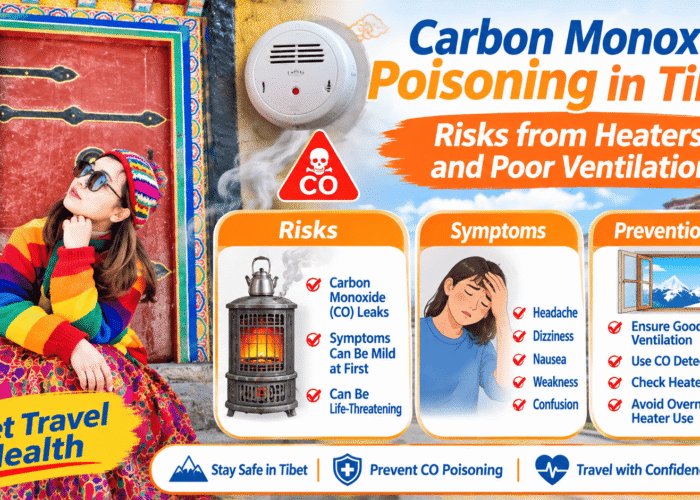
Carbon monoxide (CO) is a colourless, odourless gas produced by incomplete combustion. It can accumulate in enclosed or poorly ventilated spaces.
Potential sources include:
- Fuel-burning heaters
- Stoves
- Generators
- Vehicle exhaust
- Other combustion appliances
How to reduce the risk
- Never operate a fuel-burning stove or heater inside an enclosed tent unless the equipment is specifically designed and approved for that use and the manufacturer’s ventilation and safety requirements are met.
- Never run a vehicle engine in an enclosed or poorly ventilated space.
- Ensure accommodation heating systems are properly installed and maintained.
- Use a suitable carbon monoxide alarm where relevant.
- Do not assume that the absence of a smell means the air is safe.
Recognize possible carbon monoxide poisoning
Symptoms may include:
- Headache
- Dizziness
- Nausea
- Weakness
- Confusion
- Unusual drowsiness
If several people in the same room, vehicle or tent develop headache, nausea or dizziness at the same time, suspect carbon monoxide exposure.
If it is safe to do so, leave the enclosed area immediately and move into fresh outdoor air. Contact emergency assistance. Do not remain inside to investigate the source.
Communication and Navigation Equipment
Remote Tibet routes may have limited or unreliable mobile coverage. Plan communication before entering areas where outside assistance may be difficult to contact.
Useful equipment
- Mobile phone
- Power bank
- Compatible charging cables
- Headlamp
- Spare batteries of the correct type
- Two-way radios for group communication
- Satellite communication equipment suitable for the local area when travelling beyond mobile network coverage
- Offline maps
Cold temperatures can reduce battery performance and may cause phones to shut down unexpectedly. Protect electronic devices according to the manufacturer’s instructions.
Establish an emergency communication plan
Before entering remote areas:
- Agree on scheduled check-in times.
- Establish what to do if someone loses contact.
- Leave the route and expected return time with a contact who is not joining the trip.
- Confirm how the group will contact outside assistance.
- Make sure someone knows how to use the available communication equipment.
Ordinary two-way radios are primarily for communication within a group. They cannot replace a way to contact outside emergency services, and mountain terrain can interrupt radio signals.
What to Do If Something Goes Wrong
Different medical and environmental emergencies require different responses. Do not treat every problem as another case of altitude sickness.
Acute Mountain Sickness (AMS)
- Stop ascending.
- For mild symptoms, rest at the same altitude and monitor the person.
- Do not continue higher until symptoms have resolved.
- If symptoms worsen despite resting, arrange descent and medical assessment.
High-Altitude Pulmonary Edema (HAPE)
Warning signs can include breathlessness at rest, worsening breathing, cough and markedly reduced exercise ability.
- Seek assistance promptly.
- Provide supplemental oxygen when available and appropriate.
- Minimize physical exertion.
- Arrange the safest possible descent or evacuation.
- Obtain medical assessment urgently.
High-Altitude Cerebral Edema (HACE)
Warning signs include unsteady walking, confusion and altered consciousness.
- Treat the situation as an emergency.
- Contact emergency assistance.
- Provide oxygen when available.
- Arrange urgent descent or evacuation.
- Ensure the affected person is accompanied throughout the process.
Important: Breathlessness at rest, unsteady walking or altered consciousness requires immediate action. Do not wait for a pulse oximeter reading to fall below a particular number.
Suspected snow blindness
- Move away from strong light.
- Remove contact lenses if worn.
- Avoid rubbing the eyes.
- Use a cool compress over closed eyelids.
- Seek medical care for severe pain, significant vision loss or suspected eye injury.
Sunburn
- Stop further sun exposure.
- Use cool, damp compresses.
- Apply gentle moisturizer.
- Avoid breaking blisters.
- Seek medical attention for extensive blistering or systemic symptoms.
Hypothermia or frostbite
For suspected hypothermia:
- Move the person to a dry, sheltered area away from wind.
- Replace wet clothing with dry layers.
- Add insulation and keep the person away from cold ground.
- Seek medical assistance.
For suspected frostbite:
- Do not rub or massage the affected area.
- Do not apply direct high heat from a fire or heater.
- Protect the affected area from pressure and friction.
- If thawing could be followed by refreezing during the journey, do not deliberately thaw it in the field.
- Arrange prompt medical assessment or evacuation.
Persistent vomiting or diarrhoea
- Take small, frequent amounts of fluid or properly prepared ORS if the person can swallow safely.
- Monitor whether fluids can be kept down.
- Seek medical attention for blood in the stool, severe abdominal pain, marked weakness or an inability to keep fluids down.
Suspected carbon monoxide poisoning
- Leave the affected room, vehicle or tent immediately if it is safe to do so.
- Move into fresh outdoor air.
- Contact emergency assistance.
- Do not re-enter the enclosed space until it has been assessed and made safe.
Complete Tibet High-Altitude Travel Packing List
Use this checklist to organize your preparations.
Health and medical equipment
- Supplemental oxygen, if required by your medical and travel plan
- Pulse oximeter and spare batteries
- Personal altitude-related medicines prescribed by a doctor
- Personal prescription medicines
- Basic first-aid kit
- Oral rehydration salts
- Personal medical devices and spare supplies
- Spare prescription glasses, if needed
Sun and eye protection
- Broad-spectrum sunscreen
- SPF lip balm
- UV-protective sunglasses
- Snow goggles for snow or glacier activities
- Sun hat
- Face covering or scarf
Water and food
- Reusable water bottle
- Additional water capacity for long journeys
- Water-treatment supplies, if needed
- Portable snacks
- Food suitable for planned trekking days
Clothing and cold-weather equipment
- Insulated jacket
- Thermal base layers
- Warm mid-layer
- Waterproof and windproof outer layer
- Warm hat
- Gloves
- Warm socks
- Suitable walking or trekking shoes
- Thermal blanket
- Waterproof storage bags
- Traction equipment, if required by snow or ice conditions
Communication and navigation
- Mobile phone
- Power bank
- Charging cables
- Headlamp
- Spare batteries
- Offline maps
- Two-way radio or suitable satellite communication equipment for remote routes
- Emergency contact information
Vehicle and accommodation safety
- Carbon monoxide alarm, where relevant
- Vehicle snow chains, where required
- Emergency communication arrangements
- Confirmation of heating and ventilation safety
- Confirmation of oxygen and medical support arrangements for remote sections
Adjust Your Packing List to the Season
Tibet’s weather and travel conditions change throughout the year. Adjust your equipment to the season and the specific route.
| Travel period | Main conditions | Preparation priorities |
|---|---|---|
| Winter | Very low temperatures, snow, strong reflection from snow and increased use of combustion heating | Warm layers, eye protection, cold-injury prevention and carbon monoxide safety |
| Spring | Remaining snow, strong winds and changing rain or snow conditions | UV protection, snow goggles and equipment for changing temperatures |
| Summer | Strong UV radiation, thunderstorms, heavy rainfall and long outdoor activities | Sun protection, waterproof clothing, drinking water and weather monitoring |
| Autumn | Sudden temperature drops, snowfall and icy roads | Cold-weather equipment, snow protection and road-condition checks |
These are broad seasonal patterns, not guarantees of local weather. Check forecasts and road conditions before travelling.
After Returning Home: Symptoms That Should Not Be Ignored
Most ordinary travel fatigue, reduced appetite and sleep disruption improve with rest. However, some symptoms require medical follow-up.
Seek medical assessment for:
- Persistent breathlessness
- Unsteady walking or abnormal responses
- Reduced vision or significant eye pain
- Extensive or infected skin injuries
- Persistent numbness or pain after cold exposure
- Markedly reduced urine output or dark urine with significant muscle pain
- Ongoing symptoms after suspected carbon monoxide poisoning
Travellers who experienced HAPE or HACE should follow medical advice after returning and keep records of the illness, oxygen treatment, descent and medical care.
Frequently Asked Questions
What is the most important thing to pack for Tibet?
There is no single most important item for every traveller. Appropriate clothing, sun protection, personal medicines, safe drinking water and a well-planned acclimatization itinerary are all important. Remote trekking may require additional medical and communication equipment.
Do I need an oxygen cylinder for Tibet?
Not every traveller needs to carry personal oxygen. Requirements depend on health, itinerary, altitude, medical advice and the emergency arrangements available. Confirm oxygen availability and backup plans before entering remote areas.
Should I bring a pulse oximeter?
A pulse oximeter can help monitor SpO₂ trends, but it cannot diagnose or rule out altitude illness. Symptoms and clinical assessment remain essential.
Do I need snow goggles for Everest Base Camp?
They are particularly useful when travelling in snow-covered or highly reflective environments. At a minimum, use verified UV-protective sunglasses with suitable coverage.
Should I carry medicine for altitude sickness?
Discuss your individual risk and itinerary with a healthcare professional before departure. Bring any prescribed medicines and understand their proper use.
Is bottled water necessary in Tibet?
Use safe drinking water. Bottled water is one option, while properly boiled, filtered or otherwise treated water may also be suitable. Do not assume untreated natural water is safe.
What should I carry for the Mount Kailash kora?
Prepare for several days of walking at high elevation. Suitable footwear, warm layers, rain and wind protection, safe drinking water, food, personal medicines, sun protection and an emergency plan are important. The exact list depends on the season and route conditions.
Conclusion
A safe Tibet journey begins with realistic planning. Prepare for altitude, strong sunlight, cold weather, dry conditions and the possibility of limited medical support on remote routes.
Pack according to your itinerary rather than carrying unnecessary equipment. Make sure your group knows how to recognize serious symptoms, how to contact assistance and where to descend or evacuate if needed.
Most importantly, do not allow a fixed schedule or travel goal to take priority over health and safety. Gradual acclimatization, early recognition of symptoms and a practical emergency plan are more important than any single piece of equipment.
Medical Disclaimer: This checklist provides general educational information and is not an individualized medical plan. Consult a qualified healthcare professional before travel if you have a significant medical condition, take regular medication or plan strenuous activity at high altitude.