Travelers visiting Tibet often experience cold, dry and windy conditions, especially during winter and at exposed mountain destinations. After spending time outdoors, the face may feel tight, rough, red or irritated. The cheeks, nose, lips and ears are particularly vulnerable.
People commonly call this condition windburn. The term describes skin irritation associated with exposure to cold wind and dry conditions. It is not a precise medical diagnosis, and symptoms can overlap with ordinary dry skin, cold-related irritation and sunburn. In Tibet, wind exposure and strong ultraviolet (UV) radiation can happen at the same time. A person may therefore have both wind-related irritation and sun damage.
This guide explains how to recognize wind-related skin irritation and protect your skin during a Tibet journey.
What is windburn?
Windburn is a common term for skin that becomes dry, red, tight or uncomfortable after exposure to cold or strong wind. Wind can increase moisture loss from the skin’s surface. Cold temperatures and low humidity can also weaken the skin’s protective barrier, making it more sensitive to friction and environmental irritation.
Windburn should not automatically be treated as a separate condition from sunburn. In outdoor mountain environments, both may occur together.
Why is windburn in Tibet common during travel?
Several environmental conditions can contribute to skin irritation.
1. Strong and cold winds
Open mountain roads, high passes and lakeside viewpoints can be exposed to strong winds. Repeated exposure may leave uncovered skin feeling dry, tight and irritated.
2. Low humidity
Tibet’s dry climate can increase moisture loss from the skin. When the skin barrier becomes dry, it may feel rough, itchy or sensitive.
3. Cold temperatures
Cold weather can worsen dryness and discomfort. Indoor heating may also reduce humidity, creating another dry environment after a day outdoors.
4. Strong sunlight
High-altitude UV exposure can cause sunburn even when the air feels cold. Redness and tenderness after a windy mountain excursion may therefore be caused partly or entirely by UV damage.
5. Friction from clothing
Scarves, face coverings and rough fabrics can rub against already irritated skin. Repeated wiping of the nose and cheeks can make the irritation worse.
Symptoms of wind-related skin irritation
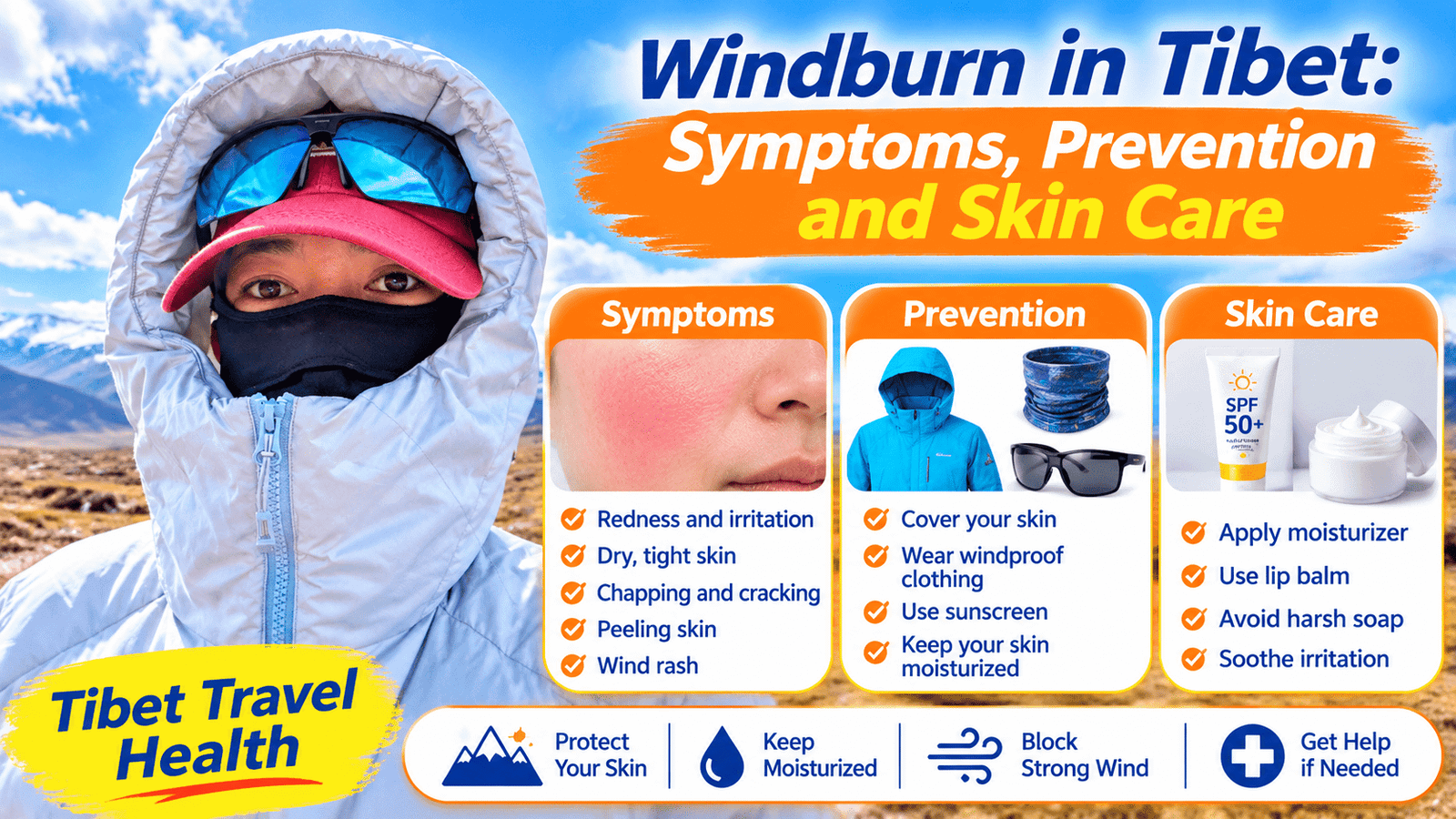
Common symptoms include:
- Dry or tight skin
- Redness
- Rough or flaky patches
- Mild swelling
- Itching or stinging
- Burning or tenderness
- Cracked lips or dry areas around the nose
Symptoms are usually most noticeable on exposed areas, particularly the cheeks, nose, chin and ears.
If the skin develops blisters, severe pain or unusual color changes, do not assume it is ordinary windburn. Cold injury, sunburn or another skin condition may be responsible.
Windburn or sunburn: How can you tell the difference?
The symptoms can look similar, and the two problems may occur together.
| Feature | Wind-related irritation | Sunburn |
|---|---|---|
| Main trigger | Cold wind, dryness and environmental irritation | Excessive UV exposure |
| Typical feeling | Tight, dry, rough or stinging skin | Warm, painful and tender skin |
| Appearance | Dryness, redness and flaking | Redness, swelling and sometimes blisters |
| Timing | During or after exposure | Often becomes noticeable hours after exposure |
| Prevention | Cover skin and protect the skin barrier | Sunscreen, clothing and UV protection |
This comparison is only a guide. Appearance alone cannot reliably distinguish the conditions.
How to treat windburn in Tibet
For mild irritation, the goal is to protect the skin barrier and reduce further exposure.
1. Move out of the wind
Go indoors or into a sheltered place. Avoid further exposure until the skin feels more comfortable.
2. Clean the skin gently
Use lukewarm water and a mild, fragrance-free cleanser if needed. Avoid hot water, rough towels and vigorous scrubbing.
Pat the skin dry rather than rubbing it.
3. Apply a thick moisturizer
A fragrance-free cream or ointment can help reduce moisture loss. Products containing petrolatum, ceramides or other gentle moisturizing ingredients may be useful.
Apply moisturizer after washing while the skin is still slightly damp.
4. Protect cracked lips
Use a simple protective ointment for dryness and an SPF lip balm when going outdoors. Avoid licking or peeling the lips.
5. Avoid irritating skincare products
Until the skin has recovered, avoid harsh exfoliants, strong acids, alcohol-based products and heavily fragranced creams if they cause stinging.
6. Continue UV protection
If you go outdoors again, protect exposed skin with clothing and broad-spectrum sunscreen. Wind protection alone does not prevent sunburn.
How to prevent windburn during a Tibet tour
Preparation is especially important for long outdoor journeys.
- Wear a wind-resistant outer layer.
- Use a scarf, neck gaiter or face covering to protect the cheeks and nose.
- Choose soft fabric that does not rub against the skin.
- Apply moisturizer regularly.
- Protect the lips with a suitable lip balm.
- Wear gloves and cover exposed ears.
- Use broad-spectrum SPF 30 or higher sunscreen on exposed skin.
- Reapply sunscreen according to the product label.
- Avoid washing your face repeatedly with hot water.
For winter trips, pack a moisturizer and lip balm in your day bag rather than leaving them in the main suitcase.
Which Tibet destinations require extra skin protection?
Everest Base Camp: Cold wind and exposed mountain conditions can irritate uncovered skin. A face covering, gloves and moisturizer are useful.
Namtso Lake: Open lakeside areas can be windy and cold. Protect your cheeks, ears and lips during outdoor stops.
Mount Kailash: Pilgrims may spend long periods walking in exposed conditions. Use layered clothing and protect the face from wind and UV radiation.
Yamdrok Lake: Viewpoints are often exposed. Keep a scarf and sunscreen accessible, even if you only plan a short stop.
When should you seek medical advice?
Seek medical assessment if you develop:
- Severe or worsening pain
- Blisters
- Skin that becomes numb, pale, waxy or unusually hard
- Extensive swelling
- Open cracks that bleed or show signs of infection
- A rash that persists or spreads
- Symptoms that do not improve with gentle skin care
Numbness, hard skin or unusual color changes after cold exposure may indicate frostbite rather than windburn. Move to shelter and seek medical help promptly.
Frequently asked questions
Is windburn a real medical condition?
Windburn is a commonly used term for skin irritation after wind and cold exposure. It is not a precise diagnosis, and symptoms can overlap with dry skin, cold injury and sunburn.
Can you get windburn in Tibet during summer?
Yes. Strong winds and dry conditions can occur in different seasons. UV exposure may also cause sunburn at the same time.
Does moisturizer help windburn?
A gentle, fragrance-free cream or ointment can help reduce moisture loss and support the skin barrier.
Should I use sunscreen when it is windy?
Yes. Wind does not block UV radiation. Use broad-spectrum sunscreen and protective clothing during daylight outdoor activities.
How long does windburn last?
Mild irritation may improve after a few days of gentle care and reduced exposure. Persistent, worsening or blistering symptoms should be assessed by a healthcare professional.
Can a scarf prevent windburn?
A soft scarf or face covering can reduce direct wind exposure. It should be clean, comfortable and not rub repeatedly against irritated skin.
Final advice
Windburn-like irritation is a common discomfort in cold, dry and exposed environments. In Tibet, wind, low humidity and strong UV radiation can affect the skin at the same time.
Protect your face with suitable clothing, use a gentle moisturizer and continue daily sun protection. If the skin becomes numb, hard, blistered or severely painful, seek medical assessment because a more serious cold or sun injury may be present.
Medical disclaimer: This article provides general health information and is not a substitute for professional medical advice, diagnosis or treatment. Seek medical assessment for severe pain, blistering, persistent skin changes or suspected frostbite.
Suggested internal links
- Frostbite in Tibet: Early Symptoms, First Aid and Prevention
- Dry Air in Tibet: Effects on Skin, Eyes, Nose and Throat
- Sunburn in Tibet: Symptoms, Prevention and Treatment
- Best Sun Protection for Tibet: Sunscreen, Clothing and Daily Prevention
- Dry Skin, Dry Nose and Nosebleeds in Tibet: Causes and Care
References
- American Academy of Dermatology (AAD), Cold Weather and Your Skin.
- AAD, Dermatologists’ Top Tips for Relieving Dry Skin.
- CDC Yellow Book 2026, Sun Exposure in Travelers.