
Tibet is famous for its high mountains, vast plateaus, sacred lakes and spectacular Himalayan landscapes. However, traveling at these elevations also means entering an environment where the air pressure is much lower than at sea level. The body receives less oxygen with each breath, and visitors who ascend too quickly may develop altitude sickness.
For many travelers, the first experience of high altitude begins in Lhasa, which lies at approximately 3,700 meters above sea level. A journey to Everest Base Camp, Mount Kailash, Namtso Lake or other remote destinations can involve even higher elevations.
Altitude sickness is not simply a problem for people who are unfit or inexperienced. Healthy, physically active travelers can also become ill. The most important factors are how high you sleep, how quickly you ascend, how much time your body has to acclimatize, and how you respond when symptoms appear.
This guide explains the main types of altitude illness, how to recognize warning signs, how to prepare for a Tibet trip, and what to do if someone becomes unwell.
Important: If someone develops confusion, difficulty walking straight, unusual drowsiness or breathlessness at rest at high altitude, treat it as a medical emergency. Arrange urgent medical assistance and descent. Give supplemental oxygen if available, but do not delay evacuation.
What Is Altitude Sickness?
Altitude sickness, also called altitude illness or acute altitude illness, refers to health problems that can develop when someone ascends to an elevation where the reduced atmospheric pressure makes less oxygen available to the body.
The percentage of oxygen in the atmosphere remains approximately 20.9% at high altitude. What changes is the atmospheric pressure. As pressure falls, the partial pressure of oxygen also falls, reducing the amount of oxygen that moves from the lungs into the bloodstream.
The body responds by breathing faster and making several physiological adjustments. These changes take time. If someone ascends faster than the body can adapt, altitude illness may develop.
The three main forms of acute altitude illness are:
- Acute Mountain Sickness (AMS): The most common form, usually involving headache together with symptoms such as nausea, dizziness or unusual fatigue.
- High-Altitude Pulmonary Edema (HAPE): A dangerous condition in which fluid accumulates in the lungs, making breathing increasingly difficult.
- High-Altitude Cerebral Edema (HACE): A life-threatening condition involving swelling and dysfunction of the brain, with warning signs such as confusion and loss of coordination.
AMS is generally less severe than HAPE or HACE, but symptoms should never be ignored. HAPE can occur without obvious preceding AMS.
For a more detailed explanation, read What Is Altitude Sickness? Causes, Types and Risk Factors.
Why Is Altitude Sickness a Concern in Tibet?
Tibet is a high-altitude destination. Many visitors arrive from low-elevation cities and reach the plateau within a relatively short time by airplane, train or road.
Lhasa is already around 3,700 meters above sea level. This is high enough for an unacclimatized visitor to develop altitude-related symptoms. Travel beyond Lhasa may involve higher mountain passes, remote valleys and overnight stays at greater elevations.
The challenge is not only the highest point reached during the day. The elevation where you sleep is particularly important. Spending several hours at a high viewpoint and returning to a lower hotel is generally less stressful than sleeping at that higher elevation.
Common Tibet travel situations that deserve attention include:
- Flying directly from a low-altitude city to Lhasa.
- Traveling by road to higher destinations soon after arriving.
- Sleeping at high elevations during an Everest Base Camp journey.
- Completing the Mount Kailash pilgrimage, which involves prolonged exposure to high altitude and a high mountain pass.
- Combining several high-altitude destinations in a short itinerary.
A well-planned journey should allow time for acclimatization and flexibility if a traveler develops symptoms.
What Are the Symptoms of Altitude Sickness?
Symptoms vary from person to person. They may begin several hours after arriving at a higher elevation or after moving to a higher sleeping altitude.
Common symptoms of acute mountain sickness
The main symptoms include:
- Headache.
- Nausea or reduced appetite.
- Dizziness or light-headedness.
- Unusual tiredness or weakness.
- Reduced ability to carry out normal activities.
A headache after ascent, particularly when accompanied by nausea, dizziness or fatigue, should raise concern for AMS.
The 2018 Lake Louise scoring system uses four symptoms: headache, gastrointestinal symptoms, fatigue or weakness, and dizziness or light-headedness. Each is rated from 0 to 3. A total score of at least 3, including a headache score of at least 1, is used in the research definition of AMS after recent altitude gain.
Sleep disturbance was removed from the revised score because it does not consistently track with the other AMS symptoms. The score is a research assessment tool, not a substitute for medical judgment or an emergency decision.
Warning signs of serious altitude illness
Watch carefully for symptoms that suggest HAPE or HACE.
Possible HAPE warning signs:
- Breathlessness that is unusual for the level of activity.
- A sudden decline in walking or exercise ability.
- Persistent or worsening cough.
- Chest congestion or tightness.
- Breathlessness while resting.
- Severe breathing difficulty or frothy, sometimes blood-tinged sputum.
Possible HACE warning signs:
- Difficulty walking straight or maintaining balance.
- Confusion or unusual behavior.
- Slowed responses.
- Abnormal drowsiness.
- Reduced consciousness.
These are not symptoms to manage by simply resting overnight. Suspected HAPE or HACE requires urgent medical assessment and descent or evacuation.
For more detail, see AMS Symptoms and Treatment, HAPE Symptoms and Emergency Treatment and HACE Symptoms and Emergency Treatment.
Who Is at Risk of Altitude Sickness?
Anyone who is not adequately acclimatized can develop altitude illness. There is no simple fitness test or medical screening test that can reliably identify everyone who will become sick.
Important risk factors include:
Rapid ascent
Moving quickly from low elevation to a high sleeping altitude gives the body less time to adapt. A direct journey to a high destination may carry more risk than a staged ascent.
High sleeping altitude
Sleeping at a higher elevation increases exposure to low oxygen, particularly during the first nights after ascent. The altitude of the hotel or guesthouse matters more than a brief daytime stop along the route.
Previous altitude illness
A history of moderate or severe AMS, HAPE or HACE is important when planning another high-altitude journey. Previous experience can help guide risk assessment, although it does not guarantee what will happen on the next trip.
Individual susceptibility
People respond differently to altitude. Age, sex, general fitness and appearance cannot reliably predict who will develop AMS.
Good physical fitness may help someone walk or trek more comfortably, but it does not reliably protect against altitude sickness.
Existing medical conditions
People with significant heart or lung disease, sleep-related breathing disorders or a history of serious altitude illness should discuss their travel plans with a healthcare professional familiar with high-altitude medicine before departure.
How Can You Prevent Altitude Sickness in Tibet?
The most reliable prevention strategy is to plan a gradual ascent and give the body enough time to acclimatize.
Plan sleeping elevations carefully
The CDC and Wilderness Medical Society provide general ascent recommendations for travelers:
- Avoid going directly from low altitude to a sleeping elevation of 2,750 meters or higher in a single day when possible.
- Spend two to three nights around 2,450–2,750 meters before ascending higher when the route allows.
- Once above 3,000 meters, increase sleeping altitude by no more than approximately 500 meters per night.
- Add an acclimatization night for approximately every additional 1,000 meters of sleeping-altitude gain.
These are general planning guidelines, not guarantees. Some people need a slower ascent.
Tibet itineraries can be challenging because Lhasa itself is already high. Travelers should therefore consider their starting elevation, recent time spent at altitude, first-night accommodation and the timing of any further ascent.
Allow time to rest after arrival
During the first 48 hours at high altitude:
- Keep physical activity light.
- Avoid strenuous trekking or heavy exercise.
- Drink enough to avoid dehydration without forcing excessive water intake.
- Avoid alcohol.
- Eat normally, or choose smaller meals more frequently if appetite is reduced.
- Monitor how you feel rather than judging your condition by fitness alone.
Do not ascend when you have symptoms
If you develop symptoms consistent with AMS, do not continue to a higher sleeping elevation.
Remain at the same altitude and monitor symptoms. If they worsen despite rest, arrange descent and medical assessment. Do not continue the itinerary simply because a hotel, sightseeing stop or pilgrimage stage has already been booked.
Discuss preventive medication before travel
Acetazolamide is a well-established medicine for preventing AMS in people whose ascent plans or medical history place them at increased risk. It supports ventilatory acclimatization.
Dexamethasone has specific roles in preventing or treating AMS and HACE in selected circumstances. Nifedipine and certain other medicines may be considered for people with a known susceptibility to HAPE.
These medicines are not interchangeable. Their suitability depends on medical history, other medications and the intended ascent. Discuss them with a qualified healthcare professional before departure rather than self-prescribing.
Read Altitude Sickness Medicines: Acetazolamide, Dexamethasone and More.
6. What Should You Do If You Develop Altitude Sickness?
The correct response depends on the symptoms and their severity.
If you have mild AMS symptoms
- Stop ascending.
- Rest at the same altitude.
- Avoid strenuous activity.
- Monitor headache, nausea, dizziness and fatigue.
- Seek medical advice if symptoms persist or worsen.
Do not move to a higher sleeping altitude while symptoms remain.
If symptoms become worse
If symptoms continue to worsen despite rest, arrange descent and medical assessment. A descent of approximately 300–1,000 meters often helps AMS, although the necessary decrease varies. Continue to assess the person rather than assuming that a fixed amount of descent guarantees recovery.
If HAPE or HACE is suspected
Treat the situation as an emergency.
- Stop physical activity and do not leave the person alone.
- Arrange urgent medical assistance and evacuation.
- Begin descent as soon as it can be done safely.
- Provide supplemental oxygen if available.
- Keep the person warm and minimize exertion.
- Use emergency medication only according to an established medical protocol or professional direction.
For HAPE, descent of at least approximately 1,000 meters or until symptoms resolve is commonly recommended when feasible. For HACE, urgent descent is essential. Do not delay evacuation while waiting to see whether oxygen or medication makes the person feel better.
A portable hyperbaric chamber may be a temporary measure when descent is delayed or impossible, but it is not a replacement for evacuation.
7. Does Oxygen Help at High Altitude?
Supplemental oxygen increases the oxygen concentration in the air a person breathes and can improve blood oxygen saturation. It may relieve some symptoms of AMS and is an important supportive treatment for HAPE and HACE.
For mild AMS, the Wilderness Medical Society describes sustained low-flow oxygen as more useful than taking a few brief breaths from a small portable can. In severe altitude illness, oxygen should be used while urgent descent and medical assistance are arranged.
However, oxygen does not make a rapid ascent safe, guarantee acclimatization or prove that a person has recovered.
A pulse oximeter can help monitor oxygen saturation, but its reading must be interpreted alongside symptoms and the clinical situation. A normal or improved reading does not rule out serious altitude illness.
Read Oxygen at High Altitude: Benefits, Flow Rates, Duration and Safety.
8. Does Physical Fitness Prevent Altitude Sickness?
No. Being physically fit does not reliably prevent AMS, HAPE or HACE.
Good cardiovascular fitness can make walking, hiking and carrying luggage easier. However, altitude illness is strongly influenced by the rate of ascent, sleeping elevation, recent acclimatization and individual susceptibility.
A marathon runner can develop AMS, while a less athletic traveler may acclimatize without significant symptoms.
Prepare for a Tibet trip with regular walking and cardiovascular exercise, but do not use fitness as a reason to shorten acclimatization time.
Read Does Fitness Prevent Altitude Sickness?.
9. Preparing for a Safe Tibet Tour
Before departure, consider the following practical steps:
- Review the elevations of your arrival city, overnight stops and major destinations.
- Check how quickly the itinerary increases sleeping altitude.
- Allow enough time in the schedule for acclimatization.
- Discuss medication and existing medical conditions with a healthcare professional.
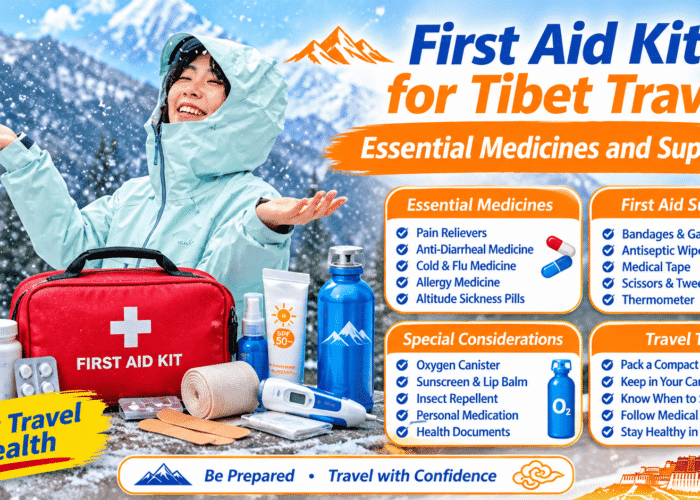
- Carry personal medicines and a suitable first-aid kit.
- Consider a reliable pulse oximeter as a monitoring aid, not a diagnostic device.
- Understand how to request medical help and arrange transport from remote areas.
- Tell your guide promptly if you feel unwell.
For Everest Base Camp and Mount Kailash journeys, flexibility is especially important. A traveler who becomes unwell should not feel pressured to continue because the group has a fixed schedule.
A responsible itinerary should put health before sightseeing targets.
Frequently Asked Questions
Is altitude sickness common in Tibet?
Altitude illness is a recognized risk for visitors who arrive without sufficient acclimatization. Lhasa is already around 3,700 meters above sea level, and many Tibet tours travel to higher destinations. Individual risk varies.
Can a healthy person get altitude sickness?
Yes. Healthy and physically fit people can develop altitude sickness. Fitness does not reliably protect against the effects of rapid ascent or high sleeping altitude.
How many days should I spend in Lhasa before going to Everest Base Camp?
There is no single number that guarantees safety for everyone. The appropriate time depends on your starting altitude, recent acclimatization, medical history, symptoms and planned overnight elevations. Allow sufficient time for acclimatization and do not ascend if you develop AMS symptoms.
Does drinking more water prevent altitude sickness?
No. Drinking enough fluid helps prevent dehydration, but excessive water intake does not prevent AMS and can be harmful. Drink according to thirst, activity and conditions.
Can oxygen cans prevent altitude sickness?
Small handheld oxygen cans provide only a brief supply. They should not be relied upon to prevent AMS or treat serious altitude illness. Sustained oxygen therapy requires an adequate and appropriate supply.
Can I continue my Tibet tour if I have a headache?
A headache after ascent may be an early symptom of AMS, especially when accompanied by nausea, dizziness or fatigue. Stop ascending and assess the situation. Seek medical advice if symptoms persist or worsen. Do not continue to a higher sleeping altitude while symptomatic.
Is altitude sickness dangerous?
Mild AMS often improves with rest at the same altitude or descent. HAPE and HACE are life-threatening emergencies. Recognizing warning signs and arranging prompt descent and medical assistance are essential.
Final Advice
Tibet’s high-altitude landscapes are extraordinary, but a safe journey requires more than a good itinerary and suitable equipment. Travelers need time to acclimatize, awareness of altitude illness symptoms and the willingness to change plans when necessary.
The most important rule is simple: never sacrifice your health to keep a travel schedule. Stop ascending when AMS symptoms develop, and seek urgent help and descent if serious warning signs appear.
Medical Disclaimer
This article provides general educational information for travelers. It does not replace professional medical advice, diagnosis or treatment. Altitude illness can become life-threatening. People with relevant medical conditions or a history of serious altitude illness should seek individualized advice before traveling. Suspected HAPE or HACE requires urgent medical assessment, oxygen when available, and prompt descent or evacuation.