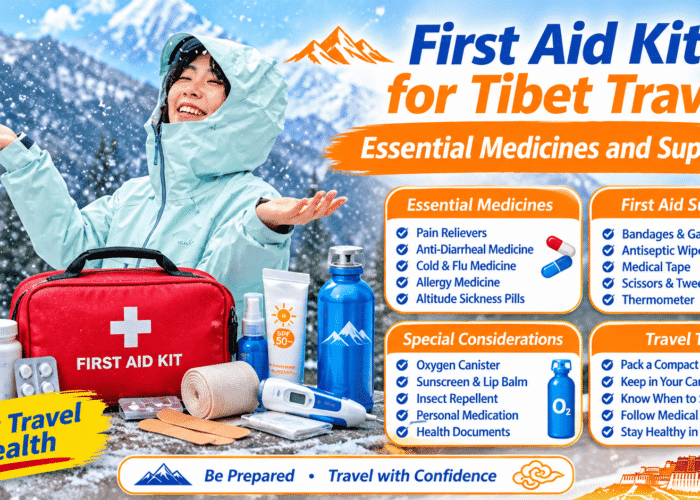

Travelers preparing for Tibet sometimes ask whether using supplemental oxygen will prevent the body from adapting to high altitude. The concern is understandable. Acclimatization depends partly on the body’s response to low oxygen availability. If supplemental oxygen increases the oxygen available for breathing, could it reduce the stimulus needed for adaptation?
The available human research does not support the idea that brief supplemental oxygen use simply reverses established ventilatory acclimatization. A small study of nighttime oxygen enrichment also found no statistically significant differences in several short-term acclimatization measurements. However, the evidence is limited. Different oxygen treatments, exposure durations and research populations cannot be treated as equivalent.
For travelers, the practical message is straightforward: use oxygen when medically indicated, but do not rely on it instead of gradual ascent and appropriate acclimatization.
What Is High-Altitude Acclimatization?
Acclimatization is the process by which the body adjusts to reduced oxygen availability at high altitude. As elevation increases, atmospheric pressure falls. Although oxygen continues to make up approximately 20.9% of the atmosphere, its partial pressure decreases. This makes it harder for oxygen to move from the lungs into the bloodstream.
The body responds through several physiological changes.
Increased breathing
One of the earliest responses is increased ventilation. The body breathes faster and deeper to bring more oxygen into the lungs.
Kidney compensation
Increased breathing removes more carbon dioxide, initially making the blood more alkaline. Over the following days, the kidneys excrete more bicarbonate, helping compensate for this respiratory alkalosis.
Changes in circulation and blood
Other adjustments occur over time, including changes in plasma volume, red blood cell production and oxygen transport.
The first several days are especially important for early acclimatization, although some physiological adaptations continue for weeks or longer.
Why Might Oxygen Affect Acclimatization?
The body increases ventilation partly because it senses reduced oxygen availability. Supplemental oxygen increases the oxygen concentration of the gas being inhaled. This can improve blood oxygenation and reduce the immediate hypoxic stimulus while oxygen is being used.
This raises two different questions:
- Does a short period of oxygen use reverse adaptations that have already developed?
- Does prolonged reduction of hypoxic exposure change the body’s longer-term adaptation?
These questions are not interchangeable. A few minutes of oxygen through a mask is very different from sleeping for weeks in an environment designed to simulate a lower altitude.
What Does Human Research Show?
The available research includes studies using different oxygen concentrations, exposure periods and populations.
Study 1: Brief oxygen exposure at approximately 4,300 metres
One study involved 15 men exposed to high altitude. Researchers administered 100% oxygen for 10 minutes on study days 3 and 12. After oxygen administration, participants returned to breathing the surrounding high-altitude air.
The researchers did not find that the brief oxygen exposure substantially eliminated the established increase in ventilation associated with acclimatization. This suggests that a short period of supplemental oxygen does not simply reset the body’s ventilatory adaptation.
However, the study examined specific breathing responses. It did not establish that every component of acclimatization remains unchanged after every form of oxygen treatment.
Study 2: Seven nights of oxygen enrichment at approximately 2,800 metres
A study published in 2025 examined 22 men who normally lived at low altitude and then spent seven days at approximately 2,800 metres.
During the study, participants completed five hikes, with the route reaching approximately 4,200 metres. One group slept for around nine hours each night in an oxygen-enriched tent with an average oxygen concentration of 32.3%. The comparison group slept in ordinary high-altitude conditions.
The researchers reported:
- Average nighttime SpO₂ of approximately 96% in the oxygen-enrichment group.
- Average nighttime SpO₂ of approximately 91% in the control group.
- Longer sleep duration in the oxygen-enrichment group.
By the seventh day, however, there were no statistically significant between-group differences in the measured short-term acclimatization indicators. These included resting and exercise oxygen saturation, heart rate, ventilation and muscle oxygenation. The results suggest that this particular nighttime oxygen-enrichment arrangement improved nighttime oxygenation and sleep without producing significant differences in the short-term acclimatization measurements examined.
The study was small and involved only men. Its findings should not be generalized to every traveler, oxygen device or duration of treatment.
Study 3: Twelve weeks of reduced nighttime hypoxia among Lhasa residents
A different study examined people who had already lived at high altitude in Lhasa for an extended period. Participants spent nighttime periods in a mildly pressurized environment designed to simulate lower-altitude atmospheric pressure.
The intervention lasted 12 weeks. It was not equivalent to receiving bottled oxygen through a nasal cannula or concentrator.
The researchers reported changes in several longer-term physiological measurements, including improved nighttime oxygen saturation, reduced hypoxic exposure and changes in some blood pressure and hemoglobin-related measures.
This study examined a sustained environmental intervention in long-term high-altitude residents. It cannot be used to conclude that occasional oxygen use during a short Tibet holiday delays acclimatization.
4. Does Using Oxygen Prevent the Body from Acclimatizing?
Based on the limited human evidence described above, there is no good reason for travelers to avoid medically indicated oxygen because they fear that a brief period of use will erase their acclimatization.
However, the evidence does not prove that every oxygen exposure has no effect on every physiological adaptation.
The important distinctions are:
| Type of oxygen exposure | What can be concluded |
|---|---|
| Brief supplemental oxygen | Limited research has not shown that it simply reverses established ventilatory acclimatization |
| Several nights of oxygen enrichment | One small study found improved nighttime oxygenation without significant differences in measured short-term acclimatization |
| Long-term reduction of nighttime hypoxia | A separate study in long-term Lhasa residents reported changes in some physiological measures |
| Continuous oxygen use over extended periods | Effects depend on the medical situation and exposure; findings from the small studies above cannot establish a universal outcome |
Oxygen concentration, oxygen flow rate, exposure duration and environmental pressure are different measurements. A room containing enriched oxygen cannot be directly compared with a nasal cannula delivering a particular flow rate.
5. Should You Avoid Oxygen to Encourage Acclimatization?
No. Travelers should not refuse medically necessary oxygen simply to preserve the body’s adaptation process.
If someone develops concerning altitude symptoms, medical treatment takes priority over theoretical concerns about acclimatization.
For example:
- A person with mild AMS should stop ascending and be assessed.
- Worsening symptoms require medical advice and may require descent.
- Suspected HAPE or HACE requires urgent medical assistance, oxygen when available, and descent or evacuation.
Oxygen may improve oxygenation and temporarily relieve symptoms, but it does not automatically resolve the underlying illness.
6. Does Oxygen Allow You to Ascend Faster?
No. Supplemental oxygen should not be used as permission to follow an unsafe ascent schedule.
A traveler may feel better while receiving oxygen, but symptoms can return after oxygen is stopped or when activity increases.
The body still needs time to adapt to the elevation. A safe itinerary should continue to consider sleeping altitude, ascent rate, previous altitude illness and the availability of lower-altitude evacuation routes.
For travelers visiting Lhasa, Everest Base Camp or Mount Kailash, a gradual itinerary remains an important part of risk reduction.
7. Practical Advice for Travelers to Tibet
Follow these principles when considering supplemental oxygen:
Use oxygen for a clear reason. It may be appropriate for a medical condition, prescribed oxygen requirement or altitude-related emergency.
Do not use oxygen to push through symptoms. If you develop a worsening headache, nausea, breathlessness or unusual weakness, stop ascending and seek advice.
Do not confuse improved SpO₂ with recovery. A higher pulse oximeter reading after oxygen does not prove that altitude illness has resolved.
Keep a descent plan. For remote journeys, know how to obtain transport and reach lower elevation or medical care.
Continue gradual acclimatization. Oxygen does not replace sensible sleeping-altitude planning and adequate rest.
Frequently Asked Questions
Does supplemental oxygen slow acclimatization?
Limited human studies have not demonstrated that brief oxygen use reverses established ventilatory acclimatization. The effects of prolonged oxygen enrichment and other forms of reduced hypoxic exposure are more complex and should not be generalized from short-term studies.
Will oxygen make my body stop adapting to altitude?
There is no evidence that a brief period of medically indicated oxygen simply switches off the body’s acclimatization process. However, oxygen exposure and long-term adaptation are different research questions.
Can I use oxygen while sleeping in Tibet?
Nighttime oxygen may be appropriate in selected circumstances, but it is not necessary for every traveler. People with medical conditions or sleep-related breathing problems should seek individual medical advice.
Does oxygen help you acclimatize faster?
Oxygen can improve oxygenation while it is being used, but it does not replace the body’s natural acclimatization process. It should not be used as a shortcut to a faster ascent.
Should I stop using oxygen once I feel better?
Do not change prescribed oxygen use without medical advice. If oxygen was being used because of suspected altitude illness, feeling better is not proof that it is safe to ascend again.
Conclusion
Current human research does not support the simple claim that brief supplemental oxygen use reverses established altitude acclimatization. A small seven-day study also found no significant differences in the measured short-term acclimatization indicators between participants sleeping in ordinary conditions and those using nighttime oxygen enrichment.
Longer-term interventions can produce different physiological responses, but they should not be confused with short-term oxygen use by tourists.
For Tibet travelers, the priority is to acclimatize gradually, use oxygen when medically indicated, recognize altitude illness early and arrange descent when serious symptoms develop.
Medical Disclaimer: This article provides general educational information and does not replace professional medical advice. Oxygen use should be based on medical needs and appropriate equipment. Suspected HAPE, HACE or severe altitude illness requires urgent medical assistance and descent or evacuation when possible.
References
- Luks AM, Beidleman BA, Freer L, et al. Wilderness Medical Society Clinical Practice Guidelines for the Prevention, Diagnosis, and Treatment of Acute Altitude Illness: 2024 Update. Wilderness & Environmental Medicine. 2024. https://doi.org/10.1016/j.wem.2023.05.013
- CDC Yellow Book 2026. High-Altitude Travel and Altitude Illness.
- Rosales AM, Hailes WS, Collins CW, et al. Impact of nocturnal oxygen enrichment on high-altitude acclimatization. American Journal of Physiology-Regulatory, Integrative and Comparative Physiology. 2025.
- Luobu Gesang, Yangzong Suona, Zhuoga Danzeng, et al. Equivalent low altitude building improves physiological adaptation at high altitude. iScience. 2026;29(6):115881. https://doi.org/10.1016/j.isci.2026.115881