Visiting the north side of Mount Everest is one of the most memorable experiences of traveling in Tibet. The journey offers dramatic views of the Himalayas, the vast Tibetan Plateau and the north face of the world’s highest mountain.
But the altitude is a serious challenge. The Tibetan tourist area around Rongbuk Monastery and the Everest Base Camp visitor zone is approximately 5,000–5,200 meters above sea level, depending on the exact location. At this elevation, the air pressure is much lower than at sea level, and the body receives substantially less oxygen with each breath.
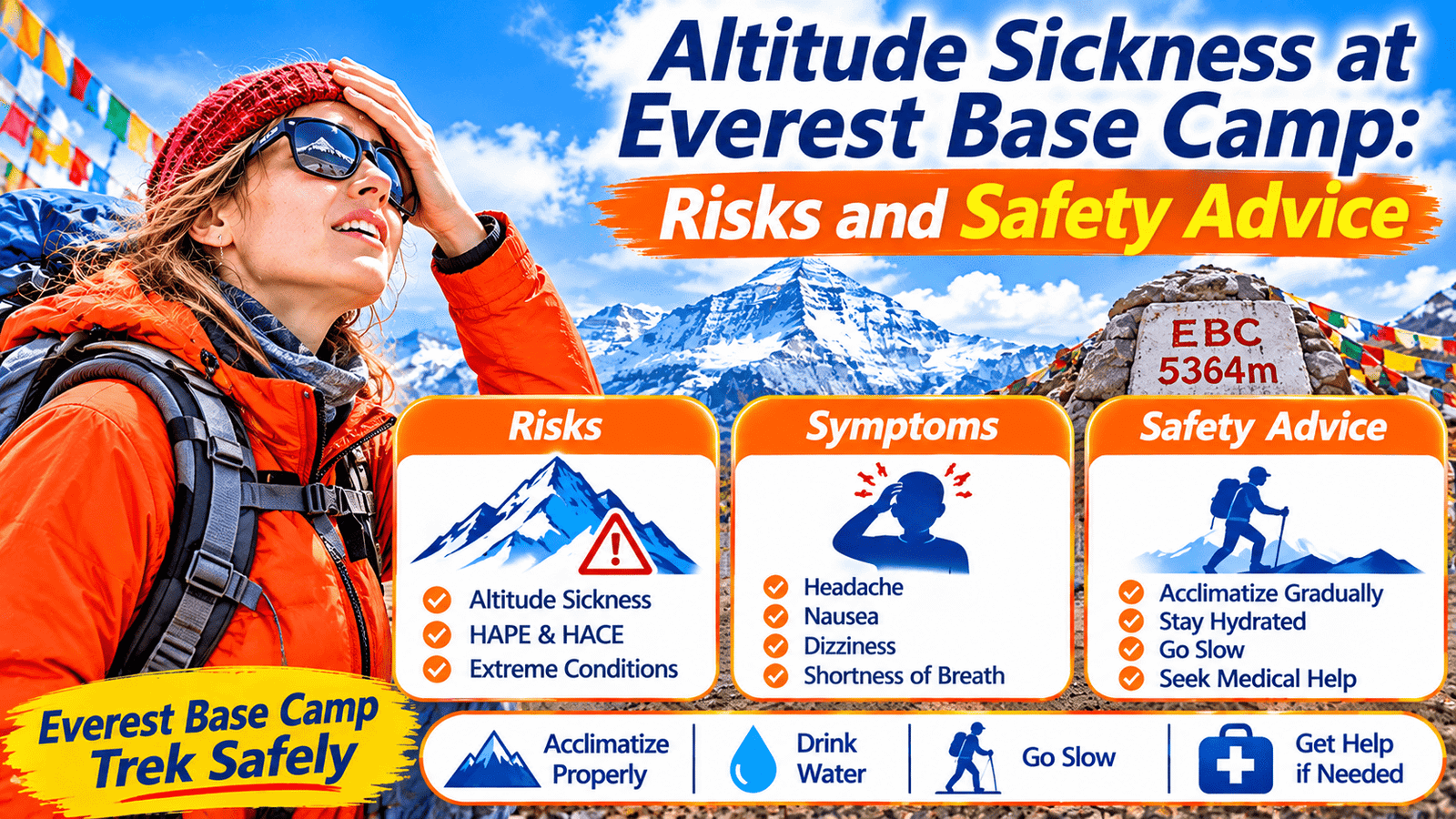
Travelers may experience headache, nausea, dizziness, fatigue and breathlessness during physical activity. More serious conditions, including high-altitude pulmonary edema (HAPE) and high-altitude cerebral edema (HACE), can also develop.
A safe Everest trip therefore requires more than arranging transport and permits. It requires a realistic itinerary, proper acclimatization, symptom awareness and a plan for responding to medical emergencies.
How high is Everest Base Camp on the Tibet side?
The Tibet-side tourist area is generally around 5,000 meters or higher. The exact elevation depends on where visitors are staying or viewing Mount Everest.
The traditional climbers’ base camp and the visitor area are not necessarily the same place. Tourists commonly visit the Rongbuk Monastery area and the designated visitor zone rather than the restricted mountaineering camp.
Approximate elevations along a common Lhasa-to-Everest route include:
| Destination | Approximate elevation |
|---|---|
| Lhasa | 3,650–3,700 m |
| Shigatse | Around 3,850 m |
| Tingri | Around 4,300 m |
| Rongbuk Monastery area | Around 5,000 m |
| Everest visitor area | Approximately 5,000–5,200 m |
These are planning figures, not exact survey measurements. The precise altitude of a hotel, tent area or viewing point may differ.
The most important detail is that visitors are moving from an already high city to an elevation approaching or exceeding 5,000 meters. This is a substantial additional physiological challenge.
Why is altitude sickness a major risk at Everest Base Camp?
Altitude sickness develops because the lower atmospheric pressure at high elevation reduces the amount of oxygen available with each breath.
At approximately 5,000 meters, the body must work harder to maintain oxygen supply. Breathing becomes faster, physical performance declines and sleep can become disturbed.
The risk is influenced by:
- How quickly you ascend from lower elevations
- Your sleeping altitude on each night
- Previous exposure to high altitude
- Your personal history of altitude illness
- Individual susceptibility
- Physical exertion, cold and other stresses during the trip
Being fit does not prevent altitude sickness. A person who regularly exercises may have better endurance than another traveler, but fitness does not replace acclimatization.
The CDC notes that altitude illness can remain a concern on Everest-region itineraries even when travelers follow standard ascent schedules. Extra acclimatization time can improve comfort and safety.
Symptoms of altitude sickness at Everest Base Camp
Acute Mountain Sickness (AMS)
AMS is the most common form of altitude illness. Symptoms often begin within hours of reaching a higher elevation, particularly after the first night.
Possible symptoms include:
- Headache
- Nausea or loss of appetite
- Dizziness
- Unusual tiredness
- Reduced ability to walk or exercise
- Difficulty sleeping
A headache after ascent accompanied by nausea, dizziness or fatigue should be taken seriously. Do not dismiss it as ordinary tiredness from a long drive.
High-Altitude Pulmonary Edema (HAPE)
HAPE occurs when fluid accumulates in the lungs and interferes with oxygen exchange. It can become life-threatening.
Warning signs include:
- Shortness of breath while resting
- A cough that becomes progressively worse
- Chest tightness or congestion
- Marked weakness
- Difficulty walking short distances
- Breathlessness that is much worse than expected
HAPE can develop without the usual symptoms of AMS. A person does not need to have a severe headache before developing a serious lung problem.
High-Altitude Cerebral Edema (HACE)
HACE is a dangerous condition involving swelling and dysfunction of the brain.
Warning signs include:
- Confusion or unusual behaviour
- Difficulty walking in a straight line
- Loss of coordination
- Severe drowsiness
- Reduced consciousness
Suspected HACE requires urgent descent and emergency medical treatment. Do not wait for a formal scoring system or assume that the person simply needs to sleep.
How to acclimatize before visiting Everest Base Camp
The safest approach is to build acclimatization into the journey from the beginning.
1. Spend time in Lhasa before traveling higher
Lhasa is approximately 3,650–3,700 meters above sea level. Spending several nights there gives the body time to begin adapting before continuing toward Shigatse and Everest.
The first days should be relatively gentle. Avoid strenuous exercise, heavy alcohol consumption and a packed sightseeing schedule.
2. Use staged overnight stops
A common route passes through Shigatse and Tingri before reaching the Everest region.
The important issue is not simply how many kilometres you travel each day. It is the elevation at which you sleep.
For travelers sleeping above 3,000 meters, widely used guidance recommends limiting increases in sleeping altitude to approximately 500 meters per day where practical and adding an acclimatization night for every additional 1,000 meters of sleeping-altitude gain.
This is a general planning guideline, not a guarantee. Some travelers need a slower ascent.
3. Avoid compressing the itinerary
A rushed itinerary may move travelers from Lhasa to the Everest region too quickly. Long driving days can make it difficult to recognize symptoms because visitors may mistake headache and fatigue for ordinary travel exhaustion.
Allow enough time for gradual ascent, rest and possible itinerary changes.
4. Do not ascend while symptomatic
If you develop symptoms consistent with AMS, do not continue to a higher sleeping altitude.
Rest at the same elevation and seek medical advice. If symptoms worsen despite rest or treatment, descend.
Never allow a fixed tour schedule, group pressure or the desire to see the sunset to override a serious health warning.
What should you do if you feel sick at Everest Base Camp?
If you develop mild symptoms, stop exertion and inform your guide or travel companion. Do not continue walking around the visitor area or attempt additional sightseeing.
A healthcare professional should assess symptoms where possible. Depending on the condition, treatment may include rest, medication and supplemental oxygen.
If symptoms worsen, arrange descent to a lower elevation. Descent is one of the most important treatments for altitude illness.
When is descent urgent?
Arrange emergency descent and medical assistance if you experience:
- Breathlessness while resting
- A worsening cough with significant weakness
- Confusion or unusual behaviour
- Loss of coordination or inability to walk normally
- Severe or worsening symptoms despite rest
Give supplemental oxygen if available, but do not delay descent while waiting for an oxygen supply or expecting oxygen alone to solve the problem.
A person with suspected HAPE or HACE should not be left alone or asked to walk down without assistance. Use available transport and emergency support.
Does oxygen help at Everest Base Camp?
Supplemental oxygen can improve blood oxygenation and relieve symptoms while it is being administered. It may be particularly important in an emergency when a person cannot immediately descend.
However, oxygen is not a substitute for a safe ascent plan. It does not make it safe to ignore worsening symptoms or continue climbing to a higher sleeping altitude.
Portable oxygen cans generally contain too little oxygen for sustained treatment of serious altitude illness. Medical oxygen equipment must have an adequate supply and suitable delivery system.
For remote travel, discuss oxygen arrangements with your tour operator before departure. Do not assume that every hotel, vehicle or stop on the Everest route has a reliable oxygen supply.
Why the Everest overnight stay needs special consideration
One of the most important decisions in planning an Everest trip is whether to sleep near the visitor area or return to a lower elevation.
Spending the night near Everest offers the chance to experience the mountain at sunset, under the stars and at sunrise. However, sleeping at around 5,000 meters or higher places a substantial demand on the body.
A traveler who is comfortable during a short daytime visit may feel worse after spending the night at that elevation.
If symptoms develop, sleeping lower is generally safer than remaining at a higher elevation. Travelers should discuss overnight arrangements with their guide and should never feel pressured to stay overnight if they are unwell.
Other health challenges at Everest Base Camp
Altitude is the main concern, but the environment creates additional challenges.
Cold and wind
Temperatures can fall sharply, especially at night and during bad weather. Wear layers, protect your hands and face, and keep spare warm clothing accessible.
Strong ultraviolet radiation
UV exposure is intense at high altitude. Use high-SPF broad-spectrum sunscreen, sunglasses with appropriate UV protection and a hat. Snow and bright rock can reflect sunlight and increase exposure.
Dry air
The air is often very dry, which can cause dry lips, irritated nasal passages and nosebleeds. Drink according to thirst, use lip balm and consider a saline nasal spray.
Physical exertion
Even short walks may feel difficult at 5,000 meters. Walk slowly, take breaks and avoid unnecessary uphill exertion.
Who should take extra precautions?
Travelers with a history of severe altitude illness, heart disease, lung disease, pre-existing low oxygen levels or sleep-related breathing disorders should consult a doctor familiar with high-altitude medicine before the trip.
Older travelers should consider their general health, mobility and ability to cope with cold, long drives and limited medical facilities.
Travelers should also discuss their medication plan with a qualified clinician. Acetazolamide may be appropriate for some people to help prevent AMS, but it is not suitable for everyone. Dexamethasone and other medicines have specific medical uses and should not be treated as general travel remedies.
Practical safety checklist for a Tibet Everest Base Camp tour
Before departure:
- Arrange a realistic itinerary with time for acclimatization.
- Discuss previous altitude illness and medical conditions with a doctor.
- Ask how emergency descent would be arranged.
- Confirm what oxygen equipment is available and how it is supplied.
- Carry prescribed personal medication.
- Consider travel insurance that explicitly covers high-altitude travel and medical evacuation.
During the journey:
- Keep the first days in Lhasa gentle.
- Avoid rapid increases in sleeping altitude where possible.
- Tell your guide about headache, nausea, dizziness or unusual fatigue.
- Do not ascend to sleep higher while experiencing altitude sickness symptoms.
- Avoid strenuous activity when first reaching a new elevation.
- Descend urgently if serious symptoms develop.
Frequently asked questions
What is the altitude of Everest Base Camp in Tibet?
The Tibetan tourist area around Rongbuk and the visitor zone is approximately 5,000–5,200 meters above sea level, depending on the exact location.
Is altitude sickness common at Tibet Everest Base Camp?
Altitude illness is a significant risk because visitors reach a very high elevation. The likelihood varies with ascent speed, sleeping altitude, previous acclimatization and individual susceptibility.
How many days should I spend in Lhasa before Everest Base Camp?
Many itineraries include several nights in Lhasa before continuing west. The correct schedule depends on the full route and the elevations at which you sleep. A few days in Lhasa do not guarantee that you are ready for 5,000 meters.
Can I visit Everest Base Camp without sleeping there?
Some itineraries visit the Everest area during the day and return to a lower sleeping elevation. This can reduce the overnight altitude burden, although the daytime visit still involves exposure to very high altitude.
Does oxygen prevent altitude sickness at Everest Base Camp?
Oxygen can relieve hypoxia while it is being used, but it does not replace acclimatization or make a rapid ascent safe.
Should I continue to Everest if I have a headache?
Not if the headache may be part of altitude sickness. Stop ascending, assess your symptoms and seek medical advice. If symptoms worsen or serious warning signs appear, descend urgently.
Final advice
Everest Base Camp is an extraordinary destination, but reaching it safely requires patience. A good tour plan allows time for acclimatization, avoids unnecessary increases in sleeping altitude and gives travelers the freedom to stop or descend when symptoms appear.
The most important rule is simple: never sacrifice your health to complete an itinerary or reach a viewpoint. A mountain visit can be postponed; a serious altitude emergency cannot be treated casually.
Medical disclaimer: This article provides general travel-health information and is not a substitute for professional medical advice, diagnosis or treatment. Consult a healthcare professional familiar with high-altitude medicine before traveling, especially if you have a history of altitude illness or an underlying medical condition. Suspected HAPE or HACE requires urgent medical attention and descent.
Suggested internal links
- Altitude Sickness in Tibet: Complete Guide for Travelers
- High-Altitude Pulmonary Edema (HAPE): Symptoms and Emergency Treatment
- High-Altitude Cerebral Edema (HACE): Warning Signs and Emergency Treatment
- Oxygen at High Altitude: Benefits, Flow Rates and Safety
- Tibet Altitude Guide: Elevations of Major Tourist Destinations
- How to Prevent Altitude Sickness: Acclimatization and Travel Planning
References
- CDC Yellow Book 2026, High-Altitude Travel and Altitude Illness.
- CDC Travelers’ Health, Travel to High Altitudes.
- Wilderness Medical Society, Clinical Practice Guidelines for the Prevention and Treatment of Acute Altitude Illness: 2024 Update.