Tibet is famous for its spectacular mountain roads, high passes, lakes and remote landscapes. However, some journeys involve several hours of driving along winding roads with repeated bends, changes in elevation and uneven surfaces.
For travelers who are sensitive to vehicle movement, these journeys can cause motion sickness. Symptoms may include nausea, dizziness, sweating, headache and vomiting. Even people who rarely experience car sickness may feel uncomfortable during a long mountain drive.
The good news is that simple preparations can reduce the risk and make the journey more comfortable.
What is motion sickness?
Motion sickness happens when the brain receives conflicting information about movement from the eyes, inner ears and other sensory systems. For example, when you sit inside a moving vehicle and look at a phone, your eyes focus on a stationary screen while your inner ear senses movement and turns. This difference can trigger nausea and dizziness.
Motion sickness can occur in cars, buses, trains, boats and aircraft. It is more likely during journeys involving repeated turns, acceleration, braking and changes in direction.
Why can Tibet mountain roads trigger motion sickness?
Several features of Tibet travel may contribute.
1. Winding mountain roads
Some routes include many bends and switchbacks. Repeated changes in direction can make passengers feel nauseated, especially when they cannot see the road ahead.
2. Long driving distances
Travelers may spend several hours in a vehicle between destinations. Prolonged exposure to movement can increase discomfort.
3. Looking down at phones or reading
Reading, watching videos or looking at a screen can increase sensory conflict. This is a common trigger during car journeys.
4. Poor sleep and fatigue
Travel fatigue can make a journey harder to tolerate. A traveler who is already tired may find motion-related symptoms more uncomfortable.
5. Anxiety and anticipation
Worrying about becoming sick can increase discomfort for some people. Sitting in a suitable position and preparing before departure can help.
Common symptoms of motion sickness
Symptoms vary from person to person and may include:
- Nausea
- Dizziness
- Cold sweating
- Pale skin
- Excessive yawning
- Increased saliva
- Headache
- Loss of appetite
- Vomiting
- General discomfort
Symptoms may begin during the drive and improve after the vehicle stops.
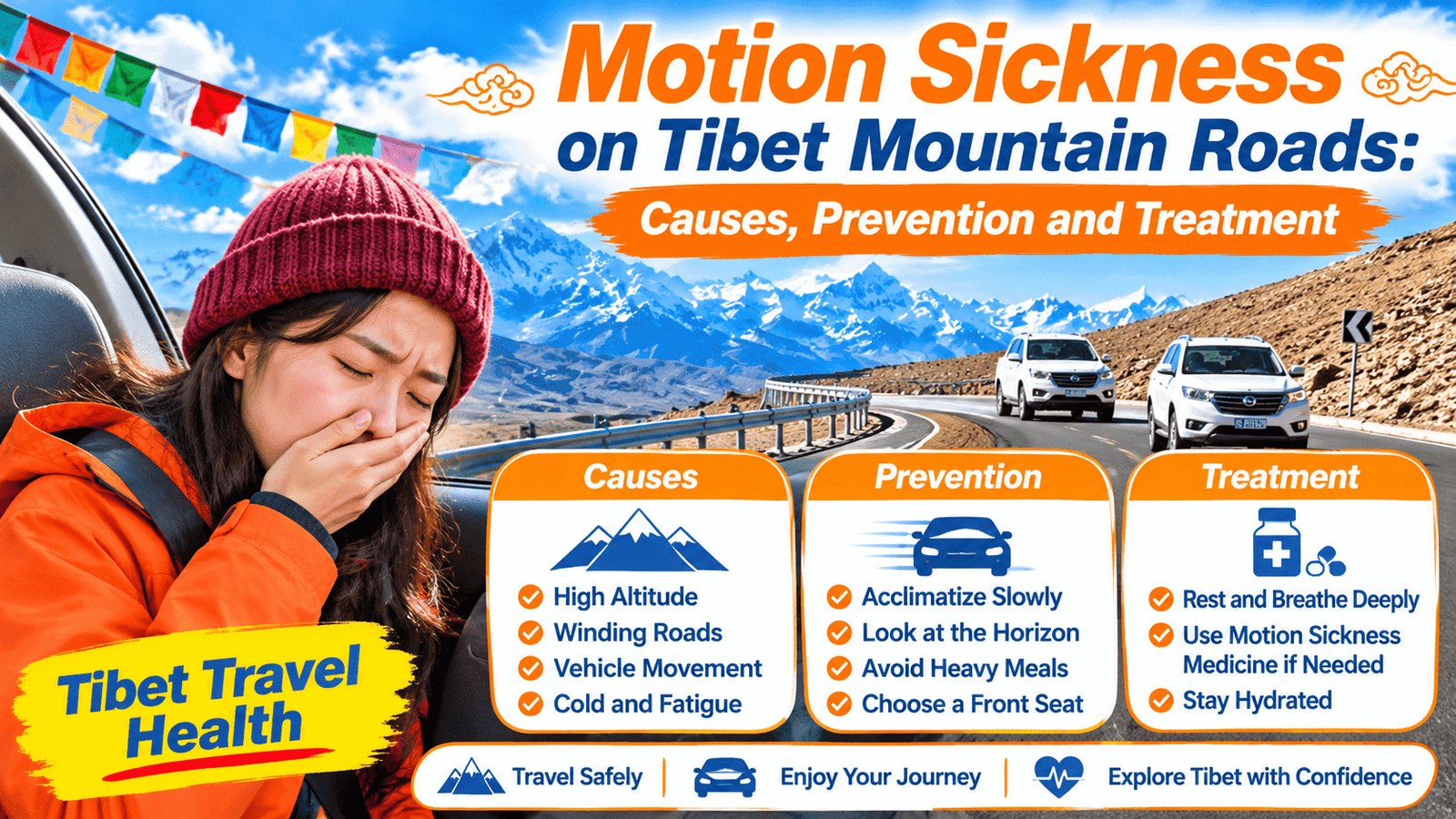
How to prevent motion sickness on a Tibet tour
1. Choose the right seat
- If possible, sit in the front passenger seat or in a position where you can see the road ahead.
- Looking toward the horizon helps the eyes receive movement information that is more consistent with the inner ear.
- If you are traveling by bus, choose a seat near the front when available.
2. Look outside instead of at your phone
- Avoid reading, playing games or watching videos while the vehicle is moving.
- Look through the front window or toward a distant point on the horizon. If looking outside makes you feel worse, close your eyes and rest.
3. Eat lightly before departure
- Avoid starting a long journey with a very heavy meal. However, traveling on a completely empty stomach may also make some people feel uncomfortable.
- A small, familiar meal or snack may be easier to tolerate.
4. Drink water regularly
- Maintain normal hydration. Take small sips of water during the journey rather than drinking a large amount at once.
- Limit alcohol, and avoid excessive caffeine if it makes you feel unwell.
5. Keep the vehicle comfortable
- Fresh air may help. If possible, keep the vehicle well ventilated and avoid strong food, perfume or fuel smells.
- Ask the driver to maintain smooth acceleration and braking when road conditions allow.
6. Take breaks
- On longer journeys, stop safely when possible. Get out of the vehicle, walk gently and allow yourself time to recover.
- Do not ask the driver to stop in an unsafe place on a mountain road.
7. Rest before a long drive
- A good night’s sleep may help you tolerate travel better. Avoid beginning a long mountain journey when severely exhausted.
What can you do if motion sickness starts?
If symptoms begin:
- Stop reading or looking at your phone.
- Look toward the horizon if possible.
- Keep your head relatively still.
- Open a window or improve ventilation if safe.
- Close your eyes and rest if looking outside makes symptoms worse.
- Take small sips of water.
- Ask for a safe stop if symptoms become severe.
If you vomit, allow time to recover before continuing. Repeated vomiting can cause dehydration and may make the rest of the journey difficult.
Can medicine help prevent motion sickness?
Some medicines can help prevent or reduce motion sickness. Examples include certain antihistamines and other prescription or non-prescription treatments. However, these medicines are not suitable for everyone. Some can cause drowsiness, blurred vision, dry mouth or impaired coordination.
Before using a motion-sickness medicine:
- Ask a doctor or pharmacist which option is appropriate.
- Check whether it interacts with your regular medicines.
- Follow the product instructions.
- Do not drive after taking a medicine that causes drowsiness.
- Avoid combining sedating medicines with alcohol.
Some motion-sickness medicines work best when taken before the journey begins. Ask a healthcare professional about timing rather than waiting until symptoms become severe. People with certain medical conditions, older adults, pregnant travelers and children may need specific advice.
Motion sickness or altitude sickness: How can you tell the difference?
This distinction is particularly important in Tibet because travelers may experience both conditions during the same journey.
| Feature | Motion sickness | Acute mountain sickness (AMS) |
|---|---|---|
| Main trigger | Vehicle movement | Ascent to high altitude |
| Typical symptoms | Nausea, dizziness, sweating, vomiting | Headache, nausea, dizziness, fatigue |
| Timing | During vehicle movement | Usually after arriving or ascending to altitude |
| Improvement | Often improves when movement stops | May persist after the vehicle stops |
| Main response | Reduce movement-related triggers | Stop further ascent and assess symptoms |
The symptoms overlap, so timing alone cannot establish the diagnosis. A headache with nausea after ascending to altitude should not automatically be blamed on car sickness. If symptoms are persistent, worsening or accompanied by unusual weakness, difficulty walking, confusion or breathlessness at rest, seek medical assessment.
Tibet routes where motion sickness may be a concern
Some journeys involve long drives and repeated bends, although individual experiences vary.
- Lhasa to Everest Base Camp
- Shigatse to Everest Base Camp
- Lhasa to Namtso Lake
- Saga to Darchen for Mount Kailash
- Mountain-pass routes between remote western Tibet destinations
Travelers who are sensitive to motion sickness should prepare before leaving rather than waiting until symptoms begin.
Frequently asked questions
Why do I feel sick on Tibet mountain roads?
Repeated turns, changes in direction and long periods inside a moving vehicle can trigger motion sickness.
Should I sit in the front seat?
For many travelers, sitting near the front and looking toward the road can help. It is not a guarantee, and the safest available seat should always take priority.
Should I eat before a long Tibet drive?
A light, familiar meal may be more comfortable than a heavy meal or traveling on an empty stomach.
Can I use my phone during the drive?
If you are prone to motion sickness, avoid reading or watching videos while the vehicle is moving. Look outside or rest your eyes instead.
Does motion sickness mean I have altitude sickness?
No. They are different conditions, although their symptoms can overlap. Persistent headache, nausea or dizziness after ascending to altitude should be assessed carefully.
When should I seek medical help?
Seek medical advice if vomiting is repeated, you cannot keep fluids down, symptoms persist after the journey or you develop severe headache, confusion, poor coordination or breathlessness.
Final advice
Motion sickness can make long mountain drives uncomfortable, but preparation can help. Choose a seat with a clear view, avoid reading or using your phone, eat lightly, drink normally and take safe breaks.
If you are prone to motion sickness, speak with a healthcare professional before departure about suitable medication. During a Tibet tour, remember that nausea and headache may also be related to altitude illness, so persistent or worsening symptoms deserve attention.
Medical disclaimer: This article provides general health information and is not a substitute for professional medical advice. Ask a doctor or pharmacist before using motion-sickness medication, particularly if you take other medicines or have an underlying medical condition.
Suggested internal links
- Altitude Sickness in Tibet: Complete Guide for Travelers
- How Long Does Altitude Sickness Last? Recovery and When to Descend
- Hydration at High Altitude: Water, Electrolytes and Dehydration
- Tibet Travel Checklist: Essential High-Altitude Gear and Safety Tips
- Altitude Sickness at Everest Base Camp: Risks and Safety Advice
References
- CDC Travelers’ Health, Motion Sickness.
- CDC Yellow Book 2026, Motion Sickness.
- CDC Travelers’ Health, Travel to High Altitudes.