Tibet’s high-altitude environment can bring freezing temperatures, strong winds and sudden weather changes. Travelers visiting snowy mountain areas, remote viewpoints and exposed trekking routes may be at risk of cold-related injuries if their skin is not properly protected.
One of the most serious cold injuries is frostbite. It happens when skin and underlying tissues freeze. The fingers, toes, nose, ears and cheeks are particularly vulnerable. Frostbite can begin with numbness, tingling or unusual skin color. Severe cases can damage deeper tissues and may cause permanent injury.
Recognizing early symptoms and responding correctly can help reduce further damage. This guide explains frostbite prevention and first aid for people traveling in Tibet.
What is frostbite?
Frostbite is an injury caused by freezing of the skin and underlying tissues. When exposed to extreme cold, the body reduces blood flow to the hands, feet and other extremities to help protect vital organs. If the tissues become cold enough, ice crystals can form within cells and cause injury.
Frostbite can affect superficial skin layers or extend into deeper tissues. The severity depends on temperature, wind, exposure time, clothing, circulation and other individual factors. Frostbite is different from simply feeling cold. Temporary cold fingers may recover after warming, while frostbite involves actual tissue injury.
Why can frostbite happen in Tibet?
Several conditions may increase the risk during a Tibet journey.
- Very cold temperatures: Winter temperatures can fall well below freezing in many parts of the Tibetan Plateau. Mountain passes and remote high-altitude areas may be colder than towns and cities.
- Strong wind: Wind increases heat loss from exposed skin. It can make the body and uncovered areas cool more quickly.
- Long outdoor exposure: Visitors may spend extended periods outside while taking photographs, waiting at viewpoints or walking on exposed trails.
- Wet clothing and gloves: Wet socks, gloves and clothing lose some of their insulating effectiveness. Moisture can make it harder to keep the body warm.
- Inadequate protection: Thin gloves, tight footwear and uncovered ears or cheeks can increase exposure.
- Reduced circulation: People with circulation problems or certain medical conditions may be more vulnerable to cold injury.
- Some medicines and nicotine use can also affect circulation. Ask a healthcare professional about individual risks before travel.
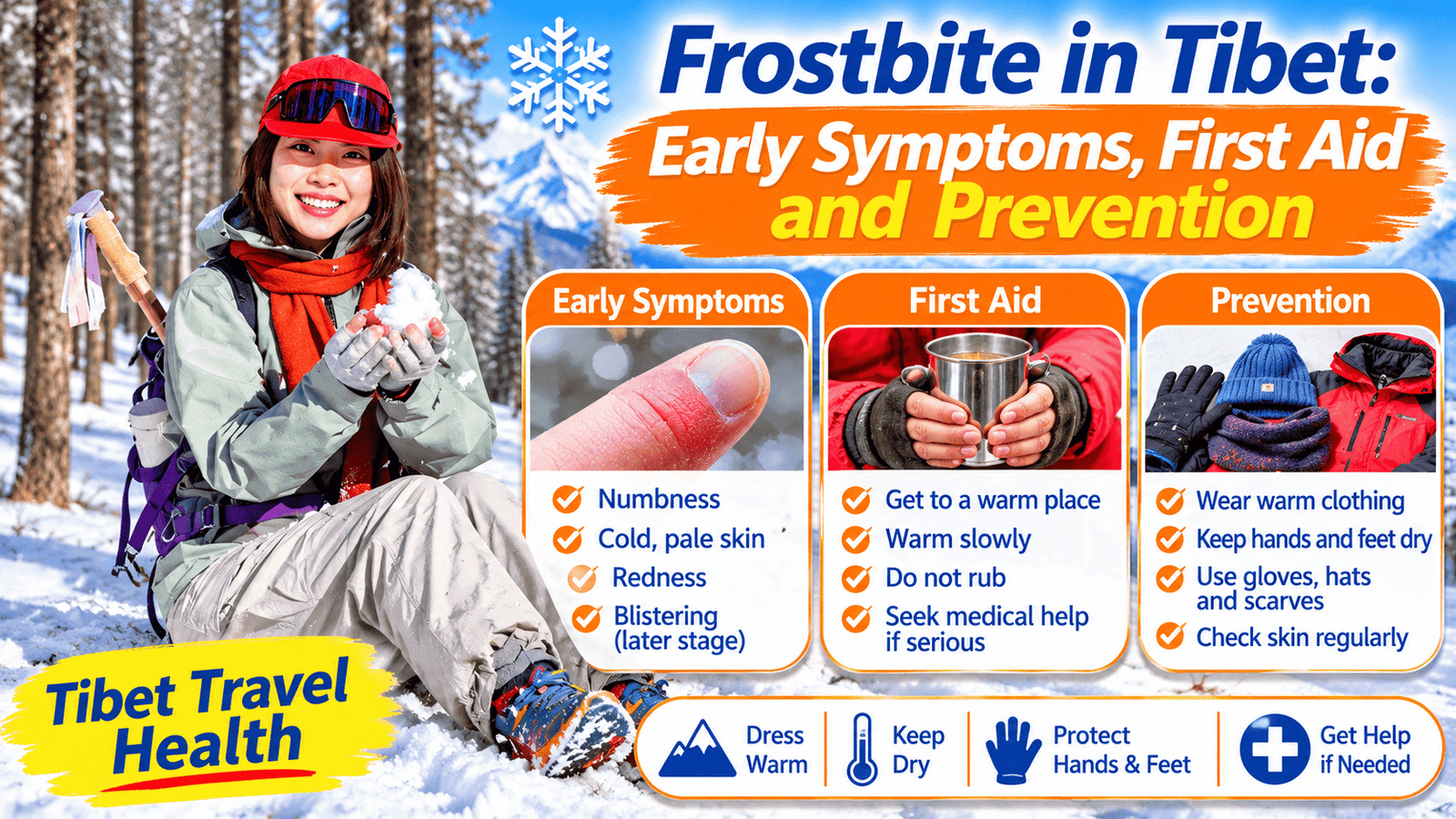
Early symptoms of frostbite
Recognizing early warning signs is important because frostbite can worsen with continued exposure.
Early signs
- Tingling or prickling
- Stinging or burning sensation
- Numbness
- Pale or unusually red skin
- Skin that feels cold and firm
- Reduced sensation in fingers or toes
A person may not realize how serious the problem is because numbness can reduce pain.
More advanced symptoms
As frostbite progresses, symptoms may include:
- White, grey, bluish or blotchy skin
- Hard or waxy skin
- Swelling
- Complete loss of sensation
- Blisters after rewarming
- Dark or black skin in severe tissue injury
Skin color changes may be harder to recognize on darker skin tones. Pay attention to temperature, texture, sensation and swelling as well as appearance.
Which body parts are most vulnerable?
The areas most commonly affected are those with exposed skin or limited protection:
- Fingers
- Toes
- Nose
- Ears
- Cheeks
- Chin
Hands and feet deserve special attention during winter trekking. Tight boots, damp socks and inadequate gloves can make it harder to maintain warmth.
What should you do if you suspect frostbite?
Frostbite requires prompt medical assessment. The first priority is to stop further cold exposure and prevent additional injury.
Step 1: Move to a warm shelter
Get indoors or into a sheltered vehicle as soon as possible. Protect the affected area from wind and further cold.
Step 2: Remove wet or restrictive items
Remove wet gloves, socks and clothing if they can be taken off without damaging the skin. Remove rings, watches and other tight items before swelling develops.
Do not pull frozen fabric away if it is stuck to the skin.
Step 3: Keep the person warm
Wrap the person in dry layers or blankets. Check for signs of hypothermia, which is a more serious whole-body cold emergency.
Step 4: Protect the affected area
Do not rub, massage or squeeze the affected skin. Protect it from pressure and further injury.
Avoid walking on frostbitten feet or toes if possible.
Step 5: Seek medical care
Arrange prompt medical assessment. Severe frostbite may require specialist hospital treatment, and early medical care can be important.
Should you warm frostbitten skin in water?
Controlled rewarming in warm water is a recognized treatment for frostbite, but it must be done carefully.
If medical help is not immediately available, warm-water rewarming may be considered when:
- The person is no longer at risk of further cold exposure.
- The affected tissue can be kept warm afterward.
- There is no risk that the tissue will freeze again.
- The person can be protected from further injury.
Medical guidance commonly uses water around 37–40°C (approximately 99–104°F). The water should feel comfortably warm, never hot. A clinician or trained responder should guide treatment whenever possible.
Do not attempt field rewarming if the area could freeze again before proper care is available. Repeated freezing and thawing can cause additional tissue damage.
What should you never do?
Some traditional warming methods can make frostbite worse.
- Do not rub the affected skin with hands, towels or snow.
- Do not place the skin directly against a fire or stove.
- Do not use a heat lamp, radiator, heating pad or hair dryer.
- Do not use hot water.
- Do not deliberately break blisters.
- Do not walk on frostbitten feet unless necessary to escape immediate danger.
Numb skin can be burned easily because the person may not feel excessive heat.
Frostbite and hypothermia can occur together
Frostbite affects specific areas of the body, while hypothermia occurs when the body’s core temperature falls dangerously low.
A person exposed to severe cold may have both conditions.
Watch for hypothermia symptoms such as:
- Persistent shivering
- Slurred speech
- Slow breathing
- Unusual tiredness
- Confusion
- Poor coordination
- Reduced consciousness
If these symptoms occur, treat the situation as an emergency and seek immediate medical help.
How to prevent frostbite during Tibet travel
Prevention is especially important when traveling far from medical facilities.
Wear suitable layers
Use several layers rather than relying on one heavy garment:
- A moisture-managing base layer
- An insulating middle layer
- A wind-resistant and weather-resistant outer layer
Keep spare dry clothing available during long outdoor journeys.
Protect your hands
Use insulated gloves or mittens. Mittens often keep fingers warmer than separate-finger gloves, although the best choice depends on the activity. Carry spare gloves in case the first pair becomes wet.
Protect your feet
Choose warm, properly fitted footwear with enough room for insulating socks. Tight boots can restrict circulation. Keep socks dry and change them if they become wet.
Cover your face and ears
Use a warm hat, scarf, neck gaiter or face covering. Protect the nose, cheeks and ears during windy conditions.
Limit time outdoors
Take breaks in a warm vehicle or building. Avoid remaining at exposed viewpoints for long periods when conditions are extremely cold or windy.
Check one another
During winter travel, companions can help identify pale skin, unusual behavior or numb fingers and toes that a person may not notice themselves.
Frostbite prevention on popular Tibet routes
- Everest Base Camp: Cold winds and low temperatures can affect exposed fingers, toes, nose and ears. Wear insulated gloves, warm socks and face protection.
- Namtso Lake: The open lakeside environment can be windy. Keep hands and face covered during outdoor stops.
- Mount Kailash: Weather can change quickly on the kora. Carry spare gloves and socks, and avoid continuing if numbness develops.
- High mountain passes: Do not stay outside unnecessarily for photographs when the wind is strong and temperatures are very low.
Frequently asked questions
Can frostbite happen at temperatures above freezing?
Frostbite is caused by freezing of tissue and is most commonly associated with below-freezing conditions. Other cold-related injuries can occur in wet and windy conditions even when the air temperature is above freezing.
What are the first signs of frostbite?
Early signs include tingling, numbness, stinging, pale skin and unusual firmness. Stop cold exposure and seek advice if frostbite is suspected.
Should I rub my fingers if they are frostbitten?
No. Rubbing can damage frozen tissue. Move to shelter, protect the area and seek medical assessment.
Can frostbite heal completely?
Mild injuries may recover, but deeper frostbite can cause permanent tissue damage, lasting pain, altered sensation or loss of tissue.
Is frostbite the same as hypothermia?
No. Frostbite is a localized freezing injury. Hypothermia is a dangerous drop in the body’s core temperature. Both can occur together.
Are hand warmers safe?
Commercial hand warmers can help prevent cold hands when used according to the instructions. Do not place them directly against numb or frostbitten skin because burns may occur without being noticed.
Should I continue trekking if my toes become numb?
Stop and assess the situation. Numbness may be an early warning sign of cold injury. Move to shelter, warm safely and seek medical advice rather than continuing to expose the feet to cold.
Final advice
Frostbite is a serious cold injury that can occur during prolonged exposure to freezing temperatures and wind. Fingers, toes, ears and the nose are especially vulnerable.
Wear suitable layers, keep gloves and socks dry, cover exposed skin and limit time outdoors in severe conditions. If frostbite is suspected, get to shelter, protect the affected area and seek medical care promptly. Never rub frozen skin or apply direct heat.
Medical disclaimer: This article provides general health information and is not a substitute for professional medical advice, diagnosis or treatment. Suspected frostbite requires prompt medical assessment. Severe frostbite and accompanying hypothermia symptoms are emergencies.
Suggested internal links
- Hypothermia in Tibet: Causes, Warning Signs and Emergency Treatment
- Windburn in Tibet: Symptoms, Prevention and Skin Care
- Dry Air in Tibet: Effects on Skin, Eyes, Nose and Throat
- Tibet Travel Checklist: Essential High-Altitude Gear and Safety Tips
- Altitude Sickness at Everest Base Camp: Risks and Safety Advice
References
- CDC, Preventing Frostbite.
- NHS, Frostbite.
- American Heart Association, 2024 Guidelines for First Aid.
- CDC/NIOSH, Cold-Related Illnesses in Workers.