Lhasa is often the first major stop for international visitors to Tibet. Known for the Potala Palace, Jokhang Temple and its traditional Tibetan neighborhoods, the city is also one of the highest-altitude urban destinations in the world.
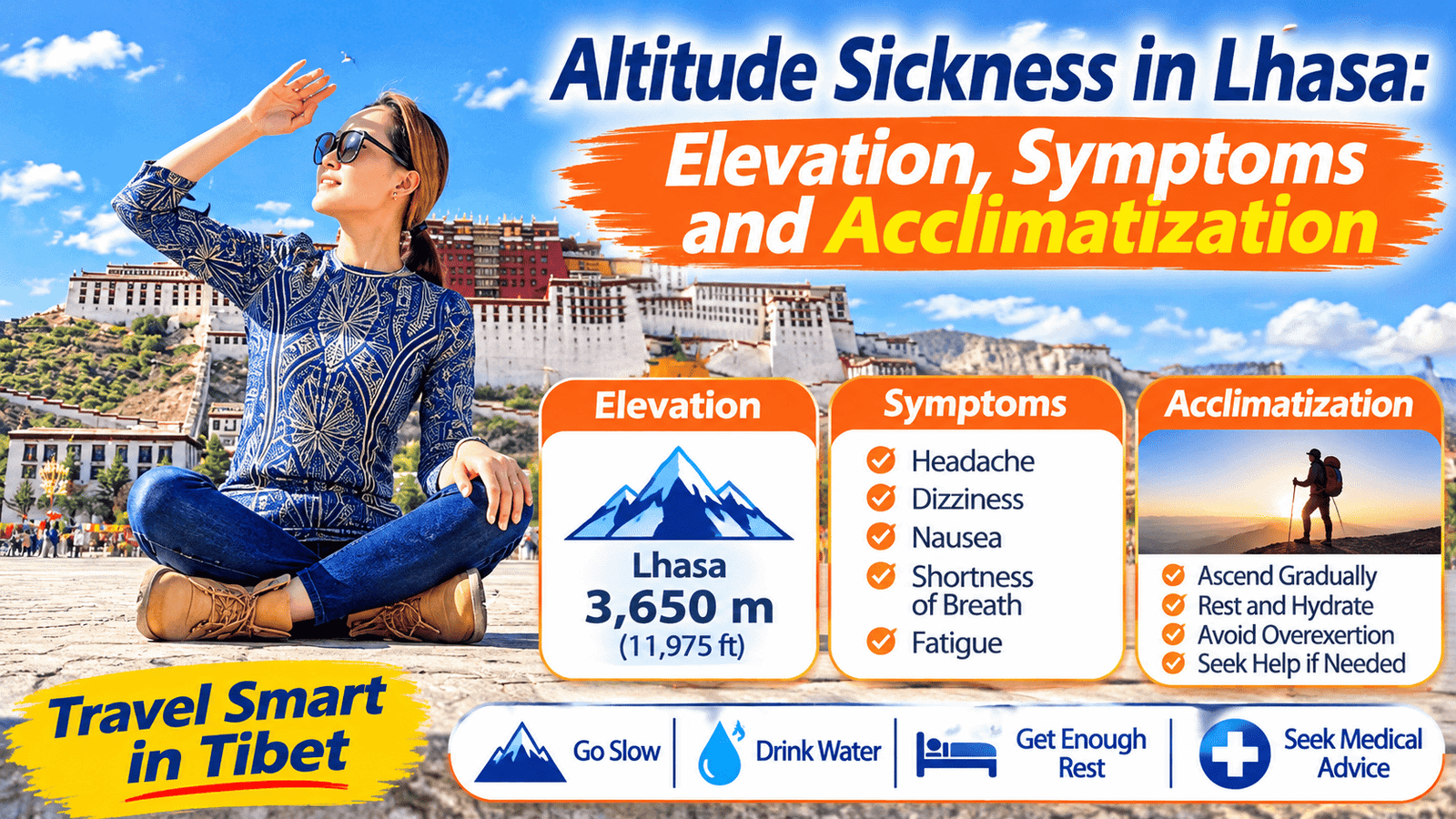
The central areas of Lhasa are approximately 3,650–3,700 metres (about 12,000 feet) above sea level. For visitors arriving from low-altitude cities, this is a major and sometimes sudden change. The air still contains about 21% oxygen, but the lower atmospheric pressure means each breath delivers less oxygen to the body.
This is why some travelers develop altitude sickness shortly after arriving in Lhasa. Symptoms may be mild, such as headache and tiredness, but more serious conditions can also occur.
The best way to enjoy Lhasa is to allow time for acclimatization, keep the first days relatively relaxed and recognize symptoms early.
How high is Lhasa?
Lhasa’s central urban area is approximately 3,650 metres above sea level, although elevation varies across the wider city and surrounding districts. The CDC’s 2026 Yellow Book lists Lhasa at approximately 3,700 metres.
At this elevation, visitors may notice that walking uphill or climbing stairs requires more effort than at sea level. Some people breathe faster, become tired more easily or experience disturbed sleep during their first nights.
| Location | Approximate elevation |
|---|---|
| Lhasa city centre | 3,650–3,700 m |
| Shigatse | Around 3,850 m |
| Yamdrok Lake viewpoints | Around 4,400–5,000 m, depending on the viewpoint |
| Namtso Lake area | Around 4,700–4,800 m |
These figures are approximate. Actual elevation depends on the precise location, road and viewpoint.
Lhasa is a useful place to begin acclimatization, but spending time in the city does not automatically make every traveler ready for higher destinations such as Everest Base Camp or Mount Kailash.
Why can altitude sickness develop in Lhasa?
At high altitude, lower atmospheric pressure reduces the amount of oxygen entering the bloodstream with each breath. The body responds by increasing breathing and making other physiological adjustments.
During the first few days, the body is still adapting. This period is particularly important because altitude illness can develop before acclimatization is complete.
The risk depends on several factors:
- How quickly you travel from a low elevation to Lhasa
- Your previous experience at similar altitudes
- Whether you have a history of altitude sickness
- Your sleeping altitude and subsequent itinerary
- Individual susceptibility and underlying health conditions
Physical fitness does not guarantee protection. A fit runner or experienced traveler can still develop acute mountain sickness (AMS).
Visitors who fly directly into Lhasa from low-altitude locations experience a rapid ascent. Travelers who reach Tibet by a slower overland route may have more gradual exposure, but their risk still depends on the actual elevations and sleeping schedule.
Common symptoms of altitude sickness in Lhasa
Symptoms of acute mountain sickness usually develop within several hours after arrival or after moving to a higher elevation. They often become noticeable during the first night or the following morning.
Common symptoms include:
- Headache
- Nausea or reduced appetite
- Dizziness
- Unusual tiredness or weakness
- Difficulty sleeping
- Reduced ability to exercise
A headache alone does not automatically mean AMS. Dehydration, fatigue, migraine and other conditions can produce similar symptoms. AMS is generally suspected when a headache develops after ascent and is accompanied by other symptoms.
When symptoms are more serious
Do not assume that every problem at altitude is ordinary acclimatization.
Warning signs of high-altitude cerebral edema (HACE) include:
- Difficulty walking in a straight line or loss of coordination
- Confusion or unusual behaviour
- Extreme drowsiness or reduced consciousness
Warning signs of high-altitude pulmonary edema (HAPE) include:
- Shortness of breath while resting
- A worsening cough
- Chest tightness or congestion
- Severe weakness or difficulty walking
- Breathlessness that becomes progressively worse
HAPE and HACE are medical emergencies. They can occur even when a person has not reported typical AMS symptoms.
How to acclimatize in Lhasa
A carefully planned first few days can make a Tibet trip more comfortable and reduce the risk of serious altitude illness.
1. Keep the first day easy
After arriving in Lhasa, avoid a demanding sightseeing schedule. Rest at your hotel, move around gently and give your body time to adjust.
A short, relaxed walk may be reasonable if you feel well, but avoid strenuous exercise, running, heavy lifting or long stair climbs.
2. Allow time before strenuous sightseeing
If possible, plan the first 24–48 hours around gentle activities. Do not try to visit every attraction immediately after arrival.
A relaxed first day can include resting, enjoying a simple meal and taking a short walk near your hotel. More demanding sightseeing can be added gradually if you remain well.
3. Increase activity gradually
Once you feel comfortable, begin normal sightseeing at a manageable pace. Walking around Barkhor Street or visiting a monastery can still be tiring at this elevation, especially if you climb stairs or walk quickly.
Take breaks and avoid competing with other travelers or trying to maintain a low-altitude walking speed.
4. Drink enough water, but do not force it
Drink regularly according to thirst and activity. Avoid becoming dehydrated, but do not drink excessive amounts of water in an attempt to prevent altitude sickness.
Eat regular meals, even if your appetite is reduced. Avoid heavy alcohol consumption, particularly during the first 48 hours.
5. Sleep well and avoid sedatives unless medically advised
Sleep can be unsettled during the first nights at altitude. Avoid alcohol and unnecessary sleeping medications, especially medicines that suppress breathing.
If you have sleep apnea or another breathing-related condition, discuss the trip with your doctor before traveling.
A practical three-day acclimatization plan in Lhasa
The following is an example of a gentle sightseeing schedule, not a medical guarantee that altitude sickness will be prevented.
| Day | Suggested activities | Activity level |
|---|---|---|
| Day 1 | Arrive in Lhasa, transfer to hotel, rest and take a short gentle walk if feeling well | Very light |
| Day 2 | Gentle city sightseeing, such as Barkhor Street and the Jokhang Temple area, if symptoms are absent | Light |
| Day 3 | Visit the Potala Palace or a monastery, allowing extra time for stairs and rest | Gradual |
The Potala Palace involves many steps and a substantial uphill climb. If you still have headache, dizziness, nausea or unusual fatigue, postpone the visit rather than forcing yourself to complete it.
If you feel unwell, remain at the same elevation or descend as appropriate. Do not continue to a higher sleeping altitude while experiencing altitude sickness symptoms.
What should you do if you develop altitude sickness in Lhasa?
If you develop mild symptoms, stop strenuous activity and rest. Do not travel to a higher elevation or begin a demanding excursion while symptoms continue.
A healthcare professional can assess your symptoms and determine whether they are consistent with AMS or another condition. Medication may be appropriate in some circumstances, but it should be selected with medical advice.
If symptoms become worse despite rest, arrange descent to a lower elevation and seek medical assistance.
If you develop breathlessness at rest, confusion, loss of coordination, severe weakness or reduced consciousness, treat the situation as an emergency. Arrange urgent medical assessment and descent. Give supplemental oxygen if available, but do not let oxygen delay evacuation.
A pulse oximeter can provide additional information, but one reading cannot diagnose or exclude altitude sickness. Interpret readings alongside symptoms, altitude and changes over time.
Is Lhasa a good place to acclimatize before Everest Base Camp or Mount Kailash?
Lhasa can be a useful staging point because it allows travelers to spend several nights at approximately 3,650–3,700 metres before continuing west or north.
However, it is important to understand the difference between becoming accustomed to Lhasa and being prepared for a much higher sleeping altitude.
Everest Base Camp is around 5,000 metres or higher, depending on the visitor area and overnight location. The Mount Kailash pilgrimage begins at Darchen, approximately 4,670 metres, and crosses Dolma La Pass at around 5,630 metres.
A few comfortable days in Lhasa do not eliminate the risk of AMS, HAPE or HACE at these elevations. The itinerary should continue to allow gradual sleeping-altitude increases and rest days where practical.
Who should seek medical advice before traveling to Lhasa?
People with significant heart or lung disease, pre-existing low blood oxygen, obstructive sleep apnea or other serious medical conditions should discuss high-altitude travel with a qualified doctor before departure.
Older adults should not assume that age alone makes travel impossible, but their general health, medications, mobility and ability to respond to an emergency should be considered.
Anyone with a previous history of severe altitude illness should obtain an individual travel plan before booking a rapid ascent.
Frequently asked questions
What is the altitude of Lhasa?
Central Lhasa is approximately 3,650–3,700 metres above sea level. The exact elevation varies across the city.
Can you get altitude sickness in Lhasa?
Yes. Visitors who arrive from low elevations can develop AMS in Lhasa. Headache, nausea, dizziness and unusual fatigue are common symptoms.
How many days should I acclimatize in Lhasa?
Many itineraries allow two or three nights in Lhasa before traveling farther. This is a useful starting point, but the appropriate schedule depends on your previous altitude exposure, symptoms and the sleeping elevations planned afterward.
Should I visit the Potala Palace on my first day?
It is generally better to avoid a demanding visit immediately after arriving from low altitude. The stairs and uphill walking can be tiring. Allow time to acclimatize first.
Does oxygen prevent altitude sickness in Lhasa?
Supplemental oxygen can improve oxygenation and relieve symptoms in some circumstances, but it does not replace gradual acclimatization or appropriate medical care.
Can I travel to Everest Base Camp after three days in Lhasa?
Some organized itineraries continue after several nights in Lhasa, but three days do not guarantee that you are fully acclimatized. The onward route should be planned carefully, and you should not continue if you have ongoing altitude sickness symptoms.
Final advice
Lhasa is an excellent starting point for exploring Tibet, but its elevation should never be underestimated. Take the first days slowly, listen to your body and avoid rushing toward higher destinations.
A well-designed itinerary should make acclimatization part of the journey rather than treating it as an inconvenience. If symptoms become severe or worsen, health and safety must take priority over the sightseeing schedule.
Medical disclaimer: This article provides general travel-health information and is not a substitute for professional medical advice, diagnosis or treatment. Consult a healthcare professional familiar with high-altitude medicine before traveling if you have underlying medical conditions or a history of altitude illness. Suspected HAPE or HACE requires urgent medical attention and descent.
Suggested internal links
- Altitude Sickness in Tibet: Complete Guide for Travelers
- How to Prevent Altitude Sickness: Acclimatization and Travel Planning
- Acute Mountain Sickness (AMS): Symptoms and Treatment
- Altitude Sickness at Everest Base Camp: Risks and Safety Advice
- Tibet Altitude Guide: Elevations of Major Tourist Destinations
References
- CDC Yellow Book 2026, High-Altitude Travel and Altitude Illness.
- CDC Travelers’ Health, Travel to High Altitudes.
- Wilderness Medical Society, Clinical Practice Guidelines for the Prevention and Treatment of Acute Altitude Illness: 2024 Update.