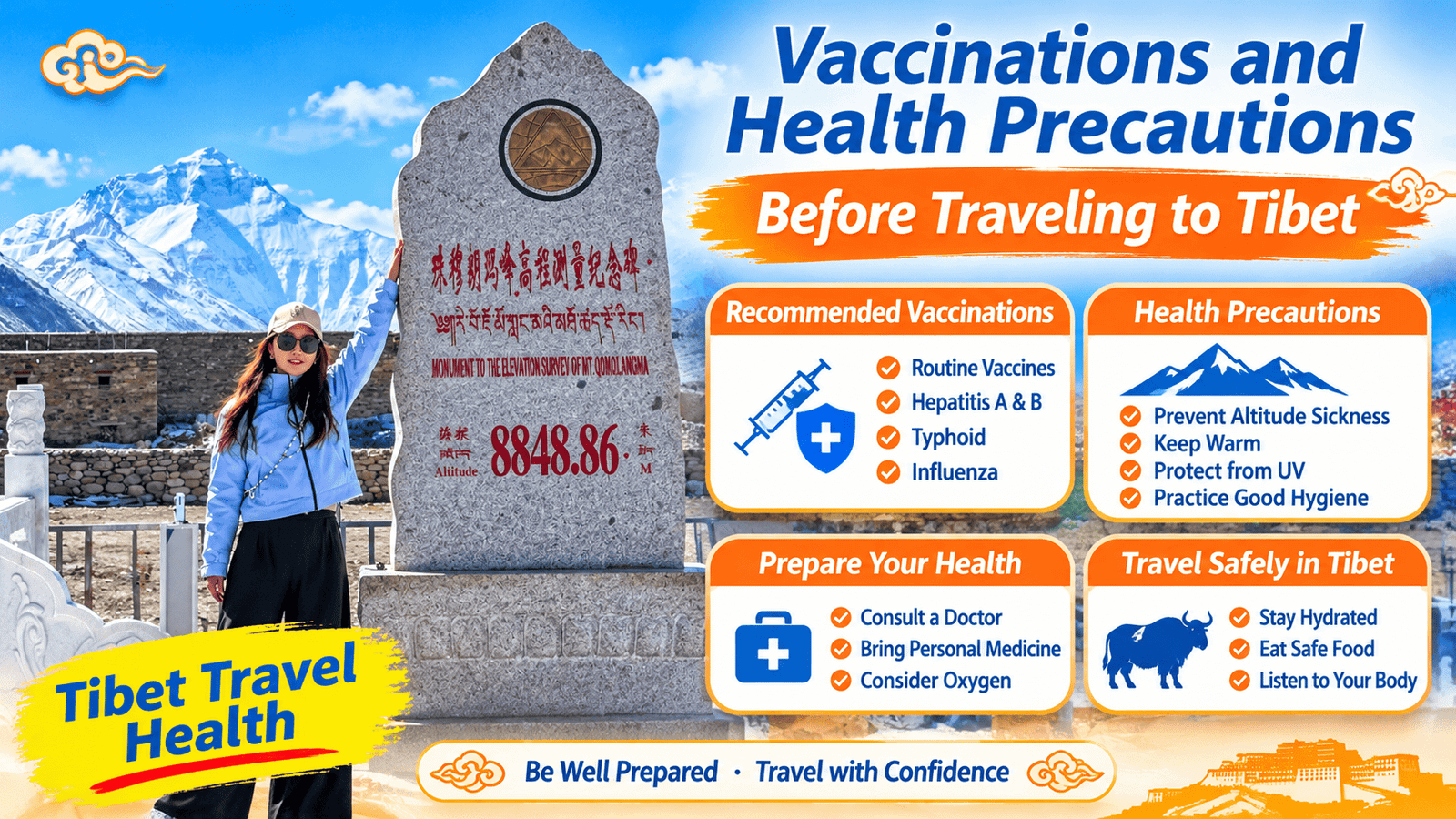
Preparing for a trip to Tibet involves more than arranging flights, permits, hotels and transportation. Travelers should also review their vaccination records and consider their personal health needs before departure.
Tibet’s high altitude, changing weather, remote travel routes and long journeys can make health preparation especially important. Vaccination is one part of that preparation, but there is no single vaccine schedule that is suitable for every visitor. Your recommended vaccinations depend on your age, previous immunizations, medical history, country of residence, travel duration and planned activities.
This guide explains how to prepare for a healthy trip to Tibet and what to discuss with a travel-health professional.
Do You Need Vaccinations Before Traveling to Tibet?
There is no universal vaccination list that applies to every international visitor to Tibet. Many travelers should first make sure their routine vaccinations are up to date. A travel-health professional can then assess whether additional vaccines are appropriate based on the full itinerary.
For example, a short sightseeing trip to Lhasa is different from a longer journey involving rural areas, trekking, animal contact or travel through several regions of China. Do not assume that every traveler needs every travel vaccine. Equally, do not assume that a short trip means vaccination review is unnecessary.
1. Review Your Routine Vaccinations
Before traveling, check whether your routine vaccinations are current.
Depending on your age, medical history and national immunization schedule, these may include:
- Measles, mumps and rubella (MMR)
- Tetanus, diphtheria and pertussis (Tdap or equivalent)
- Influenza
- COVID-19
- Polio
- Chickenpox (varicella)
- Other age- or risk-based vaccinations recommended in your home country
Some infections that are uncommon in one country may still circulate elsewhere. International travel can expose visitors to illnesses they may not encounter in their everyday environment. Bring your vaccination record to your medical appointment. If you are unsure about previous vaccinations, a healthcare professional can help review your records and determine whether a booster or catch-up dose is appropriate.
2. Discuss Travel-Specific Vaccines With a Healthcare Professional
Depending on your circumstances, a clinician may discuss additional vaccines.
These can include:
- Hepatitis A: This vaccine may be recommended for travelers to destinations where food or water contamination is a concern. The recommendation depends on current destination guidance and individual circumstances.
- Hepatitis B: This may be relevant for travelers who could have exposure to infected blood or body fluids, need medical procedures abroad, or have other risk factors.
- Rabies: Discuss rabies vaccination if your itinerary involves remote areas, animal contact, outdoor activities or limited access to timely medical care. Pre-exposure vaccination does not eliminate the need for medical care after an animal bite or scratch.
- Other vaccines: Additional recommendations depend on the countries and regions included in your wider itinerary, the season, your activities and current public-health guidance.
A travel clinic can check current recommendations for China and the specific regions you plan to visit.
3. When Should You Get Travel Vaccinations?
Ideally, arrange a travel-health appointment at least four to six weeks before departure.
This gives you time to:
- Review your medical history and vaccination record
- Receive vaccines that require multiple doses
- Complete recommended booster doses
- Discuss medication and allergy concerns
- Ask about altitude-related health preparation
- Arrange any necessary medical documents
Some vaccines can be given on an accelerated schedule when departure is close, but not every vaccine has this option. Even if you are leaving soon, it is still worthwhile to seek professional advice.
4. Vaccination Is Not the Same as Altitude Preparation
Vaccines help protect against specific infectious diseases. They do not prevent altitude sickness. Visitors to Tibet should separately prepare for the effects of reduced oxygen pressure at high elevations. Lhasa is approximately 3,650 metres above sea level. Everest Base Camp and the Mount Kailash region are considerably higher.
A sensible altitude plan includes:
- Allowing time to acclimatize after arriving in Lhasa
- Avoiding strenuous exercise during the first days
- Increasing sleeping altitude gradually where the route allows
- Avoiding alcohol during early acclimatization
- Recognizing symptoms of acute mountain sickness
- Knowing when to stop ascending and seek medical help
Travelers with significant heart, lung or other medical conditions should discuss their itinerary with a clinician before departure.
5. Food and Water Hygiene
Vaccination cannot prevent every food- or water-related illness. Careful hygiene remains important.
During your trip:
- Drink water from reliable, safe sources.
- Use sealed bottled water or properly treated water when necessary.
- Avoid drinking untreated water from rivers, lakes or streams.
- Wash or sanitize your hands before eating.
- Choose freshly cooked food from hygienic establishments.
- Be careful with raw or undercooked food.
- Wash fruit when safe water is available, or peel it yourself.
Traveler’s diarrhea can cause dehydration, which may make travel at high altitude more difficult. Carry oral rehydration salts and seek medical attention if you develop blood in your stool, a high fever, severe abdominal pain or signs of significant dehydration.
6. Avoid Animal Bites and Scratches
Rabies is a serious viral infection transmitted through the saliva of infected mammals, usually through bites or scratches.
During your Tibet trip:
- Avoid approaching unfamiliar dogs and other mammals.
- Do not feed or handle stray animals.
- Supervise children around animals.
- Do not assume that a healthy-looking animal is free of infection.
If you are bitten or scratched, wash the wound immediately and thoroughly with soap and running water, then seek urgent medical assessment. A healthcare professional can determine whether rabies post-exposure treatment or other wound care is necessary. Even travelers who have received rabies pre-exposure vaccination still need medical assessment after a possible exposure.
7. Prepare for Respiratory Infections
Cold weather, crowded transport, indoor gatherings and close contact with other travelers can increase opportunities for respiratory infections to spread.
Useful precautions include:
- Keeping recommended respiratory vaccinations up to date
- Washing or sanitizing your hands
- Avoiding close contact with people who are visibly ill when possible
- Wearing a well-fitting mask in crowded indoor settings if appropriate
- Improving ventilation where practical
- Resting if you become unwell
If you develop a fever, cough or breathing difficulty before traveling to a high-altitude destination, seek medical advice before continuing your ascent.
8. Review Your Medical History Before Booking High-Altitude Travel
Vaccination is only one part of pre-travel health preparation.
Tell your doctor if you have:
- Heart disease or a history of heart failure
- Chronic lung disease
- Severe asthma
- Kidney disease
- Diabetes
- A history of blood clots
- Significant sleep-related breathing problems
- Pregnancy or a possibility of pregnancy
- A previous serious reaction to a vaccine or medicine
Your doctor can help assess whether your planned sleeping altitudes and activities are suitable and whether you need additional preparation. Do not stop prescribed medicines or change their doses simply because you are traveling to a high-altitude destination.
9. Carry Your Medical and Vaccination Records
Keep important medical information accessible during the trip.
Consider carrying:
- A copy of your vaccination record
- A list of regular medicines and their generic names
- Details of medication allergies
- A short medical summary if you have a chronic condition
- Your doctor’s contact details
- Travel insurance and emergency assistance information
Keep essential prescription medicines in their original labeled containers and pack them in your hand luggage. Check the rules for carrying prescription or controlled medicines into China before departure.
Frequently Asked Questions
Which vaccines are required to visit Tibet?
Vaccination requirements and recommendations are not the same thing. There is no single routine vaccine list that applies to every international tourist visiting Tibet. Check current entry requirements and seek personalized travel-health advice.
Should I get a hepatitis A vaccine before visiting Tibet?
A clinician may recommend hepatitis A vaccination depending on your vaccination history, itinerary and current destination guidance. Discuss it during your pre-travel appointment.
Do I need a rabies vaccine for Tibet?
Not every traveler needs pre-exposure rabies vaccination. It may be considered for people with animal exposure, remote itineraries or limited access to prompt medical treatment. Any bite or scratch from a potentially infected animal requires urgent medical assessment.
Can I get vaccinated shortly before departure?
Some vaccinations can still be useful when given close to departure, but the timing and number of doses vary. Contact a travel-health clinic as soon as possible.
Do vaccines prevent altitude sickness?
No. Vaccines protect against particular infectious diseases. Altitude sickness is caused by the body’s response to reduced oxygen pressure at high elevations and requires a separate prevention and acclimatization plan.
Internal Links to Add
- Altitude Sickness in Tibet: Complete Guide for Travelers
- How to Prepare Your Body Before Traveling to Tibet
- First Aid Kit for Tibet Travel: Essential Medicines and Supplies
- Traveler’s Diarrhea in Tibet: Causes, Prevention and Treatment
- Colds, Flu and Respiratory Infections in Tibet
Medical Disclaimer
This article provides general travel-health information and is not a personalized vaccination recommendation. Vaccine decisions should be based on current destination guidance, your medical history and your vaccination record. Consult a qualified travel-health professional before departure.
References
- CDC Travelers’ Health: Routine Vaccines.
- CDC Travelers’ Health: Before You Travel.
- CDC Yellow Book 2026: The Pre-Travel Consultation.
- CDC Travelers’ Health: Travel Vaccines.