
Tibetan Thangka Art: History, Styles, Materials, Colors, and Spiritual Meaning
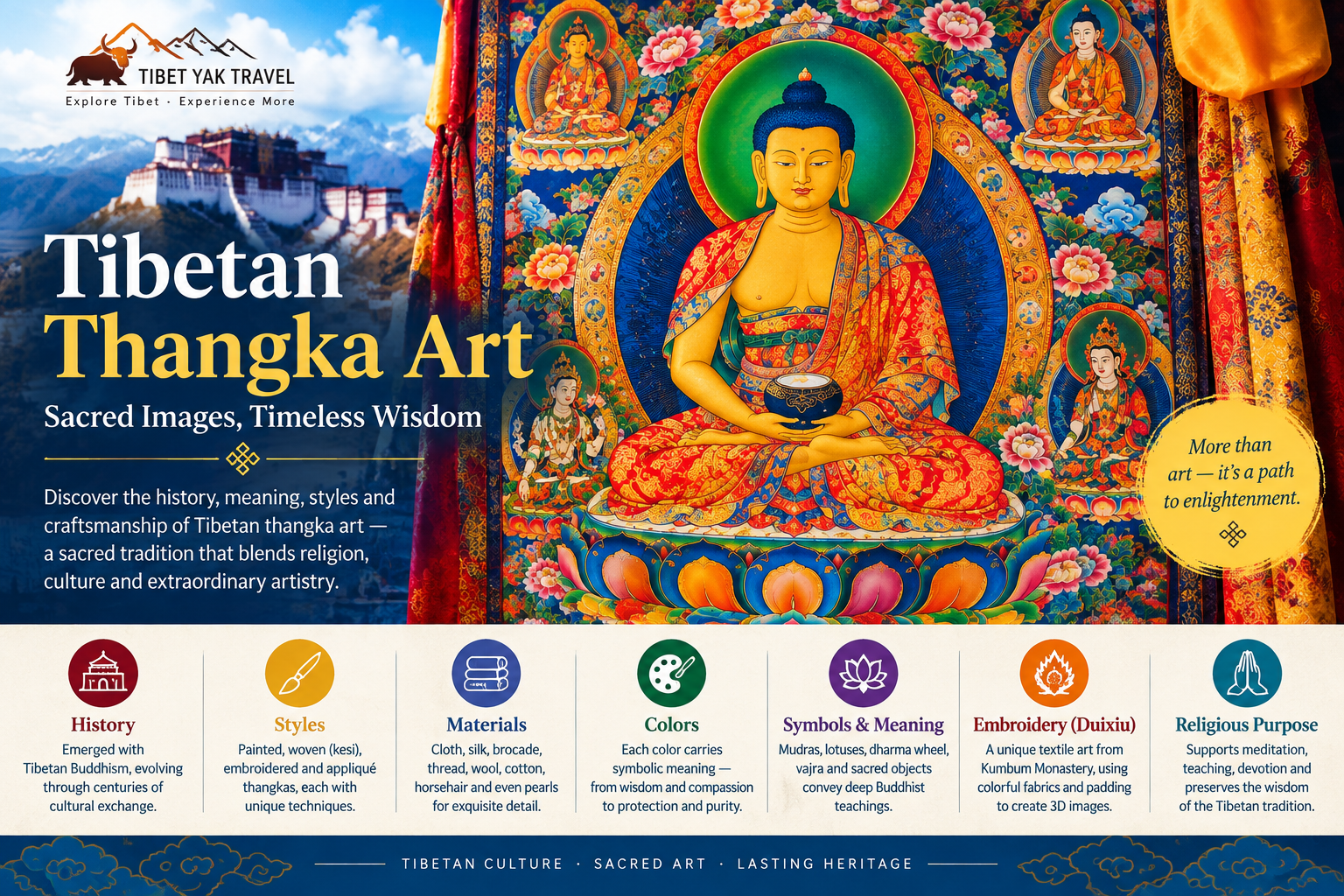
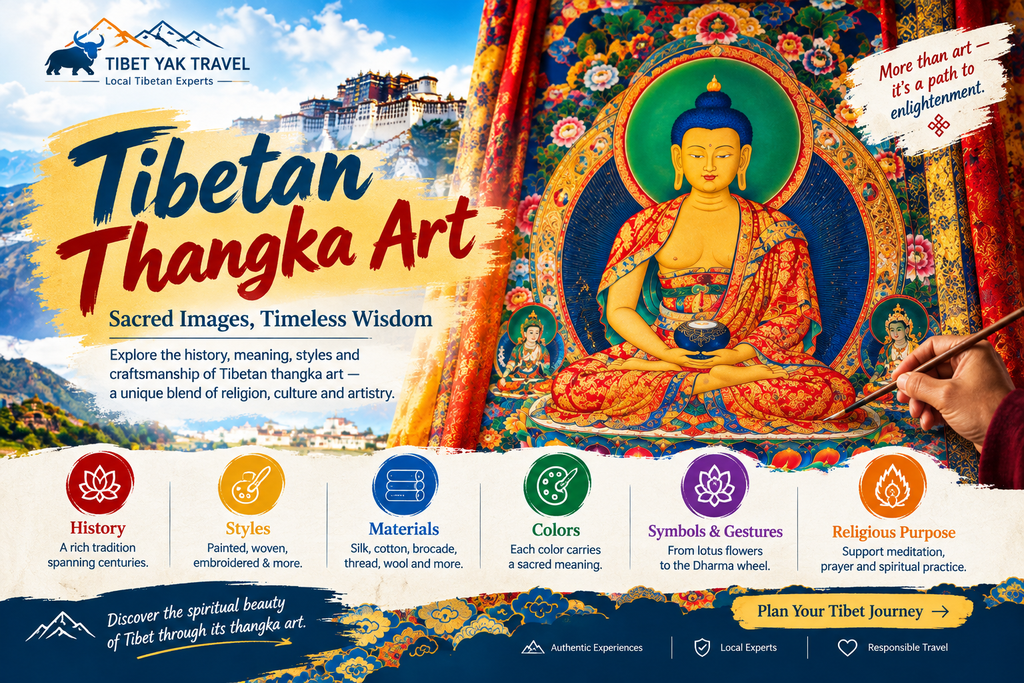
Tibetan thangka art is one of the most distinctive artistic traditions of Tibetan Buddhist culture. These sacred images combine religious teachings, intricate craftsmanship, symbolic colors, and detailed compositions to communicate Buddhist ideas through visual form. Traditionally displayed in monasteries, temples, and devotional spaces, thangkas serve both as works of art and as important objects of religious practice.
A thangka may portray a Buddha, a bodhisattva, a revered Buddhist teacher, a protective deity, or an elaborate mandala. Some are painted on cloth, while others are created using woven silk, embroidery, or carefully assembled textiles. Each form requires patience, artistic skill, and an understanding of the religious symbolism behind the image.
The beauty of a Tibetan thangka lies not only in its detailed figures and vivid colors but also in its deeper purpose. For practitioners, it can support meditation, prayer, religious study, and the cultivation of compassion and wisdom.
The History of Tibetan Thangka Art
Thangka art developed within the religious and cultural environment of Tibetan Buddhism. As Buddhist teachings spread across the Tibetan Plateau, artists created visual representations of Buddhas, teachers, deities, and sacred narratives to support religious practice and preserve Buddhist traditions.
Tibetan Buddhist art developed through centuries of interaction with neighboring artistic cultures, including those of India, Nepal, and other Himalayan regions. These connections influenced the appearance of religious figures, ornamental patterns, painting techniques, and textile craftsmanship. Over time, Tibetan artists developed distinctive approaches that reflected local religious traditions and artistic preferences.
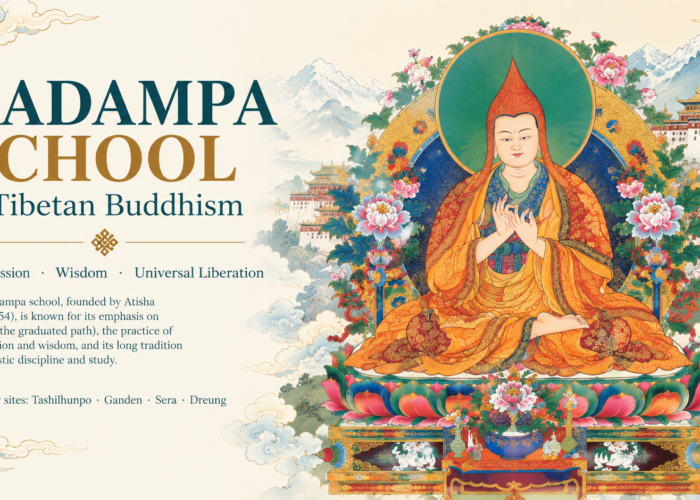
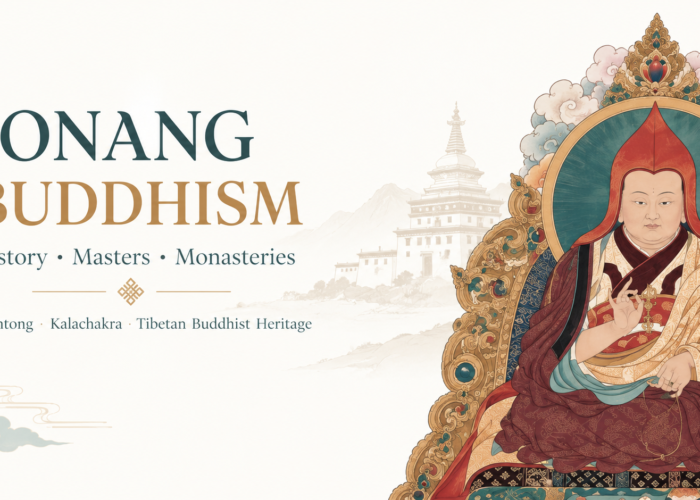
Thangkas became important objects in monasteries and devotional settings. Their portable format also made them practical for religious teachers and communities who traveled between settlements, monasteries, and remote regions. As Tibetan Buddhist institutions developed, artists produced thangkas representing important teachers and religious lineages. Portraits of figures such as Atisha and Tsongkhapa helped preserve their memory and teachings. Images of the Dalai Lamas and Panchen Lamas also became important subjects of Tibetan religious art.
Thangkas as Historical Records
Beyond their religious purpose, some thangkas preserve valuable historical information. Their inscriptions, portraits, clothing, ritual objects, and decorative details can reveal connections between religious institutions, patrons, and artistic traditions.
The historical artworks described in the source material illustrate these connections. A portrait of Shakya Yeshe, known as the Great Compassion Dharma King, records a relationship between Tibetan Buddhism and the Ming imperial court. The textile includes his religious title in both Chinese and Tibetan, along with an imperial seal.
Another thangka depicts the Yongle Emperor of the Ming dynasty in elaborate imperial robes. Its design and presentation demonstrate how Tibetan Buddhist religious art could also intersect with courtly patronage and political history. These examples show that thangkas are not only religious images. Some are also important historical objects that preserve evidence of cultural exchange and the development of Tibetan Buddhist institutions.
What Is the Religious Purpose of a Thangka?
A Tibetan thangka is more than a decorative painting. Within Tibetan Buddhist traditions, it serves as a visual support for religious practice, meditation, and the transmission of teachings. Buddhist concepts can be difficult to communicate through words alone. Thangka artists use recognizable figures, symbolic objects, colors, and carefully arranged compositions to make religious ideas visually accessible.
A Support for Meditation and Visualization
In Tibetan Buddhist practice, certain thangkas serve as visual supports for meditation. Practitioners may focus on the image of a Buddha, bodhisattva, or meditation deity while engaging in specific practices taught within their tradition. The image also helps establish a visual reference for contemplation and visualization. The details of the deity, including posture, hand gestures, ornaments, and attributes, can carry specific religious meanings.
Different traditions use different images and practices. So, not every thangka is intended for the same form of meditation, and some specialized practices require instruction from a qualified teacher.
An Aid to Religious Learning
Thangkas can also communicate Buddhist teachings through visual storytelling. A single composition may contain a central Buddha surrounded by teachers, disciples, protective deities, and smaller scenes. These figures can represent religious lineages, important events, or aspects of Buddhist teachings.
For example, thangkas depicting Tsongkhapa may include his two principal disciples, Khedrup Je and Gyaltsab Je. Such compositions visually connect the teacher with the tradition that developed around his teachings.
Similarly, scenes from the legendary life of King Gesar preserve stories that have an important place in Tibetan cultural tradition.
Objects of Devotion and Offering
Thangkas are often displayed in religious settings as objects of devotion. Practitioners may offer incense, lamps, flowers, or prayers before sacred images, according to their traditions. The presence of a thangka in a monastery or shrine can create a focal point for collective worship and personal reflection.
Some large textile images are displayed during religious festivals, allowing communities to gather before monumental representations of Buddhas or revered teachers.
Their purpose therefore extends beyond viewing. They participate in the religious life of the communities that create, preserve, and use them.
The Main Styles of Tibetan Thangka Art
Tibetan thangka art includes several techniques and visual approaches. The best-known form is painted thangka, but woven silk, embroidery, and textile applique also form part of this artistic heritage. The style of a thangka depends on its materials, subject, artistic tradition, and intended use.
Painted Thangkas
Painted thangkas are created on prepared cloth, commonly using carefully applied pigments and detailed brushwork. Artists construct the composition with attention to proportion, placement, and religious symbolism. The central figure usually receives the greatest visual emphasis, while smaller figures, landscapes, and decorative elements fill the surrounding space.
Painted thangkas can portray peaceful Buddhas, compassionate bodhisattvas, revered teachers, wrathful deities, or complex religious diagrams. Fine lines, layered colors, patterned clothing, and detailed ornaments give these works their characteristic richness.
Silk Brocading and Woven Silk Thangkas
Some Tibetan religious images are created using woven silk rather than painted directly onto cloth. Silk Brocading, also known as silk tapestry, is a weaving technique used to create detailed designs through carefully controlled weaving. In the Tibetan Buddhist context, woven textile images can depict teachers, deities, and elaborate religious compositions.
The source describes several important examples, including portraits of the Panchen Lamas and the founder of the Tselpa Kagyu tradition. These works demonstrate how textile craftsmanship became an important part of Tibetan Buddhist visual culture.
Embroidered and Applique Thangkas
Embroidered and applique thangkas use fabric, thread, and decorative stitching to create religious images. Rather than relying solely on painted lines and pigments, artists build the composition through the placement of colored textiles. Different fabrics can represent skin, clothing, ornaments, flowers, and other details.
Some works combine stitching with padding to create raised surfaces. Others use directly assembled fabric shapes to form detailed figures and backgrounds. These textile techniques allow artists to produce images with a distinctive texture and a shallow, sculptural appearance.
The Embroidery and Textile Art of Kumbum Monastery
One of the distinctive textile traditions described in the source is Barbola Thangka, associated with Kumbum Monastery, Qinghai. Barbola Thangka is a form of Tibetan textile art that uses colorful fabrics to create raised religious images. It is particularly notable for its three-dimensional appearance, which distinguishes it from conventional painted thangkas.
How Barbola Thangka: Duixiu Is Made
Artists begin by selecting fabrics of different colors and textures. They cut the materials into shapes representing religious figures, clothing, ornaments, and decorative patterns. In the padded technique described in the source, wool or cotton is placed behind selected fabric pieces. The padded shapes are then sewn onto a large backing, often made of dark cloth.
This process creates a raised surface that gives the image depth and texture. The careful arrangement of the fabric allows artists to represent facial features, garments, jewelry, and other details through the natural qualities of the textiles. The finished work can be displayed as a hanging scroll or as a large textile image within a religious hall.
Barbola three-dimensional applique thangkas: Two Textile Techniques
The source also describes a related technique called jiandui (剪堆). The main difference lies in how the textile shapes are assembled. In the padded form of duixiu, selected pieces are filled with wool or cotton to create a raised effect. Jiandui, by contrast, uses cut fabric shapes that are assembled directly onto the background.
This allows artists to produce elaborate compositions featuring religious figures alongside trees, rocks, flowers, tables, and other decorative details. Both techniques depend on the careful selection of fabrics and the harmonious arrangement of shapes and colors.
The Religious Subjects of Kumbum Barbola Thangka
Kumbum Monastery’s textile art includes images of Buddhas, bodhisattvas, protective deities, and arhats, as well as narrative scenes. The source describes large textile works depicting the Sixteen Arhats and the Eight Immortals. These compositions use expressive poses and distinctive appearances to create a sense of movement.
Other works combine religious and auspicious imagery, including scenes of the Queen Mother of the West and the Peach Banquet. The monastery’s artistic tradition demonstrates how textile craftsmanship can communicate religious stories while incorporating a broad range of decorative and cultural themes.
Materials Used in Tibetan Thangka Art
The materials used in thangka production influence the artwork’s appearance, texture, durability, and artistic possibilities. Different techniques require different materials, and not every thangka contains the same combination.
Cloth and Fabric
Painted thangkas are commonly created on cloth. Textile thangkas use silk, satin, brocade, and other fabrics to construct the image. The source describes works made from woven silk and colorful brocade, as well as large textile compositions assembled on dark fabric backings. Fabric choice is important because different materials reflect light, hold color, and create texture in different ways.
Silk, Satin, and Brocade
Silk and satin are particularly important in textile-based religious art. Their smooth surfaces and varied colors allow artists to create distinctive visual effects. Brocade fabrics can introduce decorative patterns into clothing, ornaments, and other parts of the composition.
In Barbola, the contrast between different textiles helps distinguish individual elements and gives the image its rich surface.
Wool and Cotton
Wool and cotton are used in some padded duixiu techniques to create volume. By placing these materials behind cut fabric shapes, artists can raise selected parts of the composition above the backing. Because, the technique produces a shallow-relief effect, allowing figures and decorative details to appear more dimensional.
Thread, Horsehair, and Pearls
Thread is essential to embroidered and applique textile art, holding fabric pieces together and helping define the composition. The source also describes a Qing-dynasty embroidered thangka of Hayagriva that combines brocade fabrics with horsehair threads.
According to the source, the ornaments of this particular work incorporate more than 1,300 pearls. This example illustrates how textile artists could combine multiple materials to create elaborate and highly decorative religious images.
The Meaning of Colors in Tibetan Thangka Art
Color is one of the most striking features of Tibetan thangka art. Brilliant reds, blues, yellows, greens, and whites can make the central figures stand out against richly decorated backgrounds.
In Tibetan Buddhist imagery, colors may have specific symbolic associations. Their meaning depends on the deity, religious tradition, artistic context, and composition. It is important not to assume that every color carries exactly the same meaning in every thangka.
Blue: Depth and Powerful Imagery
Blue appears prominently in many Tibetan Buddhist images, including representations of wrathful deities and some peaceful figures. In particular religious contexts, blue may be associated with profound wisdom, the nature of reality, or powerful protective imagery.
The source describes blue backgrounds in the thangkas of the Seventh and Eighth Panchen Lamas. Blue also appears as the body color of several wrathful deities. These examples show how the same color can appear in different visual roles, depending on the artwork.
Red: Energy and Intensity
Red is frequently used in Tibetan Buddhist art to create visual emphasis. It may appear in the robes of teachers, the bodies of certain deities, flames, or decorative elements.
In some tantric contexts, red is associated with particular forms of enlightened activity, including magnetizing or attracting activity. Its precise interpretation depends on the deity and practice. In the source’s description of the Seventh Panchen Lama, a red brocade robe contrasts with the blue background.
Yellow and Gold: Radiance and Sacred Decoration
Yellow and gold are common in religious clothing, crowns, ornaments, and decorative details. They can give a composition a sense of brightness and visual importance. Gold-colored elements are especially effective for highlighting crowns, ritual objects, and elaborate garments.
The source describes Tsongkhapa and several other Buddhist teachers wearing yellow monastic hats. Yellow also appears in the robes and decorative features of various thangkas.
White: Purity and Peaceful Imagery
White is often associated with purity, clarity, and peaceful qualities in Buddhist symbolism, although the meaning varies by context. It can be used in the depiction of peaceful deities, ceremonial objects, and religious offerings.
In the source’s description of the Eighth Panchen Lama thangka, attendants hold white khatas, or ceremonial scarves, as signs of respect and offering.
Green: Compassionate and Active Qualities
Color Green is associated with certain Buddhist deities and forms of enlightened activity. For example, Green Tara is widely recognized in Tibetan Buddhism as a figure associated with compassion and swift assistance.
The source also describes green in the appearance of some protective figures and in the traditional depiction of the musical instrument held by the goddess of music. Color symbolism is therefore best understood through the complete image rather than through a color viewed in isolation.
7. The Meaning of Symbols, Gestures, and Objects
A thangka’s religious meaning often depends on small details. Hand gestures, ritual objects, crowns, lotus flowers, and surrounding figures can identify the subject and communicate important teachings.
Hand Gestures: Mudras
The positions of a deity’s hands are known as mudras. They can represent teaching, meditation, protection, generosity, or other religious meanings. For example, the source describes the Seventh and Eighth Panchen Lamas making a teaching gesture with one hand. Their other hands hold different objects: a scripture in the Seventh Panchen Lama’s portrait and a Dharma wheel in the Eighth Panchen Lama’s image.
These details help distinguish the figures and communicate their religious roles.
The Lotus Flower
The lotus is a widely used symbol in Buddhist art. It is associated with purity and spiritual development. The flower’s growth from muddy water provides a visual metaphor for the possibility of awakening despite the difficulties of ordinary existence. Lotus thrones frequently appear beneath Buddhas, bodhisattvas, and Buddhist teachers.
The Dharma Wheel
The Dharma wheel represents the Buddha’s teachings and the path of Buddhist practice. It can appear in the hands of religious figures or as part of a larger composition. In the Panchen Lama thangka described in the source, the Eighth Panchen Lama holds a Dharma wheel, making it a distinctive feature of his portrait.
The Vajra and Ritual Implements
The vajra is an important ritual symbol in Tibetan Buddhism. It is associated with indestructibility and the qualities of enlightened wisdom. Thangkas may also depict ritual bells, curved knives, skull cups, staffs, and other implements. These objects can identify particular deities and religious practices. Their meanings depend on the context in which they appear.
Crowns and Religious Clothing
Crowns, robes, hats, and ornaments can help identify Buddhist figures. The tall yellow hat worn by Tsongkhapa is strongly associated with his representation in Tibetan Buddhist art. The five-Buddha crown appearing in some portraits and deity images also carries religious significance.
Clothing and ornaments can additionally indicate a figure’s status, lineage, or specific iconographic form.
Peaceful and Wrathful Deities: Two Visual Expressions
One of the most distinctive characteristics of Tibetan Buddhist art is the contrast between peaceful and wrathful imagery.
Peaceful figures are often shown with calm expressions, balanced postures, and gentle gestures. Their appearance can emphasize compassion, wisdom, meditation, and serenity. However, Wrathful deities have fierce expressions, flaming hair, multiple arms, ritual weapons, and dynamic poses.
These appearances are not simply intended to frighten viewers. Within Tibetan Buddhist tantric traditions, wrathful forms can symbolize the forceful overcoming of ignorance, obstacles, and negative influences.
Peaceful Imagery
Buddhas and revered teachers are often represented with composed expressions and symmetrical poses. The thangkas of Atisha and Tsongkhapa described in the source illustrate this approach. Both figures sit in meditation-like postures and wear monastic clothing. Their expressions and hand gestures communicate religious dignity and contemplation.
Wrathful Imagery
Wrathful deities often appear with multiple faces and arms, dramatic ornaments, and symbolic implements. Example, Vajrakilaya, Mahakala, Yama, and Palden Lhamo. These images can appear visually intense, but their symbolism belongs to specific religious traditions. The meaning of a particular deity should be understood through its associated teachings and iconography.
Tibetan Thangka Art as a Living Cultural Tradition
Tibetan thangka art continues to connect religious practice with artistic craftsmanship. The creation of a thangka requires more than technical skill. Artists must understand the composition and visual conventions associated with their subject, particularly when producing images intended for religious use.
Traditional painting and textile techniques preserve knowledge passed between generations of artists and religious communities. At the same time, thangkas provide a way to explore the wider history of Tibetan Buddhist culture. Portraits of teachers preserve religious lineages, while depictions of protective deities communicate complex systems of symbolism.
Textile traditions such as duixiu demonstrate how artists have used fabric, padding, stitching, and decorative materials to expand the possibilities of religious imagery. The continued preservation of these works helps maintain a connection between artistic heritage and the communities for whom the images hold religious significance.
Where to Discover Tibetan Thangka Art
Travelers interested in Tibetan Buddhist art can explore the collections and religious institutions associated with several locations described in the source.
Potala Palace, Lhasa
The Potala Palace is associated with historic thangkas depicting Buddhist teachers and important historical figures, including the Yongle Emperor. Its collections offer insight into the relationship between Tibetan Buddhist art, religious institutions, and historical patronage.
Tibet Museum, Lhasa
The Tibet Museum is identified in the source as the home of a kesi portrait of Shakya Yeshe, the Great Compassion Dharma King. The work is notable for its woven textile technique and historical association with the Ming imperial court.
Kumbum Monastery, Qinghai
Kumbum Monastery is particularly important for its duixiu tradition. Its textile artworks include religious figures, arhats, protective deities, and elaborate narrative compositions. Large textile images are also associated with religious festivals.
Sichuan Museum, Chengdu
The Sichuan Museum is identified in the source as holding a collection of Panchen Lama brocade thangkas and an eleven-piece series depicting King Gesar. These works illustrate the variety of subjects represented in Tibetan Buddhist and Tibetan cultural art.
Museum collections and monastery displays may change over time, so visitors should confirm current exhibition and access information before traveling.
Frequently Asked Questions About Tibetan Thangka Art
What is a Tibetan thangka?
A Tibetan thangka is a traditional religious artwork, usually created on cloth. It may depict a Buddha, bodhisattva, Buddhist teacher, protective deity, mandala, or religious narrative. Thangkas are used in devotional settings and, in some traditions, as supports for meditation and religious learning.
What is the history of Tibetan thangka art?
Thangka art developed alongside Tibetan Buddhism and was shaped by centuries of religious and cultural exchange across the Himalayan region. Artists created images of Buddhas, teachers, and deities to support religious practice and preserve Buddhist teachings.
What materials are used to make thangkas?
Materials vary by technique. Painted thangkas use cloth and pigments, while textile works may use silk, satin, brocade, thread, and other fabrics. Some duixiu artworks incorporate wool or cotton padding, and particularly elaborate pieces may include decorative materials such as pearls.
What is the difference between painted and embroidered thangkas?
Painted thangkas use pigments and brushwork to create images on cloth. Embroidered and applique thangkas use thread and fabric to construct figures and decorative details. Some textile works have raised surfaces that create a three-dimensional appearance.
What is duixiu (Barbola Thangka)?
Duixiu is a Tibetan textile art technique associated with Kumbum Monastery in Qinghai. Artists cut colorful fabrics into shapes and sew them onto a backing. Some pieces are padded with wool or cotton to create raised, textured images.
Why are colors important in Tibetan thangka art?
Colors help identify figures, emphasize important details, and communicate religious symbolism. Blue, red, yellow, white, and green can carry different associations depending on the deity and tradition. Their meanings should be interpreted within the complete composition.
Why do some Tibetan Buddhist deities look fierce?
Wrathful deities can represent the forceful overcoming of ignorance, obstacles, and negative influences. Their expressions, ritual objects, and dynamic poses have specific meanings within Tibetan Buddhist traditions.
Are thangkas used for meditation?
Some thangkas serve as visual supports for meditation and deity visualization. Others are used for devotional worship, religious teaching, or ceremonial display. Their precise purpose depends on the image and the Buddhist tradition.
Where can travelers see Tibetan thangka art?
Collections and religious institutions mentioned in the source include the Potala Palace and Tibet Museum in Lhasa, Kumbum Monastery in Qinghai, and the Sichuan Museum in Chengdu. Current public access to individual artworks should be checked before visiting.
Conclusion: Discover the Spiritual Beauty of Tibetan Thangka Art
Tibetan thangka art brings together history, religion, symbolism, and extraordinary craftsmanship. Through painted figures, woven silk, embroidered textiles, and elaborate compositions, artists have preserved Buddhist teachings and cultural traditions across generations. The materials and techniques used in thangka production reveal the skill of Tibetan artists, while the colors, gestures, and sacred objects communicate religious ideas. The contrast between peaceful Buddhas and wrathful protective deities adds further depth to this artistic tradition.
From historic portraits of Buddhist masters to the richly textured duixiu works of Kumbum Monastery, Tibetan religious art offers a fascinating way to explore the cultural and spiritual heritage of Tibet and the wider Tibetan Buddhist world.
For travelers interested in Tibetan culture, understanding thangka art provides more than an appreciation of beautiful images. It offers a deeper perspective on the beliefs, history, and artistic traditions that continue to shape religious life across the Tibetan Plateau.