Introduction: What Is Gongbo Losar?
Gongbo Losar, also known as Kongpo Losar or Gongbu New Year, is a traditional Tibetan New Year celebrated in the Gongbo region of Nyingchi in eastern Tibet. Unlike the widely celebrated Tibetan Losar, which falls on the first day of the first Tibetan lunar month, Gongbo Losar takes place on the first day of the tenth Tibetan lunar month.
This makes it one of the earliest traditional New Year celebrations in Tibet. The festival is particularly associated with the communities of Bayi District, Milin, and Gongbo’gyamda (Gongbu Jiangda), where local traditions have developed alongside the region’s distinctive geography, agricultural lifestyle, and cultural history.
Gongbo Losar is more than a change of calendar. It is a celebration of family reunion, agricultural prosperity, good health, and community life. Its customs include cleaning homes, preparing traditional New Year food, inviting family dogs to a special feast, collecting the first water of the year, offering prayers for a good harvest, and competing in traditional archery.
During the celebrations, villages come alive with folk songs, traditional clothing, dancing, games, and festive gatherings. For travelers visiting Nyingchi in November, Gongbo Losar provides an opportunity to discover a living cultural tradition that is different from the better-known New Year celebrations in Lhasa and central Tibet.
When Is Gongbo Losar Celebrated?
Gongbo Losar falls on the first day of the tenth month of the Tibetan calendar. Because the Tibetan calendar is lunisolar, its Gregorian date changes each year, usually falling in November or sometimes December.
For example:
- 2024: December 2
- 2025: November 20
- 2026: November 10
The 2026 date corresponds to the first day of the tenth Tibetan lunar month in the Fire Horse year.
Although the main New Year date is the first day of the month, celebrations and community activities can continue for several days. Some traditional festivities and gatherings extend toward the middle of the month. For travelers, it is worth planning to arrive in Nyingchi before New Year’s Eve so that you can experience the preparations as well as the main celebrations.
The Legend Behind Gongbo Losar
The origins of Gongbo Losar are closely connected with a local legend about the ancient Gongbo kingdom and its warriors. According to traditional accounts, during the period of the Tibetan Empire, the Gongbo region faced the threat of invasion by northern forces known locally as the Hor. The Tibetan authorities called upon regional leaders to provide military support, and the ruler of Gongbo, commonly identified in local stories as Aji Jeb (Agyel), mobilized local men to defend their homeland.
The soldiers were preparing to leave in the autumn, close to the traditional New Year period. However, the journey to the battlefield was long, and they feared that they would be unable to return home in time to celebrate with their families. According to the legend, the Gongbo king understood their feelings and decided to bring the New Year celebration forward. Rather than allowing the soldiers to depart without enjoying the traditional festivities, he arranged for the community to celebrate on the first day of the tenth Tibetan lunar month.
The soldiers shared festive food, drank barley wine, gathered around fires, and celebrated with their families before setting out for battle. The story says that they subsequently defeated their enemies and returned with victory.
To commemorate this event, the people of Gongbo continued celebrating their New Year on the first day of the tenth lunar month. The story has been passed down through generations and remains an important part of the region’s cultural identity. However, the precise historical circumstances, including the identity of the invading forces and the details of the king’s military campaign, are difficult to establish independently. It is best understood as a traditional origin legend rather than a fully verified historical account.
Preparing for Gongbo Losar: Cleaning Homes and Making New Year Food
The arrival of Gongbo Losar brings several days of preparation. Families clean their homes, prepare festive dishes, arrange offerings, and make sure there is enough food and drink for relatives and guests. These preparations symbolize leaving behind the difficulties of the old year and welcoming a new beginning.
Traditional New Year Cleaning
In the days before New Year’s Day, families traditionally carry out a thorough cleaning of their homes. Rooms, kitchens, courtyards, fireplaces, and household surroundings are cleaned to create a fresh and welcoming environment. In some local traditions, special cleansing rituals are also performed to drive away negative influences and misfortune.
Families prepare traditional Tibetan foods, including khapse, the familiar deep-fried New Year pastry. Barley flour, butter, cheese, meat, and barley wine are among the ingredients and foods associated with the festive season. Markets and households become busy as people prepare for family gatherings and visitors.
Welcoming the New Year with Traditional Clothing and Khata
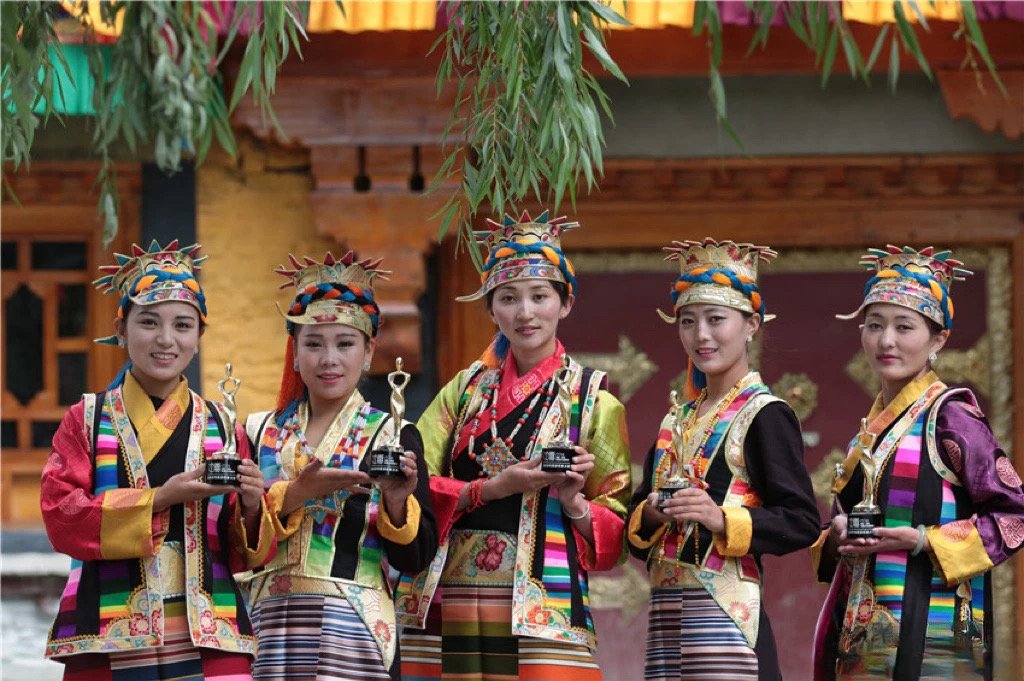
Wearing new or carefully prepared traditional clothing is an important part of the celebration. Gongbo Tibetan clothing has distinctive regional characteristics. Traditional garments are often made from woolen fabrics, decorated textiles, and other materials, with different styles for men and women.
Families dress in their finest clothes to welcome the New Year. When visiting relatives and friends, people exchange khata, traditional white ceremonial scarves, as a gesture of respect and good wishes. Hosts may also present chemar, a traditional offering box containing roasted barley flour and other symbolic offerings, to welcome guests and express wishes for prosperity, happiness, and a successful year.
Unique Gongbo Losar Traditions
One of the most fascinating aspects of Gongbo Losar is the variety of customs practiced by local families. Many reflect the close relationship between people, animals, agriculture, and the natural environment.
Inviting the Family Dog to a New Year Feast
Perhaps the most unusual and memorable Gongbo Losar tradition is inviting the family dog to a special New Year feast. Dogs have traditionally played an important role in Tibetan households, helping protect homes, livestock, and property. During Gongbo Losar, they are treated as special guests and given an opportunity to enjoy a festive meal.
Families arrange different kinds of food on a wooden board or tray. Offerings may include tsampa (roasted barley flour), meat, butter, cheese, and other foods. The dog is then invited to eat, and family members observe which food it chooses first.
According to local beliefs, the dog’s choice provides a symbolic prediction of the coming year’s prosperity:
- If the dog first eats tsampa or grain-based food, it is considered a good sign for agricultural production and an abundant harvest.
- If it chooses butter or dairy products, it symbolizes prosperity in animal husbandry and livestock production.
- Other food choices may also carry traditional meanings depending on local interpretations.
This charming custom reflects the importance of dogs in rural life and the close relationship between Gongbo families and their animals. It also expresses people’s hopes for abundance and good fortune in the coming year.
Eating Jieda: The Traditional New Year Feast
Another distinctive Gongbo Losar tradition is eating Jieda, a traditional festive food associated particularly with the Gongbo region. Jieda is prepared by mixing yak butter, milk, tsampa, and sugar into a soft mixture that is shaped and heated over the household fireplace. Families traditionally gather around the fire to warm and eat it together.
The food is sometimes enjoyed with local flatbread, including buckwheat bread. More than simply a festive dish, Jieda represents family reunion and the enjoyment of a prosperous New Year. Sharing it around the fireplace creates a warm atmosphere in which relatives can talk, exchange blessings, and celebrate together.
Other festive foods may include khapse, barley wine, yak meat, and locally prepared pork dishes. Tibetan incense pork, known as Tibetan fragrant pig, is another well-known specialty of the Nyingchi region. For visitors, tasting Jieda is one of the most interesting ways to experience the local food culture during Gongbo Losar. Tibet Autonomous Region Government+1
Carrying the First Water of the New Year
The first-water ritual is another meaningful custom associated with Gongbo Losar. Early on New Year’s morning, women traditionally rise before sunrise and prepare to collect fresh water from a nearby spring, river, or other water source. They carry water containers and may bring barley wine, tsampa, and other offerings. At the water source, they perform sang, a traditional smoke offering using aromatic branches, while making prayers for good health, happiness, and prosperity.
In some local accounts, women carrying the first water back to their homes should avoid turning around or speaking along the way. The first water symbolizes purity, renewal, and the blessings of life. Bringing it home represents welcoming good fortune into the household at the beginning of the New Year.
The custom also reflects the importance of water in traditional agricultural communities, where a reliable supply is essential for families, livestock, and crops.
Worshipping the Harvest Goddess
Agriculture has traditionally played an important role in the lives of Gongbo communities. As a result, prayers for favorable weather and a successful harvest are central to some New Year customs. On New Year’s morning, families traditionally prepare offerings and visit an important agricultural field belonging to their household.
They make offerings and prayers to the harvest goddess, asking for favorable weather, healthy crops, sufficient water, and abundant harvests in the coming year. The ritual expresses gratitude for the land and the natural resources that sustain local communities. It also demonstrates how Gongbo Losar connects the New Year calendar with the agricultural cycle and the traditional beliefs of the people who live in the region.
Traditional Archery, Folk Music, and Dancing
After the household rituals and New Year offerings, Gongbo Losar becomes a lively community celebration. Traditional sports, music, dancing, and friendly competitions bring villagers together.
Gongbo Whistling Arrows: A Unique Archery Tradition
Traditional archery is among the most important cultural activities associated with Gongbo Losar. Known locally as Bixiu (Gongbo whistling arrows), this distinctive form of archery uses specially designed arrows that produce a whistling sound as they travel through the air. The arrows create a characteristic sound that distinguishes Gongbo archery from ordinary target shooting. Traditionally associated with hunting and military practices, whistling arrows have gradually developed into an important cultural and sporting tradition.
During New Year celebrations, local men gather in open fields to demonstrate their archery skills. Participants wear traditional Gongbo clothing, carry bows and arrows, and compete in front of enthusiastic spectators. Traditional arrow songs and performances accompany the competitions, adding to the festive atmosphere.
The practice is more than a sporting event. It represents the region’s historical identity, traditional skills, and community pride. Gongbo whistling archery continues to be an important feature of local cultural celebrations. linzhi.gov.cn+1
Traditional Games and Friendly Competitions
Alongside archery, traditional physical competitions provide entertainment during the festival. Depending on the village and the organized celebration, activities can include stone-lifting competitions, wrestling, strength challenges, and traditional Tibetan dice games.
These activities reflect the physical skills and recreational traditions of earlier generations. For local communities, they are also an opportunity for younger people to learn traditional games and participate in activities that have long been associated with Gongbo social life.
Gongbo Folk Songs and Traditional Dancing
Music and dancing are essential parts of Gongbo Losar. During the celebrations, villagers sing traditional folk songs and perform regional dances, often wearing colorful traditional clothing. Group dancing, particularly Guozhuang (Gorshey), brings people together in circles, accompanied by rhythmic singing and music.
Traditional Tibetan instruments, including the dranyen (Tibetan lute), may accompany folk performances. During the daytime, families and villagers gather for cultural performances, competitions, and social activities. In the evening, bonfires create a warm gathering place where people sing, dance, drink barley wine, and enjoy festive food.
These celebrations strengthen relationships between families and neighbors while helping preserve the songs, dances, and musical traditions of the Gongbo region.
Visiting Relatives and Sharing New Year Blessings
Family reunion and hospitality are at the heart of Gongbo Losar. During the New Year period, people dress in their finest traditional clothing and visit relatives, friends, and neighbors. Guests are welcomed with food, drinks, and traditional offerings.
Families exchange khata and New Year greetings, wishing one another good health, happiness, successful harvests, and prosperity. One distinctive community custom is Qiang Guo, described in some local accounts as a traditional visiting and singing activity.
Groups of women, sometimes led by an older woman, visit different households while singing and dancing. Women from the host household may join the group, and the gathering continues as they visit other families in the village.
Through these visits, songs, dances, and good wishes are shared throughout the community. Although the precise forms of this custom can vary between villages, the underlying spirit is the same: celebrating together, strengthening family relationships, and welcoming the New Year with happiness.
How Long Does Gongbo Losar Last?
The main festival begins on the first day of the tenth Tibetan lunar month, but celebrations are not necessarily limited to a single day. Traditional family rituals, village gatherings, archery competitions, dancing, and religious offerings can take place over several days. Some local celebrations continue toward the fifteenth day of the month.
The third day is also associated in some Gongbo communities with visits to sacred hills and mountains. People may carry prayer flags, barley wine, and tsampa to perform sang offerings, hang prayer flags, sing, and dance. The exact schedule differs between villages and may also depend on local cultural events organized for visitors.
Experience Gongbo Losar in Nyingchi, Tibet
Gongbo Losar offers travelers a different perspective on Tibetan culture. While many visitors associate Tibet with monasteries, Buddhist festivals, and the famous Tibetan New Year in Lhasa, the Gongbo region preserves a distinctive collection of local customs and celebrations.
Nyingchi is also known for its forests, rivers, traditional villages, and comparatively mild climate. November is an interesting time to explore the region, particularly for visitors interested in combining cultural experiences with sightseeing.
Where to Experience Gongbo Losar
The traditional festival is mainly associated with the Gongbo communities of present-day Nyingchi.
Areas of particular cultural interest include:
- Bayi District: An important center for Gongbo cultural activities and New Year celebrations.
- Milin: A region with distinctive Gongbo traditions, traditional villages, and agricultural communities.
- Gongbo’gyamda (Gongbu Jiangda): Another important part of the historical Gongbo region, with its own local customs and cultural heritage.
Official cultural and tourism activities have also been organized in villages such as Maiba Village in Bayi District. However, the location and program of public celebrations can change from year to year.
Travel Tips for Visitors
If you are planning to experience Gongbo Losar, consider the following suggestions:
- Arrive before New Year’s Day: Visit a few days early to see families preparing food, decorating their homes, and getting ready for the festival.
- Check local event schedules: Public performances and cultural activities may take place in different villages each year.
- Wear warm clothing: November in Nyingchi can bring cold mornings and evenings, even when daytime temperatures are comfortable.
- Respect local customs: Ask permission before photographing people, household ceremonies, religious offerings, or private family gatherings.
- Try traditional food: If invited, enjoy local dishes such as Jieda, khapse, barley wine, and Tibetan fragrant pork.
- Participate respectfully: If public archery demonstrations, folk dancing, or cultural activities are open to visitors, follow local instructions and participate appropriately.
For international visitors, travel arrangements should also account for Tibet’s applicable foreign-traveler permit and organized-tour requirements. Planning with a licensed local travel agency can help coordinate transportation, accommodation, permits, and festival visits.
Frequently Asked Questions About Gongbo Losar
1. What is Gongbo Losar?
Gongbo Losar, also called Kongpo Losar or Gongbu New Year, is a traditional New Year celebration of the Gongbo region in Nyingchi, eastern Tibet. It is celebrated on the first day of the tenth Tibetan lunar month.
2. When is Gongbo Losar in 2026?
Gongbo Losar in 2026 falls on November 10, 2026, corresponding to the first day of the tenth Tibetan lunar month in the Fire Horse year.
3. Why does Gongbo celebrate New Year earlier than other parts of Tibet?
According to local legend, the Gongbo king moved the New Year celebration forward so that soldiers could celebrate with their families before leaving to defend their homeland. This tradition is believed to have established the first day of the tenth Tibetan month as Gongbo New Year.
4. What are the most unusual Gongbo Losar traditions?
Some of the most distinctive customs include inviting family dogs to a special feast, eating Jieda around the fireplace, carrying the first water of the New Year, worshipping the harvest goddess, and competing in traditional whistling-arrow archery.
5. Where can travelers experience Gongbo Losar?
The festival is mainly celebrated in Bayi District, Milin, and Gongbo’gyamda in Nyingchi. Visitors can experience local celebrations, traditional food, archery, folk dancing, and cultural performances, depending on the village and annual event schedule.
6. Is Gongbo Losar the same as Tibetan Losar?
No. Both are traditional Tibetan New Year celebrations, but they take place at different times. Gongbo Losar falls on the tenth Tibetan lunar month, while the widely celebrated Tibetan Losar takes place on the first day of the first lunar month.
Conclusion: A Celebration of Gongbo Culture and Tibetan Heritage
Gongbo Losar is much more than an alternative date for celebrating the Tibetan New Year. It is a cultural tradition shaped by the history, environment, agricultural lifestyle, and community spirit of the Gongbo people.
Every custom carries a meaningful message. Cleaning the home represents a fresh beginning. Sharing Jieda around the fireplace celebrates family reunion. Inviting the family dog to a New Year feast expresses the close relationship between people and animals. Carrying the first water symbolizes renewal and prosperity, while offering prayers in agricultural fields expresses gratitude for the land and hopes for a successful harvest.
Traditional archery, folk songs, dancing, and visits between households bring the community together and help preserve its cultural identity. For travelers, Gongbo Losar provides an opportunity to experience a different side of Tibet, beyond its famous monasteries, sacred mountains, and spectacular Himalayan landscapes. It is a chance to discover the living traditions of eastern Tibet and understand how local communities continue to celebrate their history and heritage.
If you are planning a trip to Nyingchi in November, consider including Gongbo Losar in your itinerary. Experiencing this traditional New Year celebration can make your journey through eastern Tibet particularly memorable.
Research references
The article has been updated using regional tourism and government cultural information, including:
- Nyingchi Culture and Tourism Bureau – Gongbo New Year traditions and visitor activities.
- Tibet Autonomous Region Government – Gongbo New Year customs and traditional food.
- China Tibetology Research Center – Tibetan New Year traditions in Nyingchi.
- Nyingchi Government – The cultural heritage of Gongbo whistling arrows.
- 2026 Tibetan calendar – Gregorian date conversion.