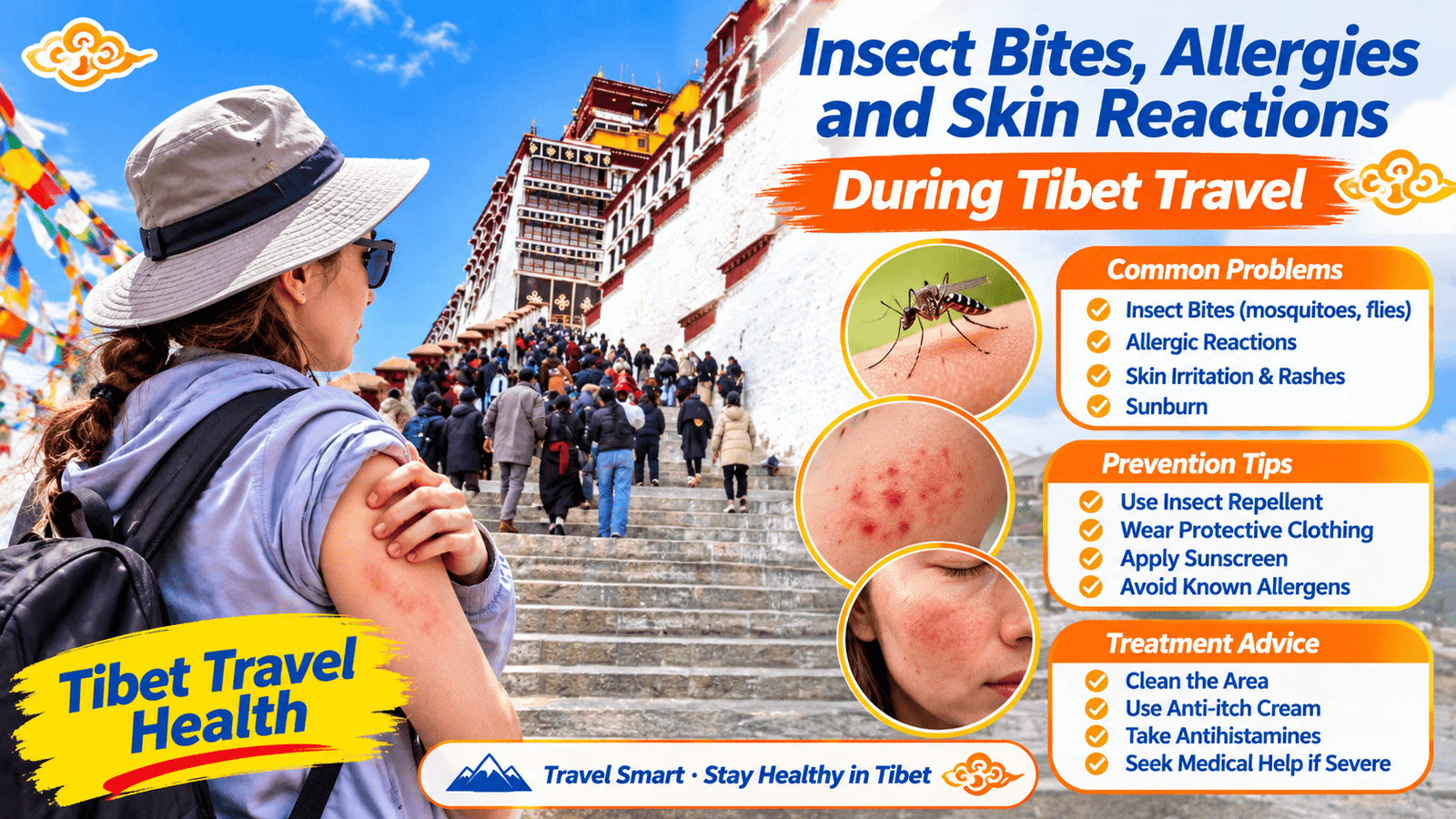
Tibet is known for its high mountains, grasslands, lakes, valleys and remote outdoor landscapes. During warmer months, visitors may spend time walking through grassland areas, exploring rural villages, camping or trekking near lakes and rivers. As with outdoor travel in other regions, insects and other small arthropods may sometimes cause bites, stings, itching or skin irritation.
Most ordinary insect bites cause only temporary discomfort. However, some reactions can become infected, trigger an allergic response or require medical attention.
This guide explains how to reduce insect exposure, manage common skin reactions and recognize symptoms that need medical care during a Tibet trip.
Are Insect Bites a Major Concern in Tibet?
Insect exposure varies with location, season, weather, altitude and the type of outdoor activity. A traveler spending most of their time in Lhasa hotels and urban sightseeing areas may have a different experience from someone camping, trekking or staying near grasslands and water.
It is not appropriate to assume that every insect-related disease occurs throughout Tibet or that all visitors face the same risk. Specific disease risks depend on the local environment and current public-health information.
For most travelers, practical precautions focus on preventing bites, avoiding contact with unfamiliar insects and animals, and keeping irritated skin clean.
1. Common Insect-Related Problems During Travel
Outdoor travelers may encounter several types of insects and other small arthropods.
Mosquito bites
- Mosquitoes can cause small, itchy bumps, redness and localized swelling.
- Some people develop larger reactions around the bite.
- The level of mosquito exposure varies by season and location.
- Avoiding bites is a sensible general precaution, but do not assume that a particular mosquito-borne disease is present at every Tibet destination.
Fly and other insect bites
- Some biting flies and other insects can cause painful or itchy skin reactions.
- The affected area may become red, swollen or tender.
- Scratching can damage the skin and increase the chance of secondary infection.
Bee and wasp stings
- Bees and wasps can cause immediate pain, redness and swelling.
- Most reactions remain local, but some people develop severe allergic reactions that affect breathing, circulation or multiple body systems.
Ticks
- Ticks are small arachnids, not insects. They may be found in some outdoor environments, including areas with grass, shrubs and other vegetation.
- A tick can attach to the skin without being noticed immediately.
- After outdoor activities, checking your body and clothing is a useful precaution.
- Not every tick carries disease, and the presence of ticks does not establish that a particular tick-borne disease is common in the area.
2. How to Prevent Insect Bites in Tibet
Prevention is usually easier than treating multiple itchy bites during a long journey.
Wear Protective Clothing
When walking through grassland or areas with dense vegetation, consider wearing:
- Long-sleeved shirts
- Long trousers
- Closed footwear
- Socks that cover the ankles
- A hat or suitable head covering
Tuck trousers into socks when walking through areas where ticks may be present. Light-colored clothing can also make it easier to notice ticks crawling on fabric.
Use Insect Repellent
Use an insect repellent that is approved for your intended use and follow its label instructions.
Common active ingredients in effective repellents include:
- DEET
- Picaridin or icaridin
- IR3535
- Oil of lemon eucalyptus or its registered active ingredient, PMD
The suitable product and duration of protection depend on its formulation and concentration. Apply repellent according to the label. Avoid spraying it directly into the eyes or mouth, and follow age-related precautions for children.
If you also use sunscreen, follow the product instructions for applying both products. Some combined products may require different application practices.
Protect Clothing and Outdoor Equipment
Permethrin-treated clothing and equipment can provide additional protection against certain insects and ticks.
Important precautions:
- Use only products specifically labeled for clothing or equipment.
- Never apply clothing-treatment permethrin products directly to skin.
- Follow instructions for drying and washing treated clothing.
- Keep treated items away from pets where product instructions require it.
Reduce Exposure Around Accommodation
If you are staying in a room without screened windows or doors, keep openings closed when practical or use suitable mosquito netting where necessary. For camping, use a properly fitted net when appropriate and inspect sleeping equipment before use. Avoid leaving food waste uncovered around campsites, as it can attract insects and other animals.
3. How to Recognize an Insect Bite Reaction
The appearance of a bite depends on the insect, the amount of exposure and the person’s individual response.
Common local symptoms include:
- A small raised bump
- Itching
- Redness or discoloration
- Local swelling
- Mild pain or tenderness
- A small puncture mark
Some people develop a larger local reaction, with swelling extending beyond the immediate bite area. Skin color changes may look different on different skin tones. Warmth, tenderness, swelling and changes in the affected area can be useful clues in addition to redness. Most uncomplicated bites gradually improve over several days.
4. What to Do After an Insect Bite
For an ordinary bite or sting without serious symptoms, basic first aid may be sufficient.
- Move away from the insect or area where the exposure occurred.
- Wash the affected skin with soap and clean water.
- If a stinger remains, remove it promptly and carefully.
- Apply a cold pack wrapped in cloth to help reduce swelling.
- Avoid scratching the affected area.
- Keep the skin clean and monitor it for changes.
For itching, some people may benefit from an appropriate antihistamine or topical treatment. Ask a pharmacist or healthcare professional which product is suitable for your age, medical history and other medicines.
Do not apply multiple creams or strong chemicals to irritated skin without checking whether they are appropriate.
How to Remove a Bee Stinger
If a bee stinger remains in the skin, remove it as soon as possible. It can be gently scraped sideways with a fingernail or the edge of a card.
Wash the area afterward. A retained stinger should not be left in place while you search for special equipment.
5. Tick Bites: How to Check and Remove a Tick
After walking through grassy or brushy areas, check your clothing and exposed skin for ticks.
Pay attention to:
- Behind the knees
- Around the waist
- Under the arms
- Around the ears
- The scalp and hairline
- Between the legs
- Around the ankles
Check backpacks and other outdoor equipment as well.
How to Remove an Attached Tick
For most people, current CDC guidance recommends removing an attached tick promptly with clean, fine-tipped tweezers.
- Grasp the tick as close to the skin as possible.
- Pull upward with steady, even pressure.
- Avoid twisting or jerking the tick.
- Clean the bite area and your hands after removal.
- Check your body for additional ticks.
Do not use petroleum jelly, nail polish, heat or other substances to try to make the tick detach. If you cannot remove the tick safely, seek medical assistance.
Important exception: People with a known severe tick allergy should follow their specialist’s individual emergency plan rather than relying on routine tick-removal advice. Some people with severe tick allergy need medical assistance for removal.
What to Watch for After a Tick Bite
Monitor your health after a tick bite.
Seek medical advice if you develop:
- Fever
- A new or spreading rash
- Unusual headache
- Muscle or joint aches
- Swollen lymph nodes
- Unexplained fatigue
- Other new symptoms in the days or weeks after exposure
Tell the healthcare professional when and where the bite occurred and, if known, how long the tick was attached.
Do not assume that every bite requires antibiotics. Treatment decisions depend on the exposure, symptoms, location and medical assessment.
6. Skin Allergies and Other Reactions During Tibet Travel
Not every itchy rash is caused by an insect. Travelers may develop skin reactions from several different exposures.
Contact Dermatitis
Contact dermatitis occurs when the skin reacts to something it touches.
Possible triggers include:
- New soaps or shampoos
- Laundry detergents
- Fragrances
- Sunscreen ingredients
- Clothing dyes or materials
- Plants
- Adhesives and medical tapes
- Some topical medicines
Symptoms may include itching, redness, dryness, swelling or small blisters. A useful first step is to stop using the suspected product and gently wash the affected skin. Seek medical advice if the reaction is extensive, painful or persistent.
Hives (Urticaria)
Hives are raised, itchy skin welts that may appear suddenly and change location over time. They can be triggered by insect stings, medicines, foods, infections, temperature changes or other causes. A small area of hives may remain a skin-only reaction, but hives accompanied by breathing difficulty, throat swelling, faintness or other signs of a severe allergic reaction are an emergency.
Heat and Sweat-Related Skin Irritation
Long walks, warm clothing and sweating can irritate the skin. Areas where clothing rubs or sweat collects may develop redness, itching or small bumps.
To reduce irritation:
- Wear comfortable, breathable clothing.
- Change out of wet or heavily sweaty clothes.
- Keep skin folds clean and dry.
- Avoid harsh soaps and strongly scented products.
- Reduce friction from tight clothing.
Sun-Related Skin Reactions
Tibet’s strong ultraviolet exposure can cause sunburn and may aggravate some skin conditions. Some medicines and skin products can also increase sensitivity to sunlight. Protect exposed skin with broad-spectrum sunscreen, suitable clothing and sunglasses. If a rash appears after sun exposure, consider whether it may be sunburn, a medication reaction or another skin condition.
7. How to Recognize a Serious Allergic Reaction
Medical emergency
A severe allergic reaction is called anaphylaxis. It can develop rapidly after an insect sting, certain bites or another allergen exposure.
Warning signs include:
- Difficulty breathing or wheezing
- Swelling of the tongue, lips or throat
- Difficulty swallowing
- Sudden dizziness or collapse
- Fainting or loss of consciousness
- Widespread hives or swelling with other systemic symptoms
- Severe symptoms involving more than one body system
Anaphylaxis can occur even when there is no obvious rash.
What to Do
- Call local emergency medical services immediately.
- If the person has a prescribed epinephrine (adrenaline) auto-injector, help them use it according to their emergency action plan.
- Keep the person lying down if possible. If breathing is difficult, allow a position that makes breathing easier without letting them stand or walk suddenly.
- Stay with the person and monitor their breathing and responsiveness.
- Follow emergency dispatcher instructions.
Do not rely on antihistamines as a substitute for epinephrine in anaphylaxis. Antihistamines do not treat the dangerous airway and circulation problems of a severe allergic reaction.
If you have a known history of serious insect-sting allergy, discuss travel plans with your doctor before departure. Ask whether you should carry an epinephrine auto-injector and make sure you know how to use it.
8. When Should You Seek Medical Attention?
Seek medical advice if:
- The bite or sting becomes increasingly painful.
- Redness, warmth or swelling continues to spread.
- Pus or fluid develops.
- You develop a fever.
- You experience a rash after a tick bite.
- A bite occurs in the mouth, throat or near the eye.
- Symptoms worsen or fail to improve.
- You have a history of serious allergic reactions.
Seek emergency help immediately for breathing difficulty, throat or tongue swelling, collapse or other signs of anaphylaxis.
In remote parts of Tibet, medical assistance may take longer to reach you. Inform your guide or travel companion early if symptoms are worsening.
9. What to Pack for Insect and Skin Protection
A small personal kit can be useful for outdoor trips.
| Item | Purpose |
|---|---|
| Suitable insect repellent | Reducing bites |
| Long-sleeved outdoor clothing | Covering exposed skin |
| Fine-tipped tweezers | Removing ticks |
| Soap or skin-cleaning supplies | Cleaning bites and minor wounds |
| Cold pack or reusable cold compress | Reducing local swelling |
| Suitable anti-itch product | Relieving minor itching |
| Clean dressings | Protecting scratched or broken skin |
| Sunscreen | Protecting against UV exposure |
| Personal prescribed allergy medication | Managing known medical conditions |
If you have a history of anaphylaxis, your emergency medication and action plan should be readily accessible rather than packed in checked luggage.
Frequently Asked Questions
Are mosquito bites common in Tibet?
Insect exposure varies by season, location and outdoor activity. Travelers spending time in grasslands, near water or in rural areas may encounter different conditions from those staying mainly in urban areas. Use practical bite-prevention measures.
Should I bring mosquito repellent to Tibet?
Yes, a suitable insect repellent is a useful addition to an outdoor travel kit, particularly for camping, trekking and rural travel. Choose a product appropriate for your age and circumstances and follow its label.
Can insect bites cause serious allergic reactions?
Yes. Most bites cause minor local symptoms, but some insect stings can trigger anaphylaxis. Difficulty breathing, throat swelling, fainting or sudden collapse requires emergency medical assistance.
How should I treat an itchy insect bite?
Wash the area with soap and clean water, apply a cold compress and avoid scratching. An appropriate antihistamine or topical product may help, but check with a pharmacist if you are unsure what to use.
What should I do if I find a tick on my body?
For most people, remove it promptly with fine-tipped tweezers by grasping close to the skin and pulling steadily upward. Clean the area afterward and monitor for symptoms. Anyone with a known severe tick allergy should follow their specialist’s specific instructions.
Should I take antibiotics after an insect bite?
Not automatically. Most uncomplicated bites do not require antibiotics. A healthcare professional should assess signs of infection or any suspected insect-borne illness before deciding on treatment.
Can a skin rash be caused by something other than insects?
Yes. Contact dermatitis, hives, sunburn, heat irritation, medication reactions and infections can all cause rashes. A persistent or worsening rash should be assessed rather than automatically assumed to be an insect bite.
Internal Links to Add
- First Aid Kit for Tibet Travel: Essential Medicines and Supplies
- Sunburn at High Altitude: Symptoms, Prevention and Treatment
- Medication and Sun Sensitivity: Medicines That Can Increase UV Reactions
- Dry Skin, Dry Nose and Nosebleeds in Tibet: Causes and Care
- Tibet Travel Checklist: Essential High-Altitude Gear and Safety Tips
- Traveler’s Diarrhea in Tibet: Causes, Prevention and Treatment
Medical Disclaimer
This article provides general information about insect bites, skin irritation and allergic reactions. It is not a substitute for medical diagnosis or treatment. Seek emergency assistance for suspected anaphylaxis and professional assessment for worsening skin reactions, suspected infection or symptoms following a tick bite.
References
- CDC Travelers’ Health: Avoid Bug Bites.
- CDC: What to Do After a Tick Bite, June 9, 2026.
- NHS: Insect Bites and Stings.
- NaTHNaC TravelHealthPro: Insect and Tick Bite Avoidance.
- Mayo Clinic: Insect Bites and Stings: First Aid.