Trekking in Tibet can involve long walks across rocky paths, uneven ground, mountain trails and high-altitude passes. Whether you are walking around Everest Base Camp, exploring remote valleys or completing the Mount Kailash pilgrimage, your feet play an important role in making the journey comfortable and safe.
Blisters, pressure points, bruised toenails and foot pain are common problems during long-distance walking. They can affect experienced hikers as well as first-time trekkers, particularly when footwear is new, poorly fitted or unsuitable for the terrain.
Good foot care starts before you arrive in Tibet. Choosing the right footwear, wearing suitable socks, gradually increasing walking distances and treating friction early can help prevent small problems from becoming serious.
This guide explains how to prepare and care for your feet during a Tibet trekking trip.
Why Is Foot Care Important for Tibet Trekking?
Tibet’s trekking routes vary considerably. Some involve relatively easy walks around lakes, monasteries and scenic viewpoints, while others require several hours of walking over uneven mountain terrain.
The Mount Kailash kora, for example, is approximately 52 kilometres and usually takes three days to complete. The route crosses the high Drolma La Pass, at approximately 5,630 metres. Walking conditions can include rocky paths, loose stones, steep sections and changing weather.
These conditions place repeated pressure on the feet.
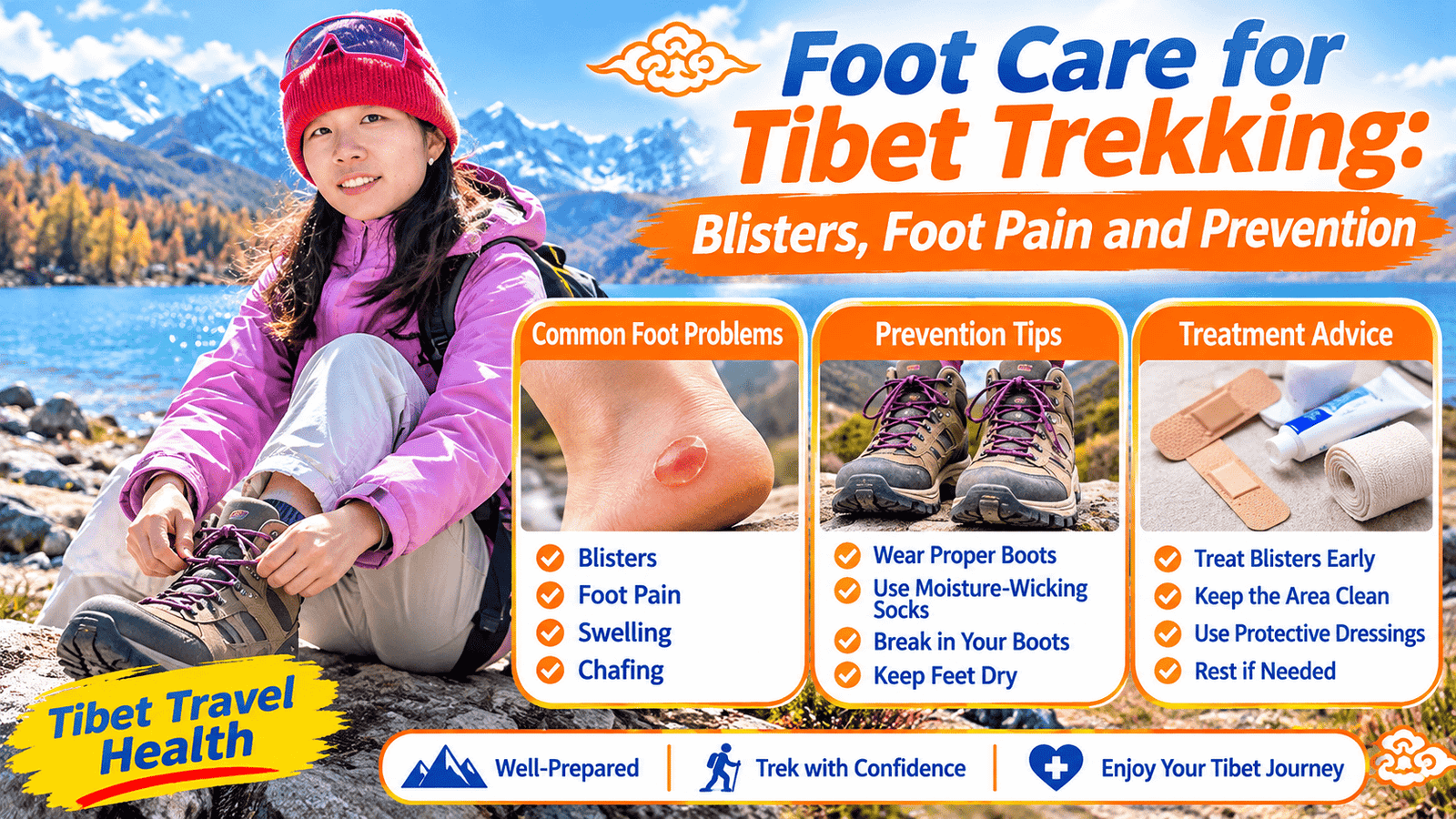
Common trekking-related problems include:
- Friction blisters on the heels and toes
- Painful pressure points
- Bruised or damaged toenails
- Swelling after long walks
- Foot fatigue and muscle soreness
- Ankle discomfort on uneven ground
- Cuts and scrapes from rocks or rough terrain
At high altitude, fatigue and reduced physical capacity may also affect walking technique and balance. Appropriate footwear and regular rest are therefore important parts of trekking preparation.
1. Choose the Right Hiking Boots or Shoes
Your footwear should match the route, terrain, weather and your individual foot shape.
A good pair of hiking shoes or boots should feel comfortable from the beginning. They should not depend on painful pressure or prolonged wear to become suitable.
What to look for
- Correct length: Your toes should not repeatedly hit the front of the shoe when walking downhill.
- Suitable width: Your toes should have enough room to spread naturally.
- Secure heel: Your heel should not slide excessively when walking.
- Comfortable support: The sole should provide suitable grip and stability for the terrain.
- Appropriate protection: Rocky trails may require stronger soles and protective uppers.
- Weather suitability: Consider waterproofing, breathability and insulation according to the season and route.
Try hiking footwear while wearing the socks you intend to use on the trek.
Your feet may become slightly larger after walking for a long time, so test shoes later in the day when possible. Walk uphill and downhill during fitting if the shop or testing area allows it.
Should you wear hiking boots or trail shoes?
For rocky, uneven or cold routes, supportive hiking boots may provide useful protection and stability. For easier trails, some experienced walkers may prefer well-fitting trail shoes.
There is no single best option for everyone. The important factors are fit, comfort, grip, protection and suitability for the route.
2. Break in Your Footwear Before Traveling
Avoid starting a demanding Tibet trek in brand-new boots.
Wear your chosen footwear during shorter walks before departure. Gradually increase the distance and walking time so you can identify rubbing, pressure points and discomfort.
A useful preparation routine includes:
- Wear the shoes around your home or neighborhood.
- Take short walks on different surfaces.
- Gradually increase walking distance.
- Include uphill and downhill walking when possible.
- Test the footwear with your trekking socks.
- Check for redness, hot spots or pain after every walk.
If a shoe repeatedly causes rubbing or pressure, change the fit or choose different footwear before your trip.
Do not assume that painful boots will eventually become comfortable.
3. Wear Suitable Trekking Socks
Socks help manage moisture and reduce friction between your feet and footwear.
For long walks, consider socks made from moisture-wicking synthetic fibers or suitable wool blends. Avoid relying on ordinary cotton socks for demanding trekking, as they can retain moisture.
Useful features include:
- Comfortable cushioning around the heel and forefoot
- A smooth toe seam
- A secure fit without excessive tightness
- Moisture management
- Suitable thickness for your boots
Some hikers prefer a thin liner sock beneath a thicker hiking sock. Others find that a single well-fitting technical sock works better. Test your preferred combination before departure.
Carry spare pairs and change socks when they become wet or heavily sweaty. Allow used socks to dry before wearing them again.
4. Prevent Blisters Before They Form
A friction blister develops when repeated rubbing and pressure damage the skin. Heat and moisture can increase the likelihood of blister formation.
A common early warning sign is a hot spot: an area of skin that feels warm, irritated or unusually sensitive.
Do not ignore a hot spot during a trek.
When you notice one:
- Stop walking and remove your shoe.
- Check the affected area.
- Dry the skin gently.
- Identify the source of rubbing or pressure.
- Apply suitable protective tape or a blister dressing.
- Adjust your socks or footwear before continuing.
Treating a hot spot early is usually easier than managing a large, painful blister later.
Common friction areas include:
- Back of the heel
- Sides of the toes
- Tops of the toes
- Ball of the foot
- Areas where footwear seams or straps rub
Use blister pads, hydrocolloid dressings or suitable sports tape if you know they work well with your footwear. Test any adhesive product before your trip to check for skin irritation.
5. How to Care for a Foot Blister
A blister is a pocket of fluid beneath the outer layer of skin. The intact skin helps protect the tissue underneath.
For a small blister that is not causing significant pain:
- Keep the area clean and dry.
- Protect it with a suitable blister dressing.
- Reduce pressure and friction.
- Avoid unnecessary puncturing or peeling of the skin.
If a blister opens naturally, gently clean the area with clean water, protect the exposed skin with a sterile dressing and change the dressing if it becomes wet or dirty.
Do not pull away the remaining skin unless a healthcare professional advises you to do so.
A large, very painful or repeatedly pressured blister may need professional assessment. Some wilderness medicine guidance describes sterile drainage while preserving the overlying skin in selected cases, but this is not a reason to puncture blisters with an unclean needle on the trail.
Signs that a blister may be infected
Seek medical advice if you notice:
- Increasing redness around the wound
- Increasing warmth or swelling
- Pus or cloudy discharge
- Worsening pain
- Redness spreading away from the blister
- Fever or feeling generally unwell
Do not continue a demanding trek on a worsening infected wound without medical assessment.
6. Prevent Toenail Injuries and Foot Pain
Downhill walking can push your toes toward the front of your shoes. If your footwear is too short or your laces are loose, repeated impact may cause bruising, pain or damage to the toenails.
To reduce this risk:
- Choose footwear with enough toe room.
- Secure your laces so your feet do not slide forward.
- Keep toenails trimmed and smooth.
- Avoid cutting toenails too short.
- Use suitable socks to reduce movement inside the shoe.
- Slow down on steep downhill sections.
If a toenail becomes badly bruised, very painful, lifted or separated from the nail bed, seek medical advice. Do not attempt to remove a damaged nail yourself.
Persistent foot pain should not be dismissed as ordinary trekking fatigue. Pain that becomes severe, prevents normal walking or is accompanied by significant swelling requires assessment.
7. Look After Your Feet During Long Trekking Days
A simple routine during the trek can help prevent minor problems.
Before starting
- Check your feet for redness, cuts or existing blisters.
- Put on clean, dry socks.
- Make sure there are no stones or sand inside your shoes.
- Tie your laces securely but not so tightly that they restrict circulation.
- Apply protective tape to known friction areas if needed.
During the walk
- Stop when you feel rubbing or unusual discomfort.
- Remove small stones or debris from your shoes.
- Adjust laces when moving between uphill and downhill sections.
- Change wet socks when practical.
- Take appropriate breaks.
After the walk
- Remove footwear and allow your feet to air.
- Wash away dirt when clean water is available.
- Dry carefully, especially between the toes.
- Check for blisters, cuts, swelling and bruising.
- Let shoes and socks dry before the next walking day.
Avoid placing wet hiking boots directly against a heater. Excessive heat can damage materials, affect fit and cause some footwear components to deteriorate.
8. Use Trekking Poles on Difficult Terrain
Trekking poles can help improve balance and reduce some of the load placed on the legs during uphill and downhill walking.
They may be especially useful on:
- Loose stones
- Steep descents
- Uneven mountain paths
- Snow-covered sections where conditions allow safe use
- Long walks when fatigue develops
Poles do not prevent every foot injury, and they cannot replace appropriate footwear or careful walking.
Use them with a comfortable rhythm and adjust their length to the terrain.
9. What to Pack for Foot Care in Tibet
A small foot-care kit can help you manage minor problems during a trekking trip.
| Item | Purpose |
|---|---|
| Blister dressings | Protecting areas affected by friction |
| Sports or medical tape | Covering known hot spots |
| Sterile gauze | Covering broken skin |
| Small antiseptic or wound-cleaning supplies | Cleaning minor wounds |
| Spare hiking socks | Replacing wet or uncomfortable socks |
| Nail clippers | Maintaining toenails |
| Small towel | Drying feet |
| Comfortable evening footwear | Giving feet a break from trekking boots |
| Personal pain-relief medicine | For appropriate use after professional advice if needed |
Keep the kit accessible during the walk rather than packed deep inside your main luggage.
10. When Should You Stop Trekking and Seek Medical Help?
Not every foot problem requires evacuation, but some symptoms should never be ignored.
Stop walking and seek medical assessment if you develop:
- Severe or worsening foot pain
- Inability to bear weight
- Significant swelling or deformity
- A deep cut or puncture wound
- Signs of wound infection
- A severely damaged or bleeding toenail
- Numbness or loss of normal sensation
- Pale, blue or unusually cold toes that do not recover with appropriate warming
In cold conditions, numbness, hard or waxy skin and persistent color changes may indicate a cold injury. Do not rub suspected frostbite or apply direct high heat. Follow appropriate emergency guidance and seek urgent medical care.
If foot pain makes it unsafe to continue, tell your guide and stop. On a remote route, continuing despite serious pain may increase the risk of a fall or a more serious injury.
Frequently Asked Questions
What shoes are best for trekking in Tibet?
Choose comfortable hiking footwear that matches your route and season. Rocky or cold routes may require supportive boots with good grip and protection, while easier trails may suit trail shoes. Fit and prior testing are more important than brand.
Should I buy new hiking boots just before my Tibet trip?
It is better to buy and test them well before departure. Wear them on progressively longer walks so you can identify rubbing and pressure points.
How can I prevent blisters during the Mount Kailash kora?
Use properly fitted, broken-in footwear, suitable moisture-wicking socks and blister protection for known problem areas. Stop and treat hot spots early rather than waiting for a blister to develop.
Should I pop a trekking blister?
Avoid deliberately popping a small, comfortable blister. The intact skin helps protect the area. Large or very painful blisters may need professional assessment and appropriate treatment.
Are trekking poles necessary for Tibet?
They are not essential for every route, but they can improve balance and provide support on steep or uneven terrain. They may be particularly useful during long descents.
Can I continue trekking with a painful blister?
It depends on its size, location and severity. A small protected blister may allow gentle walking, but severe pain, infection or difficulty walking means you should stop and seek medical advice.
Internal Links to Add
- Altitude Sickness on the Mount Kailash Pilgrimage: Symptoms, Prevention and Safety
- Tibet Travel Checklist: Essential High-Altitude Gear and Safety Tips
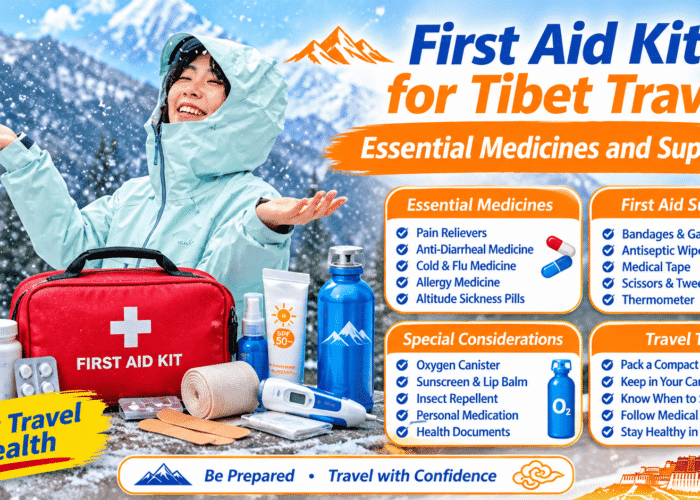
- First Aid Kit for Tibet Travel: Essential Medicines and Supplies
- Frostbite in Tibet: Early Symptoms, First Aid and Prevention
- Hypothermia in Tibet: Causes, Warning Signs and Emergency Treatment
- Exercise at High Altitude: Walking, Trekking and Managing Physical Effort
Medical Disclaimer
This article provides general information about trekking foot care and is not a substitute for medical diagnosis or treatment. Seek professional advice for severe pain, suspected infection, significant injuries or possible cold-related damage.
References
- Wilderness Medical Society, Practice Guidelines for Basic Wound Management in the Austere Environment.
- British Mountaineering Council, How to Prevent Blisters When Hiking.
- REI Expert Advice, Blister Prevention and Care.
- Alpine Club of Canada, Hiking and Backpacking Guidance.