Traveling in Tibet can be physically demanding. Visitors may experience long journeys, early starts, changes in sleep patterns, cold weather and unfamiliar surroundings. After arriving at high altitude, even ordinary activities such as walking, climbing stairs or carrying luggage may feel more tiring than usual.
Some travelers develop headaches, tiredness, poor concentration or a general feeling of exhaustion during the first days of their trip. These symptoms can have several causes. They may be related to travel fatigue, inadequate sleep, dehydration, illness or the body’s response to high altitude. The most important point is not to assume that every headache or tired feeling is harmless. Headache and fatigue can also be early symptoms of acute mountain sickness (AMS), while severe or unusual symptoms may indicate a medical emergency.
This guide explains common causes, practical prevention and warning signs during Tibet travel.
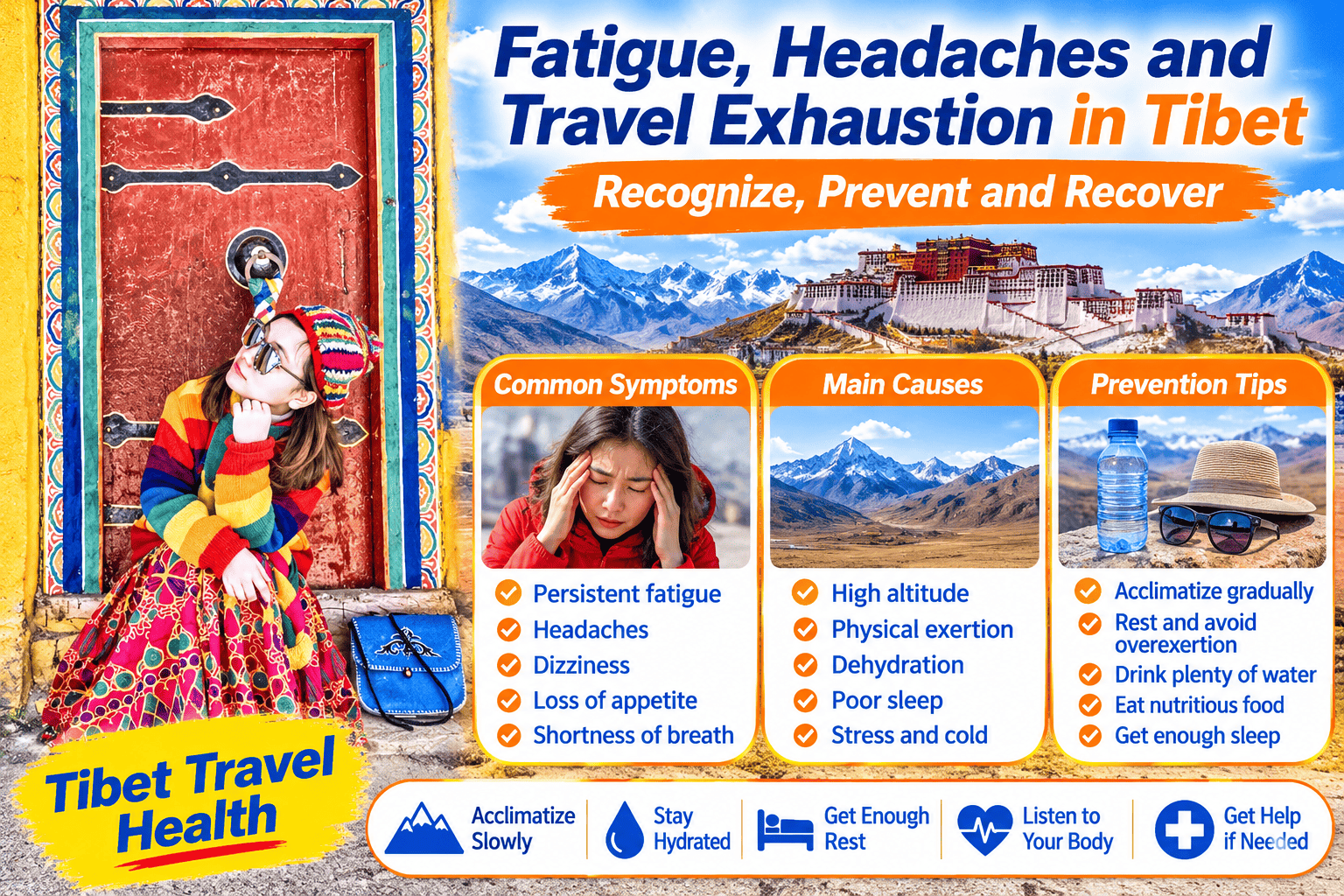
Why do travelers feel tired in Tibet?
Fatigue is a general feeling of physical or mental tiredness. It can develop for many reasons, especially during a journey involving long-distance travel and high elevation.
1. High altitude
- At high altitude, the air pressure is lower and less oxygen is available with each breath. The body needs time to adjust.
- During the early acclimatization period, travelers may notice reduced exercise tolerance, tiredness, headache or disturbed sleep.
2. Long journeys
- Traveling by plane, train or vehicle can be tiring.
- Long hours of sitting, changes in routine and limited opportunities for rest may contribute to exhaustion.
3. Poor sleep
- Some travelers sleep poorly after arriving at high altitude.
- They may wake frequently, experience periodic breathing during sleep or feel less refreshed in the morning.
- Poor sleep can contribute to daytime tiredness, headaches and difficulty concentrating.
4. Dehydration
- Inadequate fluid intake, vomiting, diarrhea or excessive sweating can cause dehydration.
- Possible symptoms include thirst, dark urine, dizziness, dry mouth, headache and tiredness.
5. Physical exertion
- Walking uphill, climbing stairs and trekking at high altitude require more effort than similar activities at lower elevations.
- Trying to maintain the same walking pace as at sea level can lead to unnecessary exhaustion.
6. Changes in routine
- Early hotel departures, irregular meals, unfamiliar food and time-zone changes may also affect energy levels.
7. Illness
- Respiratory infections, gastrointestinal illness, anemia, medication effects and other medical conditions can cause fatigue or headaches.
- Persistent symptoms should not automatically be blamed on altitude.
Common symptoms of travel fatigue
Travel fatigue may include:
- General tiredness
- Sleepiness during the day
- Reduced concentration
- Mild headache
- Irritability
- Reduced motivation
- Muscle tiredness
- Feeling less energetic than usual
These symptoms are nonspecific. They cannot reliably distinguish ordinary tiredness from altitude illness or another medical problem.
How can you reduce fatigue during a Tibet tour?
1. Allow time to acclimatize
- Do not plan strenuous sightseeing or trekking immediately after a major increase in sleeping altitude.
- Spend time resting after arrival and follow an itinerary that allows gradual adjustment.
- A sensible itinerary should include appropriate rest periods rather than rushing between high-altitude destinations.
2. Walk slowly
- Reduce your walking pace, especially during the first days.
- Take breaks when needed and avoid competing with other travelers.
- Your body may require more time to complete ordinary activities.
3. Get enough sleep
- Maintain a regular sleep routine where possible.
- Keep the room comfortable, avoid excessive late-night activity and allow enough time for rest.
- Do not use alcohol as a sleep aid at altitude.
4. Eat regular meals
- A balanced diet provides energy for sightseeing and walking.
- Choose foods that you can digest comfortably and avoid skipping meals during long travel days.
5. Maintain normal hydration
- Drink water regularly according to thirst and activity.
- Pay attention to fluid losses from sweating, vomiting or diarrhea.
- Do not force excessive amounts of water. Overhydration can be harmful.
6. Plan realistic daily activities
- Avoid combining a long drive, several sightseeing stops and strenuous walking into an unnecessarily demanding day.
- Allow time to rest, especially after arriving at a higher sleeping altitude.
7. Avoid alcohol during early acclimatization
- Alcohol can interfere with sleep, judgment and hydration.
- Avoiding it during the initial adjustment period is a sensible precaution.
Headaches in Tibet: What might cause them?
Headaches are common and have many possible causes.
During a Tibet journey, possible contributors include:
- Acute mountain sickness
- Poor sleep
- Dehydration
- Respiratory infections
- Tension or stress
- Long hours of travel
- Eye strain
- Skipping meals
- Medication side effects
A headache after ascending to high altitude deserves particular attention, especially when accompanied by nausea, dizziness or unusual tiredness.
Headache and acute mountain sickness
Acute mountain sickness can develop after ascending to high altitude without adequate acclimatization.
Common symptoms include:
- Headache
- Nausea or loss of appetite
- Dizziness
- Fatigue
- Difficulty sleeping
Symptoms often begin within hours after ascent, but timing varies. A traveler with a possible altitude-related headache should not simply take painkillers and continue ascending. Stop further ascent, assess the symptoms and seek medical advice when needed. If symptoms worsen, descent may be necessary. Severe altitude illness requires urgent medical treatment.
When are headache and fatigue dangerous?
Some symptoms require immediate attention.
Possible high-altitude cerebral edema (HACE)
HACE is a serious altitude-related brain condition. Warning signs include:
- Confusion
- Unusual behavior
- Severe drowsiness
- Difficulty walking in a straight line
- Loss of coordination
- Reduced consciousness
These signs require emergency action, including urgent descent and medical assistance where possible.
Possible high-altitude pulmonary edema (HAPE)
HAPE affects the lungs and can develop at high altitude.
Warning signs include:
- Breathlessness at rest
- Worsening breathlessness with activity
- Persistent or worsening cough
- Chest tightness
- Unusual weakness
- Reduced ability to walk normally
HAPE is a medical emergency. Do not assume these symptoms are ordinary travel exhaustion.
Other emergency headache symptoms
Seek emergency medical care for a sudden, extremely severe headache, a headache with confusion, fainting, weakness on one side of the body, speech difficulty, vision changes, fever with a stiff neck or a headache after a serious head injury.
How to distinguish fatigue from altitude sickness
| Feature | Travel fatigue | Possible altitude sickness |
|---|---|---|
| General tiredness | Common | Common |
| Headache | Can occur | Common |
| Nausea | May occur for other reasons | Common |
| Dizziness | Possible | Possible |
| Symptoms after ascent | Not specific | Important clue |
| Poor coordination or confusion | Not normal travel fatigue | Emergency warning sign |
| Breathlessness at rest | Not ordinary fatigue | Possible serious altitude illness |
The distinction cannot be made from one symptom alone. The timing of ascent, combination of symptoms and progression all matter. A pulse oximeter reading alone cannot diagnose or rule out altitude sickness.
Should you take painkillers for a headache?
Some travelers use over-the-counter pain relievers for headaches, but the choice depends on medical history, other medicines and possible side effects. Ask a healthcare professional or pharmacist which option is suitable, particularly if you have kidney disease, stomach ulcers, liver disease, take blood-thinning medicines or have other health conditions.
Most importantly, pain relief does not treat the underlying cause of altitude sickness. Do not use painkillers to hide worsening symptoms so that you can continue ascending.
A practical daily routine for the first days in Tibet
A gentle routine can help reduce unnecessary exhaustion:
- Morning: Get up gradually, eat breakfast and avoid rushing through the first sightseeing activity.
- During the day: Walk slowly, take breaks, drink normally and avoid strenuous exercise.
- Afternoon: Allow time to rest after sightseeing or a long drive.
- Evening: Eat a balanced meal, avoid alcohol and prepare for a full night’s rest.
- Before sleeping: Check how you feel. Pay attention to headache, nausea, dizziness, breathing and any unusual symptoms.
If symptoms are worsening, do not assume that sleep alone will solve the problem. Seek medical advice.
Frequently asked questions
Is it normal to feel tired after arriving in Lhasa?
Some travelers experience tiredness while adjusting to the altitude and travel schedule. However, severe or worsening fatigue, particularly with headache, nausea or dizziness, should be assessed for possible altitude illness.
Can dehydration cause headaches in Tibet?
Yes. Dehydration can cause headache, thirst, dizziness, dark urine and tiredness. However, headache after ascending to high altitude may also indicate AMS.
Should I rest if I feel exhausted?
Yes. Reduce activity and allow time to recover. If exhaustion is accompanied by worsening headache, nausea, poor coordination or breathlessness, seek medical assessment.
Does sleeping poorly mean I have altitude sickness?
Not necessarily. Sleep can be disturbed at high altitude for several reasons. However, difficulty sleeping is one of the symptoms considered when assessing possible AMS.
Can I use oxygen for travel fatigue?
Oxygen may improve low oxygen levels in certain situations, but it is not a general treatment for ordinary tiredness and does not replace acclimatization or descent when serious altitude illness is present.
Should I continue to Everest Base Camp if I have a headache?
Do not continue ascending if you have a possible altitude-related headache with other AMS symptoms. Stop ascent, assess your condition and seek medical advice. If symptoms worsen or severe warning signs appear, urgent descent and medical treatment may be necessary.
When should I see a doctor for persistent fatigue?
Seek medical assessment if fatigue is severe, unexplained, persistent or interfering with normal activities. It may be related to an illness, medication or another health condition rather than altitude alone.
Final advice
Fatigue and headaches are common complaints during demanding journeys, but they deserve attention in Tibet because high altitude adds another possible cause.
Walk slowly, allow time to acclimatize, sleep adequately, eat regular meals and maintain normal hydration. Avoid rushing to higher destinations when you feel unwell. A headache with nausea, dizziness or unusual tiredness after ascent may indicate altitude sickness. Confusion, poor coordination, severe drowsiness or breathlessness at rest are emergency warning signs.
Medical disclaimer: This article provides general health information and is not a substitute for professional medical advice, diagnosis or treatment. Suspected severe altitude illness requires urgent medical assessment and may require immediate descent.
Suggested internal links
- Altitude Sickness in Tibet: Complete Guide for Travelers
- Acute Mountain Sickness (AMS): Symptoms, Lake Louise Score and Treatment
- High-Altitude Cerebral Edema (HACE): Symptoms, Warning Signs and Emergency Treatment
- High-Altitude Pulmonary Edema (HAPE): Symptoms, Causes and Emergency Treatment
- Sleeping at High Altitude: Oxygen Levels, Periodic Breathing and Sleep
- Hydration at High Altitude: Water, Electrolytes and Dehydration
References
- CDC Yellow Book 2026, High-Altitude Travel and Altitude Illness.
- CDC Travelers’ Health, Travel to High Altitudes.
- NHS, Tiredness and Fatigue.
- NHS, Dehydration.
- MedlinePlus, Headaches: Danger Signs.