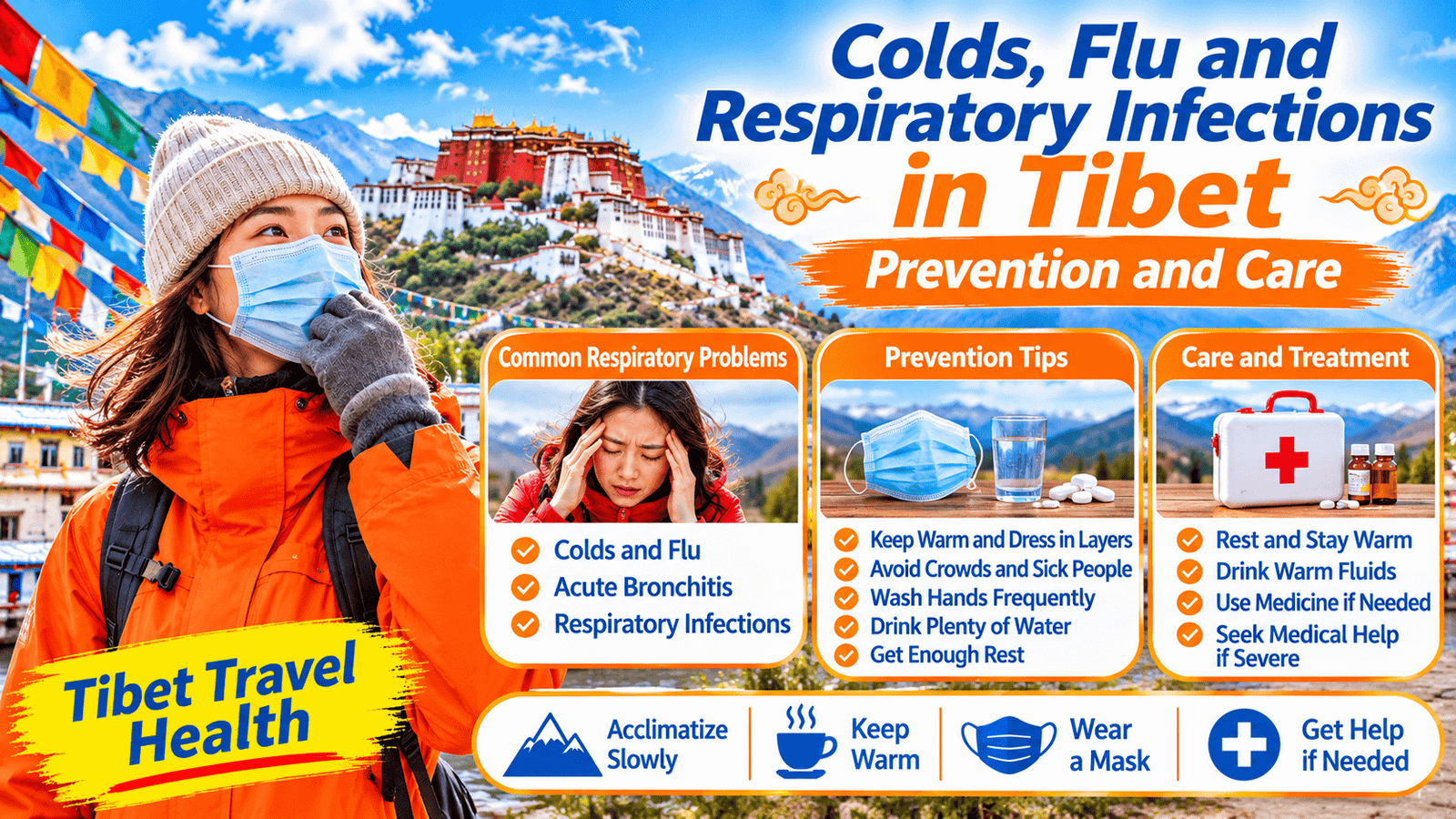
A respiratory infection can affect a Tibet trip at any time of year. Travelers may develop a runny nose, sore throat, cough, fever or general tiredness during a journey involving airports, trains, hotels, restaurants and group sightseeing. Common infections include the common cold, influenza and COVID-19. Other viruses can also cause respiratory symptoms.
Tibet’s cold and dry conditions may irritate the nose and throat, but it is important to distinguish environmental irritation from an actual infection. A sore throat caused by dry air is not the same as a viral illness accompanied by fever, body aches or a new cough. This guide explains how respiratory infections spread, how to reduce your risk and when to seek medical care during a Tibet tour.
What respiratory infections can travelers catch?
Respiratory infections affect the nose, throat and lungs. They can be caused by viruses or bacteria.
Common cold
The common cold is usually caused by viruses such as rhinoviruses and can also be caused by other respiratory viruses.
Typical symptoms include:
- Runny or blocked nose
- Sneezing
- Sore throat
- Mild cough
- Mild tiredness
- Sometimes a low-grade fever
Most colds improve without specific treatment.
Influenza (flu)
Influenza is a viral respiratory infection that can cause more sudden and intense symptoms than an ordinary cold.
Symptoms may include:
- Fever or chills
- Cough
- Sore throat
- Muscle aches
- Headache
- Marked tiredness
- Runny or blocked nose
Some people, especially older adults and those with certain medical conditions, are at greater risk of complications.
COVID-19
COVID-19 can cause a range of symptoms, including:
- Cough
- Sore throat
- Fever or chills
- Runny nose
- Headache
- Muscle aches
- Fatigue
- Changes in taste or smell
- Sometimes vomiting or diarrhea
Symptoms vary, and it may not be possible to distinguish COVID-19 from flu or another respiratory infection based on symptoms alone.
Other respiratory infections
Other viruses, including respiratory syncytial virus (RSV), adenovirus and parainfluenza, can also cause illness. Some bacterial infections can cause conditions such as pneumonia.
Why can respiratory infections spread during travel?
Travel involves contact with people from different places and shared indoor environments.
Common situations include:
- Airports and railway stations
- Crowded vehicles
- Hotels and restaurants
- Group tours
- Indoor sightseeing areas
- Close contact with people who are coughing or sneezing
Respiratory viruses can spread through infectious particles released when people breathe, talk, cough or sneeze. Poorly ventilated indoor spaces can increase the risk of transmission.
Long-distance travel does not automatically cause infection, but close contact and shared indoor air can create opportunities for viruses to spread.
Does Tibet’s dry air cause colds?
Dry air does not itself create a viral infection. Colds and flu are caused by infectious organisms. However, low humidity, cold wind and dust can irritate the nose and throat. This may produce dryness, coughing or discomfort that resembles some early infection symptoms.
A fever, body aches, worsening cough or contact with someone who is ill makes an infection more likely, although symptoms alone cannot confirm the cause.
How to prevent respiratory infections during Tibet travel
1. Keep vaccinations up to date
Before departure, check whether your routine vaccinations and recommended seasonal influenza and COVID-19 vaccinations are up to date. Vaccination recommendations depend on age, medical history, destination, current public-health guidance and the vaccines available in your country.
People at increased risk of severe illness should discuss their travel plans with a healthcare professional before departure.
2. Wash your hands regularly
- Wash your hands with soap and water, particularly before eating and after using public facilities.
- When washing facilities are unavailable, use an alcohol-based hand sanitizer containing at least 60% alcohol.
- Avoid touching your eyes, nose and mouth with unwashed hands.
3. Improve indoor ventilation
- Whenever possible, choose well-ventilated spaces and allow fresh air to circulate.
- Avoid spending unnecessary time in crowded, poorly ventilated areas when respiratory viruses are spreading.
4. Consider wearing a mask
A well-fitting mask can provide an additional layer of protection in crowded indoor environments, particularly during periods of increased respiratory illness.
It may be especially useful for older travelers, people with chronic medical conditions and those who want to reduce exposure during long transport journeys.
5. Avoid close contact with sick people
- If someone is coughing or sneezing, maintain distance where practical.
- If you become ill, reduce contact with other travelers and follow current public-health advice.
6. Rest and maintain normal hydration
Adequate sleep, regular meals and normal fluid intake support general health.
These habits do not guarantee protection from infection, but they can help you cope with the physical demands of travel.
What should you do if you develop a cold or flu during a Tibet tour?
If symptoms are mild:
- Rest and reduce strenuous activities.
- Drink fluids regularly.
- Use tissues and dispose of them safely.
- Wash your hands frequently.
- Consider wearing a mask around other people.
- Avoid sharing cups, bottles or utensils.
- Monitor your temperature and symptoms.
If possible, avoid close contact with other tour members while you are infectious.
A mild respiratory infection may improve with rest and supportive care. However, a traveler with fever, worsening cough or significant weakness should seek medical advice before continuing a demanding itinerary.
Can you take medicine for a cold or flu?
Some over-the-counter medicines may relieve symptoms such as fever, aches, nasal congestion or cough.
However, products vary and may contain several active ingredients. Check labels carefully to avoid taking the same ingredient in multiple medicines.
Ask a pharmacist or clinician before using medication if you:
- Take regular prescription medicines.
- Have high blood pressure, heart disease or kidney disease.
- Are pregnant.
- Have allergies to medicines.
- Are buying medicine for a child.
Antibiotics do not treat ordinary viral colds or influenza. They should only be used when a healthcare professional identifies or strongly suspects a bacterial infection and considers treatment necessary.
People at increased risk of severe influenza or COVID-19 should contact a healthcare professional promptly because antiviral treatment may be appropriate and can be time-sensitive.
When should you seek medical attention?
Seek medical assessment if you develop:
- A persistent or high fever
- A cough that is worsening
- Chest pain
- Shortness of breath
- Severe weakness
- Symptoms that improve and then become worse
- Difficulty drinking enough fluids
- Symptoms that persist longer than expected
Get urgent medical help for:
- Severe difficulty breathing
- Persistent chest pain or pressure
- Confusion or reduced consciousness
- Blue or grey lips or skin
- Fainting
- Severe dehydration
Travelers with chronic lung or heart disease, weakened immune systems or other significant medical conditions should seek advice earlier.
Respiratory infection or altitude sickness?
This distinction matters in Tibet because altitude sickness can also cause headache, fatigue, nausea and difficulty sleeping.
| Feature | Respiratory infection | Acute mountain sickness |
|---|---|---|
| Typical cause | Viral or bacterial infection | Rapid ascent to high altitude |
| Runny nose | Common in some infections | Not a defining symptom |
| Sore throat | Common in respiratory infections | Can occur from dryness but is not a defining symptom |
| Fever | Can occur | Not a typical feature of uncomplicated AMS |
| Headache | Can occur | Common |
| Nausea | Sometimes | Common |
| Cough | Can occur | A cough at rest with breathlessness may indicate a serious problem such as HAPE |
A person can have an infection and altitude illness at the same time. Do not assume that all symptoms are caused by the cold weather or altitude.
In particular, breathlessness at rest, worsening cough, chest tightness or unusual weakness at high altitude require urgent medical assessment.
Should you continue your Tibet tour when sick?
- It depends on the severity of symptoms and the risk to other travelers.
- If you have mild symptoms, a healthcare professional may advise rest and reduced activity.
- If you have fever, significant weakness, breathing problems or a worsening cough, do not push yourself through a high-altitude itinerary. A medical assessment may be needed before traveling to remote areas.
A tour operator may also need to adjust transport or accommodation arrangements to reduce infection risk for other passengers.
Frequently asked questions
Can I catch a cold because Tibet is cold?
Cold weather itself does not create a viral infection. Colds are caused by viruses. However, winter travel often involves more time indoors and close contact with other people.
Does dry air cause a sore throat?
Yes, dry air and mouth breathing can irritate the throat. A sore throat can also be caused by a respiratory infection, so consider other symptoms such as fever and cough.
Should I wear a mask during a Tibet tour?
A well-fitting mask can provide extra protection in crowded indoor spaces and during periods of increased respiratory illness.
Do I need a flu vaccination before traveling to Tibet?
Ask your healthcare professional whether seasonal influenza vaccination is recommended for you. The advice depends on your health, age, travel dates and current vaccine guidance.
Can I take antibiotics for a cold?
Antibiotics do not treat viral infections such as ordinary colds or influenza. Use them only when a clinician recommends them for a suspected or confirmed bacterial infection.
Is a cough at high altitude dangerous?
Not every cough is serious, but a worsening cough with breathlessness at rest, chest symptoms or reduced exercise tolerance needs urgent assessment because it may indicate a serious respiratory condition, including high-altitude pulmonary edema.
Final advice
Respiratory infections can interrupt a Tibet journey, especially when travelers share vehicles, hotels and indoor spaces. Keep recommended vaccinations up to date, practice hand hygiene, improve ventilation and consider wearing a mask in crowded settings. If you become ill, rest, reduce contact with others and seek medical advice for fever, worsening cough or breathing difficulties. At high altitude, never ignore breathlessness at rest or a rapidly worsening respiratory condition.
Medical disclaimer: This article provides general health information and is not a substitute for professional medical advice, diagnosis or treatment. Seek urgent medical help for severe breathing difficulty, chest pain, confusion or reduced consciousness.
Suggested internal links
- Dry Air in Tibet: Effects on Skin, Eyes, Nose and Throat
- Altitude Sickness in Tibet: Complete Guide for Travelers
- High-Altitude Pulmonary Edema (HAPE): Symptoms, Causes and Emergency Treatment
- Hydration at High Altitude: Water, Electrolytes and Dehydration
- Tibet Travel Checklist: Essential High-Altitude Gear and Safety Tips
References
- CDC, Preventing Respiratory Illnesses.
- CDC, About Respiratory Illnesses.
- CDC Yellow Book 2026, Post-Travel Respiratory Infections.
- CDC, Travel to High Altitudes.