
G318 Sichuan–Tibet Highway: Why This Legendary Road Trip Is Worth Taking
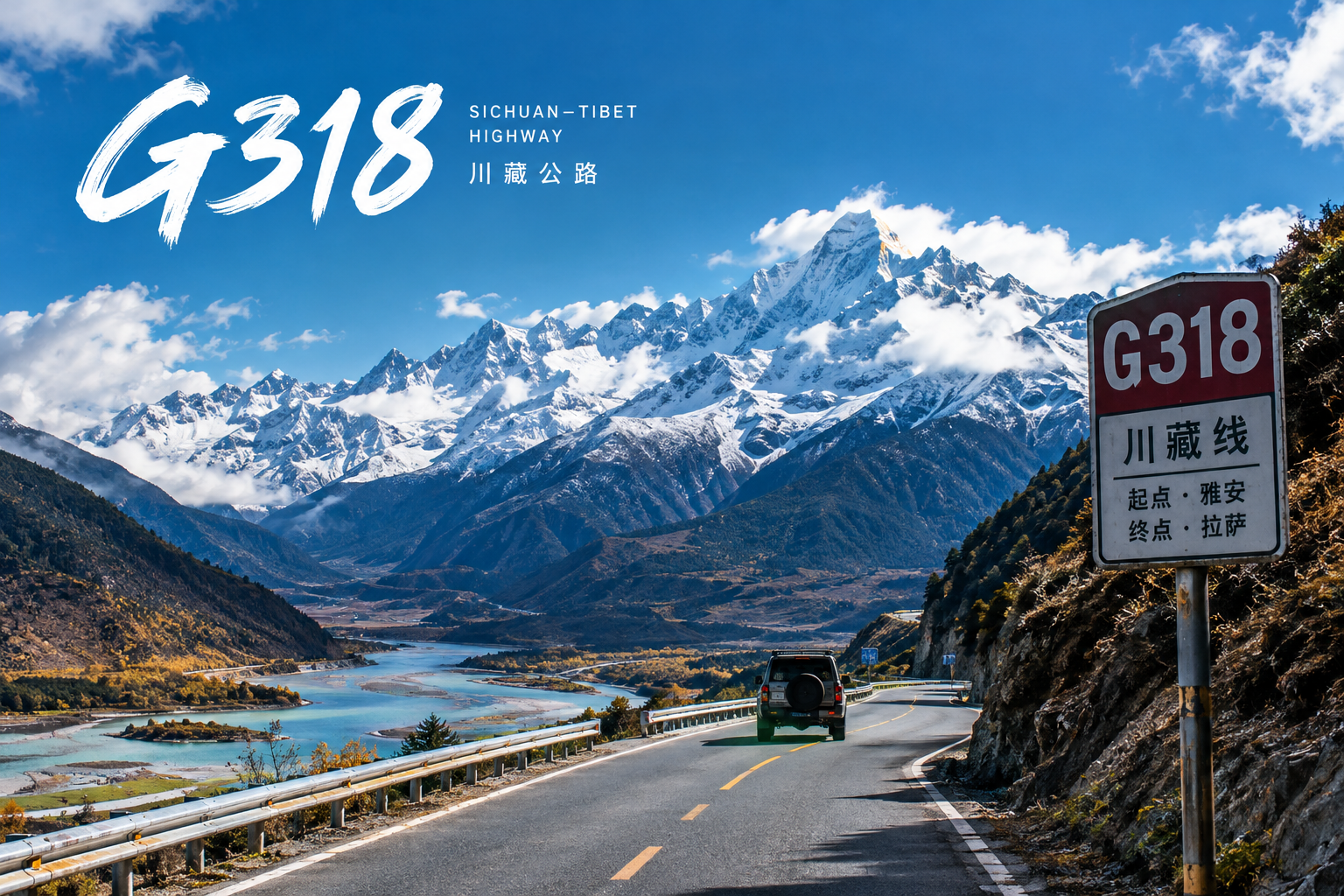
The phrase “G318 Sichuan–Tibet Highway, A drive you must take at least once in your lifetime” is closely associated with China National Highway 318 (G318). Across social media, photographs and videos of winding mountain roads, snow-covered peaks, turquoise lakes, and vast Tibetan grasslands have made this legendary route a dream journey for road-trip enthusiasts.
But how much do you really know about G318?
The Sichuan–Tibet section of G318 is more than a scenic highway. It is a journey through the dramatic landscapes of western Sichuan and eastern Tibet, a route shaped by decades of road construction, and a window into the region’s cultural diversity and history.
Starting in Ya’an, Sichuan, the journey climbs from the relatively low elevations of the Sichuan Basin into the mountains of the Hengduan Range before continuing toward Lhasa. Along the way, travelers encounter high mountain passes, glaciers, forests, grasslands, sacred lakes, traditional Tibetan settlements, and historic landmarks.
The route is also becoming more convenient, with upgraded highway services, dedicated tourist facilities, and expanding charging infrastructure for electric vehicles.
Whether you are planning a self-drive adventure, a motorcycle journey, or a guided overland trip, this guide explains what makes the G318 Sichuan–Tibet Highway special, which places deserve your attention, and how to prepare for a safe journey across the plateau.
What Is G318? Understanding the Sichuan–Tibet Highway
China National Highway 318 stretches from Shanghai on China’s eastern coast to the China–Nepal border region at Zhangmu, covering thousands of kilometers across the country. The Sichuan–Tibet section is among its most famous stretches. It connects the Ya’an and Chengdu region with Lhasa through western Sichuan and eastern Tibet.
The road is celebrated for its extraordinary geographical variety. Travelers can move from humid lowland environments into high mountain terrain, crossing river valleys, forests, alpine meadows, and high-altitude plateaus. G318 is particularly popular because it combines spectacular scenery with a relatively established network of towns, accommodation, fuel stations, restaurants, and vehicle services along many sections.
For travelers seeking a classic overland journey to Tibet, it offers a compelling balance of natural beauty, cultural encounters, and road-trip adventure.
Why Is G318 Sichuan–Tibet Highway Called a Once-in-a-Lifetime Road Trip?
Several features make the Sichuan–Tibet Highway distinctive:
- Remarkable scenery: Snow-capped mountains, glaciers, alpine lakes, forests, and grasslands appear along the journey.
- Changing landscapes: Elevation and climate shift dramatically as the road crosses mountain ranges.
- Tibetan culture: Towns and villages offer opportunities to experience regional architecture, local food, and Buddhist cultural traditions.
- Historic significance: The highway forms part of the story of modern road construction across the plateau.
- A genuine overland adventure: Long distances, high passes, and changing weather make careful planning essential.
For many travelers, the appeal is not simply reaching Lhasa. It is experiencing the gradual transformation of the landscape along the way.
Why Start Your G318 Sichuan–Tibet Highway Road Trip in Ya’an?
Ya’an, in Sichuan Province, is a popular starting point for the Sichuan–Tibet road journey. Located west of the Sichuan Basin, Ya’an provides a natural transition between lower-elevation landscapes and the mountains farther west. Starting here allows travelers to begin their ascent gradually rather than entering the highest sections of the plateau immediately. The city is also associated with giant panda conservation and regional tea culture.
China 318 Self-Drive Base in Ya’an
The China 318 Self-Drive Base is located in the Jinjiguan area of Ya’an, near the starting point traditionally associated with the Sichuan–Tibet Highway. According to local transport information, the facilities include a departure plaza, a road-culture exhibition space, commercial areas, food services, and a recreational vehicle camping area.
Visitor services have also incorporated route information, parking guidance, and support facilities intended to make road-trip preparation more convenient. For travelers, Ya’an is a useful place to organize supplies, check the vehicle, and prepare for the mountain journey ahead.
Tianquan Service Area: A Convenient Stop for Road Travelers
Tianquan Service Area on the Ya’an–Kangding Expressway has developed a travel-service concept combining giant panda culture with road tourism. Reported facilities include dining and retail options, family-friendly amenities, accessible restrooms, a driver’s rest area, and a pet-friendly space.
The service area is positioned to serve travelers moving between the city and the western Sichuan mountain region. Before departure, check current opening arrangements and available facilities, especially if you are traveling in a large vehicle or an electric car.
The Landscapes of G318: From Sichuan’s Mountains to Tibet’s High Plateau
One of the most memorable features of G318 is the way the scenery changes with elevation. The traditional expression “Four seasons on one mountain, different weather every ten miles” captures the experience of traveling through the region. Conditions can change rapidly between valleys and mountain passes, even on the same day.
Zheduo Mountain: Entering the High Mountains
Zheduo Mountain, near Kangding in western Sichuan, is an important landmark on the route toward the Tibetan Plateau. The mountain crossing introduces travelers to the challenges of high-altitude driving. Views may include sweeping ridgelines, distant snow peaks, and winding mountain roads. Weather can change quickly, and visibility may be reduced by rain, snow, fog, or strong winds.
Travel tip: Drive according to road and weather conditions, and avoid rushing to reach the summit or a scenic viewpoint.
Xinduqiao: A Photographer’s Paradise
Xinduqiao is widely known among photography enthusiasts for its broad valleys, open grasslands, traditional settlements, and mountain views. The landscape changes throughout the year. Summer brings greener pastures, while autumn can produce golden vegetation and especially attractive light for photography. It is a popular place to pause, enjoy the scenery, and explore the surrounding region.
Gongga Snow Mountain: A Majestic Mountain Landscape
Gongga Mountain, also known as Minya Konka, is one of the most celebrated peaks in Sichuan. Its snow-covered summit and surrounding mountain ranges create an impressive backdrop for the wider western Sichuan journey. Visibility depends on weather, season, and viewpoint. Travelers should not assume that the summit will always be visible from the highway.
The Lancang River Valley: Mountains, Villages, and Deep Gorges
As G318 continues west through Mangkang and the surrounding region, the road crosses landscapes shaped by major rivers and steep mountain terrain. The Lancang River cuts through deep valleys, creating dramatic contrasts between high ridgelines and the river far below. The area also connects with historic salt-producing communities, where traditional livelihoods reflect the long relationship between geography and trade.
Nujiang 72 Bends: One of the Route’s Most Famous Road Sections
The Nu River 72 Bends is one of the most recognizable sections of the Sichuan–Tibet road journey. The winding road descends through a dramatic mountain landscape, creating a sequence of curves that has become a favorite subject for road-trip photography.
The viewpoint can be spectacular, but the road is a place to concentrate on driving rather than photography. Stop only at safe, designated locations. Never stop on a blind bend or obstruct traffic to take pictures.
Ranwu Lake: High-Altitude Water and Mountain Scenery
Ranwu Lake, in the wider Basu region of eastern Tibet, is known for its clear water and surrounding mountain scenery. The landscape changes with the weather, season, and water conditions. On a clear day, the lake can reflect the surrounding mountains and sky, creating excellent photography opportunities. Ranwu is a rewarding stop for travelers interested in alpine lakes and the transition from steep mountain valleys to the broader landscapes of Tibet.
Bomi: Forests and Mountain Valleys
Bomi is known for its forested valleys, rivers, and mountain scenery. Its landscape differs noticeably from the drier plateau environments farther west. Depending on the season and route, travelers may see dense forests, flowering vegetation, and distant snow-covered peaks. The region is particularly appealing to visitors who want to explore the diversity of eastern Tibet rather than focus exclusively on high-altitude barren landscapes.
Lulang: Alpine Meadows and Forest Landscapes
Lulang is celebrated for its alpine meadows, forests, and broad mountain views. The scenery offers another contrast along G318, showing that Tibet is not simply a landscape of dry grasslands and snow-covered mountains. Parts of the southeast feature comparatively lush vegetation and forested valleys. Lulang is an excellent area to slow down, enjoy the natural surroundings, and explore local food and village culture.
Basum Tso: A Scenic Lake Detour
Basum Tso, also known as Basong Tso, is a beautiful lake in the Nyingchi region. Surrounded by forested mountains, the lake is known for its distinctive color and tranquil setting. It is a popular destination for travelers interested in Tibetan landscapes and culture. Visiting Basum Tso generally requires planning a detour from the main highway. Allow enough time for the drive and any additional stops.
Lhasa: The Destination at the End of the Journey
For many travelers, Lhasa is the culmination of the G318 road trip. The city is home to major Tibetan Buddhist landmarks, traditional neighborhoods, and an important living religious and cultural heritage. Popular places to visit include the Potala Palace, Jokhang Temple, Barkhor Street, and Sera Monastery, subject to current opening arrangements and visitor regulations.
Rather than leaving immediately after arrival, consider spending several days in Lhasa to rest, acclimatize, and explore the city.
G318 Sichuan–Tibet Highway Is More Than Scenery: The History Behind the Highway
The modern Sichuan–Tibet Highway carries a significant historical legacy. In the early 1950s, large teams of workers and soldiers undertook the difficult task of constructing roads across mountainous terrain, facing limited machinery, harsh weather, and challenging geological conditions. The construction of the Sichuan–Tibet and Qinghai–Tibet highways, which reached Lhasa in 1954, became a defining chapter in the modern transport history of Tibet.
The road-building legacy is remembered through the spirit known in Chinese as Liang Lu Jingshen, commonly translated as the spirit of the two highways. It emphasizes dedication, perseverance, and the determination to overcome difficult conditions. Several landmarks along the Sichuan–Tibet corridor help tell this story.
The Two Highways Spirit Memorial Hall in Lhasa
The Two Highways Spirit Memorial Hall, located within the Tibet regional transport authorities’ compound, presents the history of road construction through photographs, exhibits, equipment, and documentary material. According to published information from the Tibet highway authorities, the exhibition includes historical displays about the construction of the Sichuan–Tibet and Qinghai–Tibet highways. Visitors should check the current reservation process and access arrangements before planning a visit.
The Sichuan–Tibet Highway Museum at Tianquan Service Area
The Sichuan–Tibet Highway Museum is located at Tianquan Service Area on the Ya’an–Kangding Expressway. Its displays tell the story of the highway through historical photographs, old construction equipment, and exhibits about the development of road transportation. The museum is an especially relevant stop for travelers who want to understand the history behind the route they are driving.
Erlang Mountain Tunnel: A Major Engineering Milestone
Erlang Mountain was historically one of the challenging mountain crossings on the Sichuan–Tibet road. The G318 Erlang Mountain Tunnel opened to traffic in December 2001, bypassing the most difficult section of the old mountain road. It shortened the route by approximately 25 kilometers and reduced the crossing time to around five minutes under normal conditions.
The tunnel represented a major improvement in transportation between western Sichuan and the plateau. Travelers passing through the area can appreciate how modern engineering has changed the experience of crossing the mountains.
Luding Bridge: A Landmark in Chinese History
Luding Bridge, located in Luding County in Sichuan’s Garzê Tibetan Autonomous Prefecture, is a historic iron-chain suspension bridge across the Dadu River. The bridge is associated with the famous 1935 crossing during the Long March, an event widely commemorated in modern Chinese history.
Walking across the bridge provides a sense of its distinctive construction and the force of the river below. Visitors should follow local safety instructions and opening arrangements.
Nujiang Bridge Memorial: Remembering the Road Builders
The Nujiang Bridge area along the Basu section of G318 is associated with the challenges of building roads and bridges across the deep Nujiang Gorge. Memorial displays recount the difficulties faced by road-building teams working in steep, remote terrain.
The site is a reminder that the highway’s present accessibility rests on decades of engineering work and human effort. Travelers should use designated stopping areas and avoid obstructing traffic when visiting roadside memorials.
G318 Sichuan–Tibet Highway Service Areas: Making the Journey More Comfortable
A major reason for G318’s popularity is that many sections have an established network of road services. Facilities vary by location, but travelers may find fuel stations, restaurants, guesthouses, vehicle repair services, restrooms, and places to purchase supplies.
Tianquan Service Area
Tianquan Service Area combines road-trip services with giant panda-themed tourism facilities. Reported amenities include food and retail outlets, family facilities, a driver’s rest area, and a pet-friendly area.
Ya’an’s 318 Self-Drive Base
The self-drive base provides a starting point for travelers preparing for the journey west. Its planned facilities include visitor information, route guidance, parking, food services, and recreational vehicle amenities.
3185 Tourism Service Area in Lazi County
The 3185 Tourism Service Area is located along G318 in Lazi County, Shigatse, near the highway’s 5,000-kilometer marker. It serves as a convenient stopping point for travelers continuing toward the Everest region.
Following renovation, the service area incorporated Tibetan-inspired visual elements, designated rest areas, and more organized vendor spaces. It is important to distinguish the 3185 service-area name and location from the highway’s actual distance markers: travelers should confirm the precise site and route when planning a stop.
Can You Drive an Electric Vehicle on G318 Sichuan–Tibet Highway?
Electric vehicle travel along G318 is becoming more practical as charging infrastructure expands. According to information published by Tibet’s transport authorities, a green supercharging and battery-swapping corridor has been developed along parts of the Sichuan–Tibet route, connecting areas including Tianquan, Litang, Chamdo, Nyingchi, Lhasa, Shigatse, and the Everest region.
The reported network includes 23 fast-charging sites along the corridor. However, the number of operational stations, connector compatibility, charging speeds, and service availability can change. Not every section has the same charging coverage, and remote mountain areas may have fewer alternatives.
Before taking an electric vehicle to Tibet:
- Check the live status of each planned charging station.
- Confirm connector compatibility and payment methods.
- Allow extra battery capacity for cold weather, elevation changes, and long climbs.
- Identify backup charging options before entering remote sections.
- Avoid relying on a single charger in areas where alternatives are limited.
Battery-swapping facilities are not necessarily compatible with every electric vehicle, so verify vehicle-specific requirements. With careful planning, an EV journey can be a viable option on suitable sections of the route.
Essential Safety Tips for Driving G318
Driving the Sichuan–Tibet Highway (G318) requires careful planning, safe driving, and respect for high-altitude conditions.
- Acclimatize to High Altitude – Ascend gradually and avoid rushing into high-altitude areas. If you develop severe or worsening altitude symptoms, stop ascending and seek medical assistance.
- Slow Down Before Mountain Bends – Reduce speed before curves, keep a safe distance, and stay in your lane. Never overtake on blind bends or cross into oncoming traffic.
- Use a Lower Gear on Descents – Use an appropriate lower gear and engine braking on steep downhill sections. Avoid coasting in neutral and brake smoothly to prevent overheating.
- Avoid Night Driving – Mountain roads become more dangerous after dark, especially in rain, fog, or snow. Plan your journey to reach your accommodation before nightfall.
- Drive Carefully on Rough Roads – Slow down on gravel, uneven surfaces, and roadwork sections. Avoid sudden braking or steering and maintain extra distance from other vehicles.
Additional Tips
- Carry Emergency Supplies – Check your tires, brakes, lights, and coolant before departure. Carry a spare tire, first-aid kit, warm clothing, drinking water, snacks, flashlight, power bank, offline maps, and essential medication.
- Watch for Livestock and Pedestrians – Yaks, sheep, and goats may cross the road unexpectedly. Slow down and wait for them to pass. Give cyclists and pedestrians plenty of space, and never approach animals in an unsafe way for photographs.
- Check Weather and Road Conditions – Rain, snow, landslides, construction, and temporary closures can affect your journey. Check local road notices and weather forecasts before setting off, and allow extra time for delays.
- Use Your Horn Responsibly – Sound the horn when necessary to warn others, especially where visibility is limited. Never rely on honking or flashing headlights to make an unsafe overtake or blind bend safe.
- Follow Tibet Travel and Permit Rules – Foreign visitors generally need a Tibet Travel Permit and authorized travel arrangements to enter Tibet. Additional permits may be required for certain border areas. Confirm the latest requirements before departure.
Confirm the requirements for your specific route before setting out. A road being open to ordinary traffic does not automatically mean that every destination along it is accessible to international visitors.
Can Foreign Tourists Self-Drive G318 Sichuan–Tibet Highway to Lhasa?
Foreign visitors should not assume that they can independently self-drive throughout Tibet using the same arrangements available in other parts of China. International travel to Tibet generally requires a Tibet Travel Permit arranged through an authorized Tibet travel agency, and foreign visitors are normally required to follow an approved itinerary with the appropriate guide and transportation arrangements.
If you intend to drive your own vehicle or a rental vehicle, additional requirements may apply to the vehicle, driver, route, and travel authorization. These arrangements should be confirmed before booking. For many international travelers, an organized private overland tour is a more practical way to experience the G318 corridor without having to manage every logistical detail independently.
How Many Days Do You Need for the G318 Road Trip?
The time required depends on your starting point, destinations, driving experience, and the amount of time you want to spend exploring. A short itinerary may focus on the main road journey, while a longer trip allows time for mountain scenery, cultural stops, and acclimatization in Tibet.
As a general planning principle:
- A short trip: Concentrate on selected sections rather than attempting to see everything.
- A week or more: Allows a more flexible journey through western Sichuan and toward Lhasa, depending on the exact itinerary.
- A longer journey: Provides more time for destinations such as Basum Tso, Nyingchi, and additional cultural stops.
These are broad planning categories, not guaranteed driving schedules. Actual travel times depend on road conditions, altitude, weather, traffic, and required stops. Do not plan daily distances solely from a map’s estimated driving time. Mountain roads and acclimatization needs make a flexible schedule particularly important.
Frequently Asked Questions About the G318 Sichuan–Tibet Highway
1. Where does the G318 Sichuan–Tibet Highway start and end?
The famous Sichuan–Tibet road journey is commonly described as starting around Ya’an in Sichuan and continuing west toward Lhasa. G318 itself is a much longer national highway extending across China from Shanghai to the China–Nepal border region.
2. Why is G318 called the most beautiful highway in China?
G318 is celebrated for its changing landscapes, including snow-covered mountains, high passes, river valleys, alpine lakes, forests, and Tibetan grasslands. Its reputation also reflects the cultural and historical significance of the journey.
3. What is the best time to drive G318?
Summer and early autumn are popular periods for many sections because of the scenery and generally more favorable travel conditions. However, rain, landslides, snow, and road maintenance can affect the journey at any time.
4. Is G318 dangerous to drive?
Some sections involve steep gradients, sharp bends, high elevations, and rapidly changing weather. Careful driving, vehicle preparation, realistic daily distances, and current road information can help reduce risks.
5. Can electric cars travel on G318?
Electric vehicles can travel on suitable sections where charging facilities are available. Drivers should confirm the operating status of chargers, their vehicle’s compatibility, and backup options before entering remote areas.
6. Can foreigners travel along G318 to Tibet?
Foreign visitors generally need a Tibet Travel Permit and authorized travel arrangements. Additional restrictions or permits may apply to specific destinations. Confirm the current requirements for the exact itinerary before departure.
7. What are the most famous attractions along G318?
Popular places and surrounding destinations include Xinduqiao, Zheduo Mountain, the Nujiang 72 Bends, Ranwu Lake, Bomi, Lulang, and Lhasa. Some attractions require detours from the main highway.
8. Is G318 suitable for first-time visitors to Tibet?
It can be an excellent introduction to the plateau for travelers who have enough time and plan carefully. Gradual acclimatization, suitable transportation, and realistic driving schedules are important.
9. Do I need a spare tire for a G318 road trip?
Carrying a suitable spare tire and the necessary changing equipment is prudent, especially when traveling through remote sections where repair services may be limited.
10. What should I do if the weather changes suddenly?
Reduce speed, increase following distance, and find a safe place to stop if visibility or road conditions become dangerous. Check local road information before continuing, and never attempt to cross a closed or unsafe section.
Plan Your G318 Journey with Tibet Yak Travel
The G318 Sichuan–Tibet Highway offers a memorable combination of natural beauty, Tibetan cultural heritage, and modern road-trip adventure. From the mountains around Xinduqiao to the forests of Bomi and the sacred landmarks of Lhasa, each section reveals a different side of the plateau.
Whether you want to explore the classic route, combine the journey with a visit to Everest Base Camp, or continue toward other destinations in Tibet, careful planning will help you make the most of the experience.
Contact Tibet Yak Travel to discuss your preferred route, travel dates, transportation, accommodation, and permit requirements. Our local team can help you plan a suitable Tibet journey based on your interests and available time.
Travel responsibly, respect local communities, and remember that the journey is just as important as the destination.