
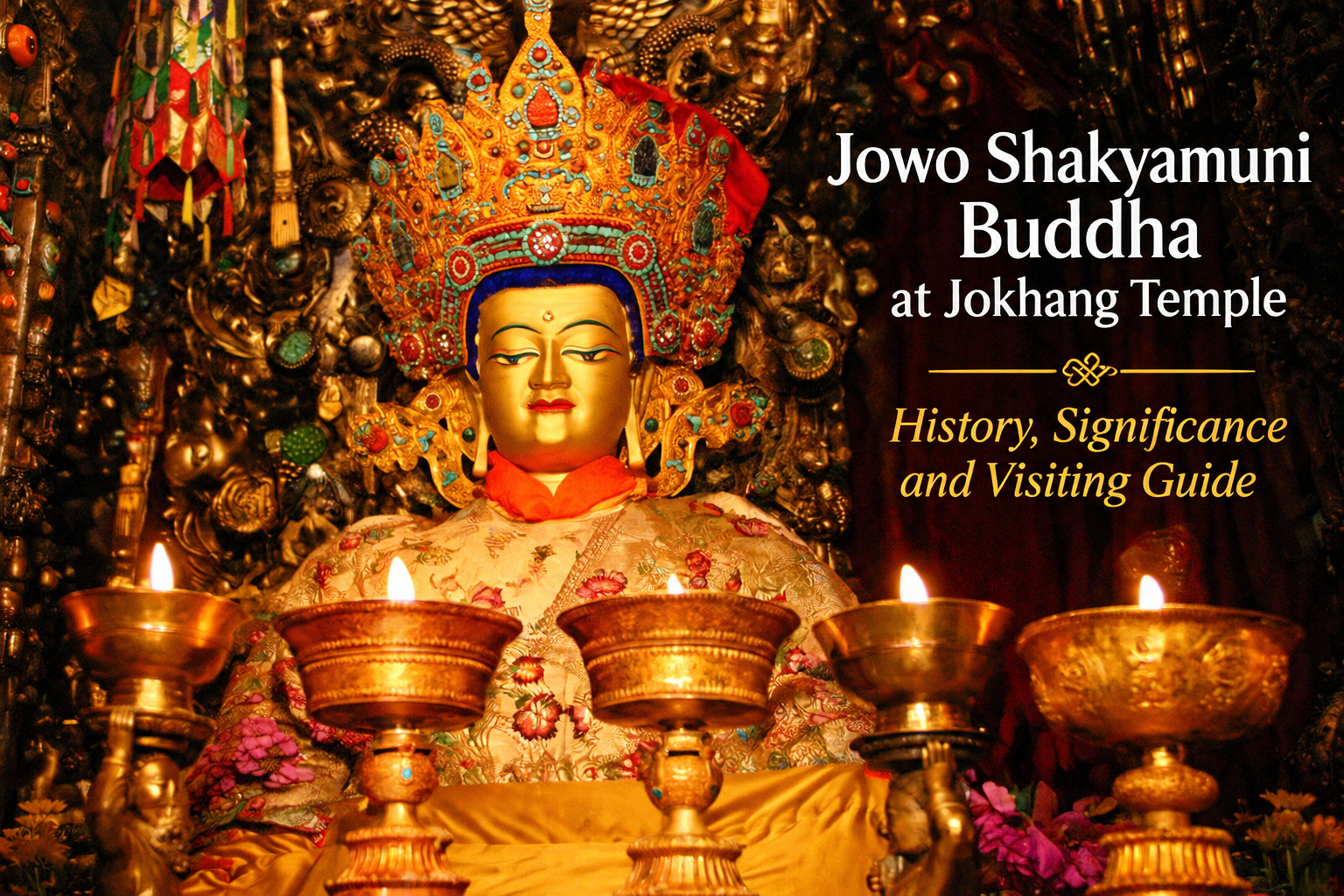
The Jowo Shakyamuni Buddha, enshrined inside Jokhang Temple in Lhasa, is one of the most revered Buddhist images in Tibet. For Tibetan Buddhists, the statue is not simply an ancient work of art. It is regarded as a particularly sacred embodiment of the Buddha Shakyamuni and remains the spiritual focus of pilgrimage and devotion in Lhasa.
The history surrounding the Jowo Buddha is filled with stories of royal patronage, religious conflict, political upheaval, persecution, concealment, and restoration. Some of these accounts belong to Tibetan religious tradition and legend, while the precise historical details of the statue’s movements remain debated.
Today, pilgrims from across Tibet and visitors from around the world come to Jokhang Temple to pay their respects. Understanding the history, religious importance, and proper etiquette of visiting the Jowo Buddha can make a trip to Lhasa far more meaningful.
What Is the Jowo Shakyamuni Buddha?
The Jowo Shakyamuni Buddha is the principal sacred image enshrined in Jokhang Temple in Lhasa. The statue represents Shakyamuni Buddha, the historical Buddha, and occupies a central position in Tibetan Buddhist devotion.
For Tibetan Buddhists, the importance of the Jowo Buddha goes beyond its age, artistic qualities, or historical associations. The image is understood as a powerful presence of the Buddha and is connected with centuries of prayer, pilgrimage, offerings, and religious practice.
The statue’s continuing importance is closely linked to the history of Buddhism in Tibet and to the development of Lhasa as one of the most important religious centers on the Tibetan Plateau.
History of the Jowo Buddha in Tibet
The history of the Jowo Buddha combines Tibetan historical traditions, religious narratives, and legends. Different sources describe the origins and movements of sacred Buddha images in different ways, and some details cannot be independently established.
Princess Jincheng and the Search for the Sacred Buddha
During the reign of Emperor Zhongzong of the Tang Dynasty, Princess Jincheng entered the Tibetan royal family through marriage. Traditional accounts associate her with the search for a life-sized statue of Shakyamuni Buddha.
According to the narrative, she eventually learned that the sacred image was enshrined at Jokhang Temple in Lhasa.
This story belongs to the wider history of Buddhism and royal patronage in Tibet. Princess Jincheng’s story also follows the earlier tradition surrounding Princess Wencheng, whose marriage to the Tibetan king Songtsen Gampo is traditionally associated with the introduction and development of Buddhism in Tibet.
However, the exact identities and movements of the Buddha statues described in these traditions are complex. Different historical and religious sources provide different accounts.
The Jowo Buddha and Religious Conflict
Traditional Tibetan accounts describe another dramatic chapter in the history of the Jowo Buddha during a period of political and religious tension. After the death of Tride Tsuktsen, political influence reportedly shifted toward ministers and aristocrats associated with the indigenous Bon tradition. According to traditional narratives, tensions between Buddhist and Bon traditions subsequently intensified.
Some accounts claim that Jokhang Temple was temporarily repurposed and that the sacred Buddha image became the subject of political and religious controversy.
One tradition says that officials believed the statue had brought misfortune wherever it had been taken and discussed returning it to India. The statue was reportedly moved toward the Gyirong region near the Nepal border, but the journey was interrupted. According to the story, the statue was then buried in a mountain ravine. The precise historical location of this event has not been conclusively established, although some modern interpretations associate the story with the broader Gyirong border region.
The Return of the Buddha to Lhasa
The story continues during the reign of Trisong Detsen, one of the most important royal patrons of Buddhism in Tibetan history. Under Trisong Detsen, Buddhism received strong royal support. Traditional accounts say that the sacred Buddha image was eventually recovered and returned to Lhasa.
Whether every detail of this narrative can be historically verified remains uncertain. Nevertheless, the story has played an important role in Tibetan Buddhist memory and helps explain the exceptional spiritual importance attached to the Jowo Buddha.
The Jowo Buddha During the Persecution Under Langdarma
Another major chapter in the traditional history of the Jowo Buddha is associated with the reign of Langdarma in the ninth century. Tibetan Buddhist histories traditionally associate Langdarma’s reign with a period of severe pressure on Buddhism. Accounts describe monasteries being closed, religious texts being destroyed, and monks being forced to return to lay life.
According to religious traditions, Langdarma also ordered the destruction or removal of the Jowo Buddha. Some accounts say that the statue was to be thrown into the Lhasa River. However, Buddhist ministers who secretly continued to protect the religion are said to have intervened.
They reportedly dug a hidden chamber beneath the main sanctuary of Jokhang Temple and concealed the statue to protect it from destruction.
After Langdarma’s assassination, the Jowo Buddha was supposedly recovered and restored to its place of worship. These accounts should be understood as part of Tibetan Buddhist religious tradition. Individual details are difficult to verify independently, but the stories demonstrate how deeply the Jowo Buddha became associated with the survival and continuity of Buddhism in Tibet.
Why Is the Jowo Shakyamuni Buddha So Important?
The Jowo Buddha is one of the most revered Buddhist images in Tibet.
For Tibetan Buddhists, the statue represents more than a historical or artistic object. It embodies the living presence of the Buddha and symbolizes qualities such as:
- Compassion
- Wisdom
- Spiritual liberation
- Buddhist faith
- Continuity of Tibetan religious traditions
For centuries, the statue has remained at the center of religious life in Lhasa. It has witnessed political changes, religious transformations, and major developments in Tibetan history. Its continuing presence at Jokhang Temple has therefore made it an important symbol of religious and cultural continuity.
A Destination for Tibetan Pilgrims
For many Tibetan pilgrims, visiting the Jowo Buddha is a deeply personal religious experience.
Pilgrims may travel hundreds or even thousands of kilometers to reach Lhasa. At Jokhang Temple, they may:
- Offer prayers
- Present khatas, or ceremonial scarves
- Light butter lamps
- Make offerings
- Perform full-body prostrations
- Circumambulate the temple and surrounding sacred sites
The devotion surrounding the Jowo Buddha is one of the clearest expressions of living Tibetan Buddhist practice in Lhasa.
Where Is the Jowo Buddha?
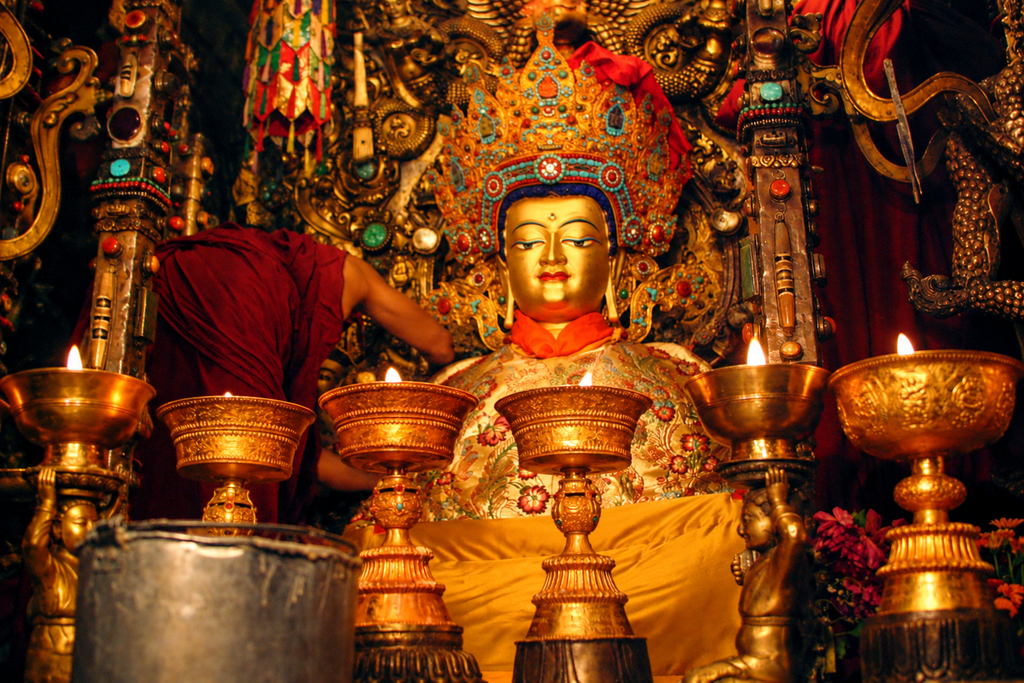
The Jowo Shakyamuni Buddha is enshrined inside Jokhang Temple, located in the historic Barkhor area of Lhasa. Jokhang is one of Tibet’s most important religious landmarks and remains an active place of worship. The temple contains richly decorated chapels, murals, religious objects, and traditional Tibetan architectural features. However, for pilgrims, the central focus remains the sacred Jowo Buddha.
Visitors should therefore remember that Jokhang Temple is not simply a historical monument or tourist attraction. It is a living religious institution where people continue to pray and practice their faith.
Visiting the Jowo Buddha at Jokhang Temple
A visit to Jokhang Temple can be one of the most meaningful experiences on a Tibet trip, particularly for travelers interested in Tibetan Buddhism, history, architecture, and culture. Because the temple remains an active place of worship, visitors should behave respectfully and follow the instructions of temple staff.
Access arrangements, opening hours, photography rules, and visitor procedures can change. Always follow the current regulations when visiting.
Jokhang Temple Etiquette: 7 Things Visitors Should Know
- Dress respectfully — Cover your shoulders and knees; remove hats and sunglasses inside.
- Step over thresholds — Avoid stepping directly on temple door thresholds.
- Walk clockwise — Follow the clockwise direction when performing kora around sacred objects.
- Do not touch sacred objects — Avoid touching statues, murals, scriptures, and ritual items.
- Respect pilgrims — Give worshipers space and never interrupt prayers or prostrations.
- Do not point at sacred images — Use an open hand rather than pointing with one finger.
- Follow photography rules — Respect signs and staff instructions; photography may be prohibited inside the sanctuary.
Frequently Asked Questions About the Jowo Shakyamuni Buddha
Why is the Jowo Shakyamuni Buddha so important?
The Jowo Buddha is one of the most revered Buddhist images in Tibet. It represents Shakyamuni Buddha and has been the focus of centuries of Tibetan Buddhist pilgrimage, prayer, and devotion. Its importance is closely connected with the development of Buddhism in Tibet and the religious history of Lhasa.
Who brought the Jowo Buddha to Tibet?
Traditional Tibetan accounts connect the arrival of sacred Buddha statues with the marriages of Princess Wencheng and Princess Bhrikuti to Songtsen Gampo. However, the identities, origins, and movements of the statues described in different historical and religious sources are complex. The traditions should therefore not be reduced to a single universally accepted historical account.
Where is the Jowo Buddha located?
The Jowo Shakyamuni Buddha is enshrined inside Jokhang Temple in the Barkhor district of Lhasa, Tibet. The statue is the principal religious focus of the temple.
Can tourists visit the Jowo Buddha?
International visitors can generally visit Jokhang Temple as part of an approved Tibet travel itinerary, subject to current entry arrangements, opening hours, and access restrictions. Visitors must follow temple regulations and respect Tibetan Buddhist religious customs.
Can visitors take photographs of the Jowo Buddha?
Photography is generally prohibited in the main sanctuary, and additional restrictions may apply elsewhere in the temple. Always follow posted notices and instructions from temple staff.
What makes the Jowo Buddha different from other Buddhist statues in Tibet?
Many Tibetan monasteries contain important and highly revered Buddhist images. The Jowo Buddha is especially significant because of its association with Shakyamuni Buddha, its place in Tibetan religious traditions, and its central role in pilgrimage at Jokhang Temple.
Its importance comes not only from its artistic or historical qualities but also from the devotion that it continues to inspire.
Experience the Spiritual Heritage of Lhasa
Visiting Jokhang Temple is about more than seeing an ancient building or Buddhist statue. The temple provides an opportunity to experience a living religious tradition. Around the Barkhor, visitors can see pilgrims circumambulating the temple, making offerings, praying, and performing prostrations.
At the heart of this spiritual landscape is the Jowo Shakyamuni Buddha. Learning about the statue’s history and the religious traditions surrounding it can help travelers approach Jokhang Temple with greater understanding and respect.
For travelers exploring Lhasa, the Jowo Buddha, Jokhang Temple, Barkhor, Potala Palace, and other sacred sites together provide a deeper introduction to Tibet’s Buddhist heritage.
Explore Lhasa with Tibet Yak Travel and discover the temples, cultural landmarks, and living traditions that make Lhasa one of the world’s great spiritual cities.