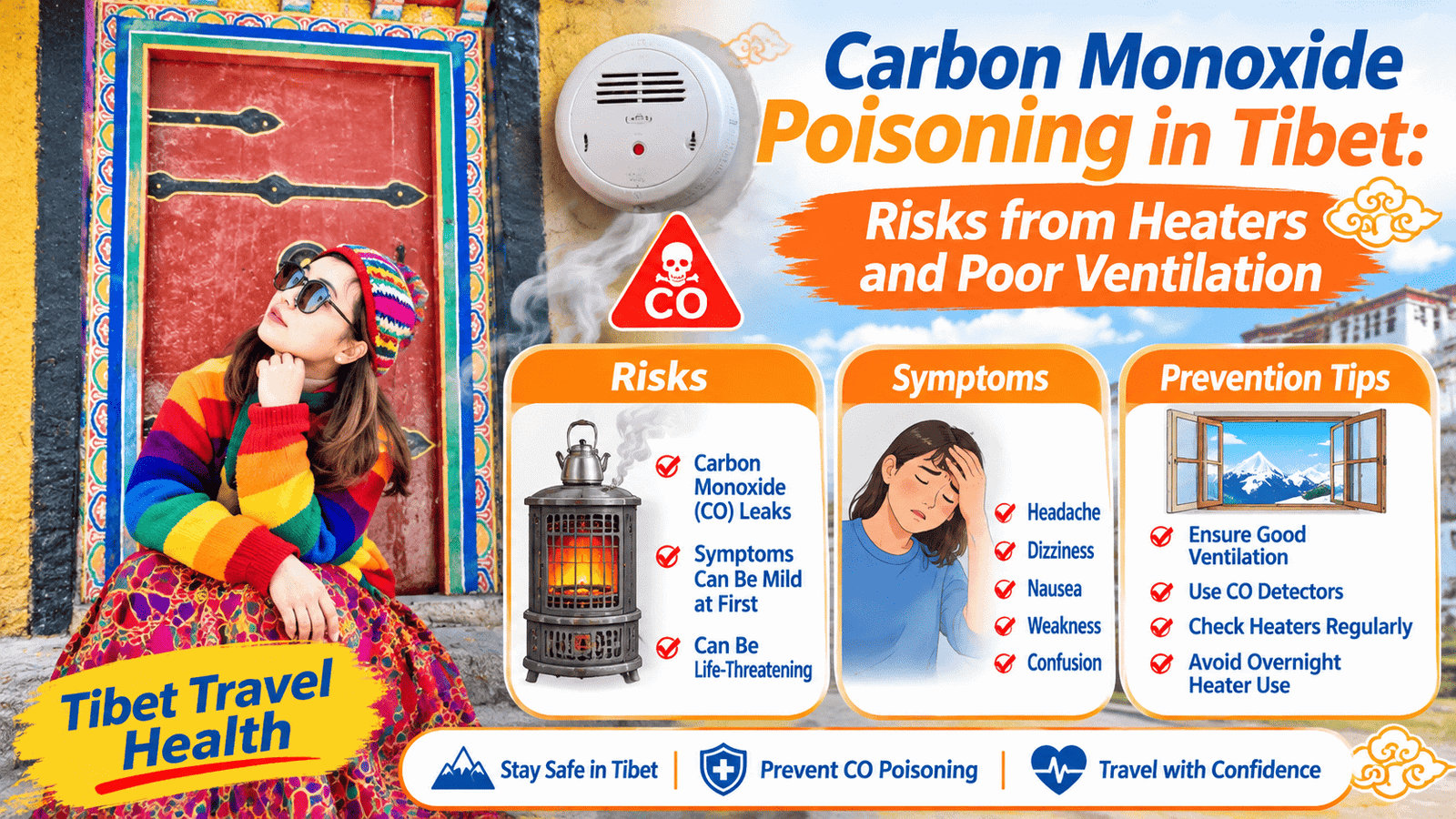
Tibet can become very cold, particularly during winter and at high-altitude destinations such as Everest Base Camp, remote mountain towns and the Mount Kailash region. Heating is therefore an important part of comfortable accommodation. However, fuel-burning heating equipment can create a serious safety risk if it is faulty, improperly installed or used in an enclosed or poorly ventilated space.
One of the most dangerous hazards is carbon monoxide (CO) poisoning. Carbon monoxide is an invisible, odorless and poisonous gas. People cannot reliably detect it by smell or sight. Exposure can cause headache, dizziness, nausea, confusion, loss of consciousness and death.
Understanding the risks can help travelers stay safe when using accommodation, vehicles or other heated spaces during a Tibet journey.
What Is Carbon Monoxide?
Carbon monoxide is a poisonous gas produced when fuels containing carbon do not burn completely.
Potential sources include:
- Coal-burning heaters
- Gas heaters and boilers
- Wood-burning stoves
- Charcoal burners
- Portable camping stoves
- Fuel-powered generators
- Vehicle engines and exhaust systems
When these appliances operate correctly and are properly installed and vented, risks can be reduced. Problems arise when combustion equipment is faulty, exhaust gases cannot escape or the appliance is used in an unsuitable enclosed space.
Carbon monoxide is particularly dangerous because it has no color, smell or taste. You cannot depend on your senses to identify it.
Why Can Carbon Monoxide Be a Risk During Tibet Travel?
Some Tibet travel routes pass through remote areas where temperatures can fall sharply, especially at night and during winter. Travelers may stay in different types of accommodation, including hotels, guesthouses, lodges and rural properties. Heating arrangements vary between buildings and regions.
Potential risks are associated with the equipment and its installation, not simply with the fact that a property is in Tibet.
Pay particular attention to:
1. Fuel-Burning Heaters
Coal, gas, wood and other fuels can produce carbon monoxide during combustion.
A poorly maintained heater, blocked flue or damaged exhaust system may allow combustion gases to enter an indoor space.
2. Poor Ventilation
A room with insufficient ventilation may allow carbon monoxide to accumulate if a fuel-burning appliance is producing it.
Opening a window should not be treated as a substitute for correct appliance installation, exhaust venting and appropriate carbon monoxide alarms.
3. Charcoal and Portable Stoves
Charcoal burners and portable fuel-burning stoves can release carbon monoxide.
Never use charcoal grills, camping stoves or other equipment intended for outdoor use inside a hotel room, tent, vehicle or other enclosed space.
4. Vehicles and Generators
Vehicle exhaust can contain carbon monoxide. A vehicle should never be left running in an enclosed garage or other enclosed space.
Portable generators also produce dangerous exhaust. They must be operated outdoors in accordance with manufacturer instructions and away from doors, windows and ventilation openings.
Symptoms of Carbon Monoxide Poisoning
Carbon monoxide poisoning can be difficult to recognize because its symptoms may resemble ordinary travel discomfort, flu-like illness or altitude-related symptoms.
Common symptoms include:
- Headache
- Dizziness
- Weakness
- Nausea
- Vomiting
- Chest pain
- Confusion
- Unusual tiredness
More serious exposure can cause difficulty walking, loss of coordination, collapse, unconsciousness and death.
Symptoms may develop while people are sleeping. This makes carbon monoxide particularly dangerous in bedrooms and accommodation where fuel-burning appliances are used.
Carbon Monoxide Poisoning or Altitude Sickness?
This distinction is especially important in Tibet because both conditions can cause headache, nausea, dizziness and weakness.
However, the causes are different.
| Feature | Carbon monoxide poisoning | Acute mountain sickness |
|---|---|---|
| Main cause | Inhaling carbon monoxide | Exposure to reduced oxygen pressure at altitude |
| Possible symptoms | Headache, dizziness, nausea, weakness, confusion | Headache, nausea, dizziness, fatigue, poor appetite |
| Possible clue | Symptoms occur in a heated or enclosed space and may affect several people | Symptoms follow ascent to high altitude |
| Immediate response | Move everyone into fresh air and seek emergency help | Stop ascending, assess symptoms and seek medical advice |
| Main danger | Carbon monoxide exposure can rapidly become life-threatening | Severe altitude illness can progress to HAPE or HACE |
These conditions cannot be reliably distinguished by symptoms alone. They can also occur at the same time.
Do not assume that a headache in a high-altitude hotel is simply altitude sickness, particularly if other people in the same room or building feel unwell.
A normal-looking pulse oximeter reading does not rule out carbon monoxide poisoning. Standard fingertip oxygen saturation devices can give misleading readings in the presence of carbon monoxide.
What Should You Do If You Suspect Carbon Monoxide Poisoning?
<badge color=”danger”>Emergency</badge>
If you suspect carbon monoxide exposure, act immediately.
- Move everyone into fresh air. Leave the room or building and get outside.
- Do not stay inside to investigate. Do not search for the source or attempt to repair the heater.
- Call local emergency services or arrange urgent medical help.
- Tell medical staff that carbon monoxide exposure is suspected.
- Do not re-enter the building until qualified personnel have confirmed it is safe.
If someone has collapsed or is unconscious, do not put yourself at risk by entering a potentially contaminated space. Call emergency responders.
People with suspected exposure need medical assessment even if they begin to feel better after going outside. Serious complications may not be obvious immediately.
How to Prevent Carbon Monoxide Poisoning in Tibet
Prevention depends on safe appliances, correct installation, proper exhaust systems and suitable detection equipment.
1. Never Use Charcoal Indoors
Do not burn charcoal in:
- Hotel rooms
- Guesthouse bedrooms
- Tents
- Cars
- Closed balconies
- Other enclosed or partially enclosed spaces
Charcoal can produce dangerous carbon monoxide even when it appears to be burning slowly.
2. Do Not Use Outdoor Camping Stoves Inside
- Portable gas and fuel-burning camping stoves should only be used in locations and conditions permitted by their manufacturer.
- Never use a portable camping stove to heat a bedroom or enclosed vehicle.
3. Check That Heating Equipment Is Properly Installed
- Accommodation providers should maintain heating systems and ensure that fuel-burning appliances have appropriate exhaust ventilation.
- Travelers should report unusual appliance behavior, damaged vents or suspected exhaust problems to the property manager.
- Do not attempt to repair or modify heating equipment yourself.
4. Use Carbon Monoxide Alarms Where Appropriate
- A working carbon monoxide alarm provides an additional layer of protection.
- In accommodation where fuel-burning appliances are present, travelers can ask whether suitable alarms are installed and maintained.
- Follow the alarm manufacturer’s instructions for placement, testing and replacement.
- An alarm is not a substitute for safe installation and maintenance.
5. Be Careful Around Vehicles and Generators
- Never sleep in a vehicle while its engine is running in an enclosed or poorly ventilated location.
- Do not operate generators indoors, in garages or near building openings.
- Follow the manufacturer’s required outdoor separation distances.
6. Report Unusual Symptoms
- If several people in the same room or building develop headache, nausea or dizziness, do not dismiss the symptoms as ordinary travel fatigue.
Leave the area and seek urgent assistance.
Advice for Tibet Tour Operators and Accommodation Providers
Carbon monoxide safety is not only a concern for individual travelers. It is also an important responsibility for tourism businesses and accommodation providers.
Tour operators should consider the following precautions when selecting accommodation and arranging winter travel:
- Use accommodation with appropriately installed and maintained heating systems.
- Confirm that fuel-burning appliances have suitable exhaust ventilation.
- Encourage properties to install and maintain carbon monoxide alarms where appropriate.
- Never allow charcoal burners or outdoor camping stoves to be used inside guest rooms.
- Train drivers and staff not to operate engines or generators in enclosed spaces.
- Make sure guides know the warning signs of possible carbon monoxide exposure.
- Include an emergency response plan for remote routes.
Travelers should feel comfortable asking how a room is heated and whether the property has carbon monoxide alarms. These are reasonable safety questions, especially when staying in remote areas during cold weather.
Frequently Asked Questions
Can you smell carbon monoxide?
No. Carbon monoxide is colorless and odorless. You cannot reliably identify it by smell, taste or sight.
Can a gas heater cause carbon monoxide poisoning?
Yes. A faulty, poorly maintained or improperly vented fuel-burning appliance can create a carbon monoxide hazard.
Is it safe to sleep with a heater running in Tibet?
It depends on the type of heater, its installation, ventilation and safety systems. Do not use unvented fuel-burning appliances in enclosed sleeping spaces. Follow the accommodation provider’s safety instructions and use properties with properly maintained heating systems.
Can opening a window prevent carbon monoxide poisoning?
Do not rely on an open window to make an unsafe appliance safe. Correct installation, exhaust ventilation, maintenance and suitable alarms are essential.
Can carbon monoxide poisoning be mistaken for altitude sickness?
Yes. Both can cause headache, dizziness, nausea and weakness. If symptoms develop in an enclosed or heated space, especially when several people are affected, leave immediately and seek emergency assistance.
What should I do if my carbon monoxide alarm sounds?
Leave the building immediately and move into fresh air. Contact emergency services and do not re-enter until the property has been checked and declared safe.
Internal Links to Add
- Altitude Sickness in Tibet: Complete Guide for Travelers
- How to Recognize an Altitude Sickness Emergency in Tibet
- Hypothermia in Tibet: Causes, Warning Signs and Emergency Treatment
- Tibet Travel Checklist: Essential High-Altitude Gear and Safety Tips
- First Aid Kit for Tibet Travel: Essential Medicines and Supplies
Medical Disclaimer
This article provides general safety information and is not a substitute for emergency medical care. Suspected carbon monoxide exposure requires immediate movement into fresh air and urgent professional assessment. Never enter a suspected contaminated area to rescue someone unless you are trained and equipped to do so safely.
References
- U.S. Centers for Disease Control and Prevention: Carbon Monoxide Poisoning Basics.
- CDC: Clinical Guidance for Carbon Monoxide Poisoning.
- CDC/NIOSH: Carbon Monoxide Hazards at Work.