Tibet is known for its open landscapes, mountain scenery and relatively clean natural environments in many areas. However, air quality is not identical everywhere or on every day. Dust, road construction, vehicle emissions, heating smoke, cooking fumes and other airborne particles can affect local conditions.
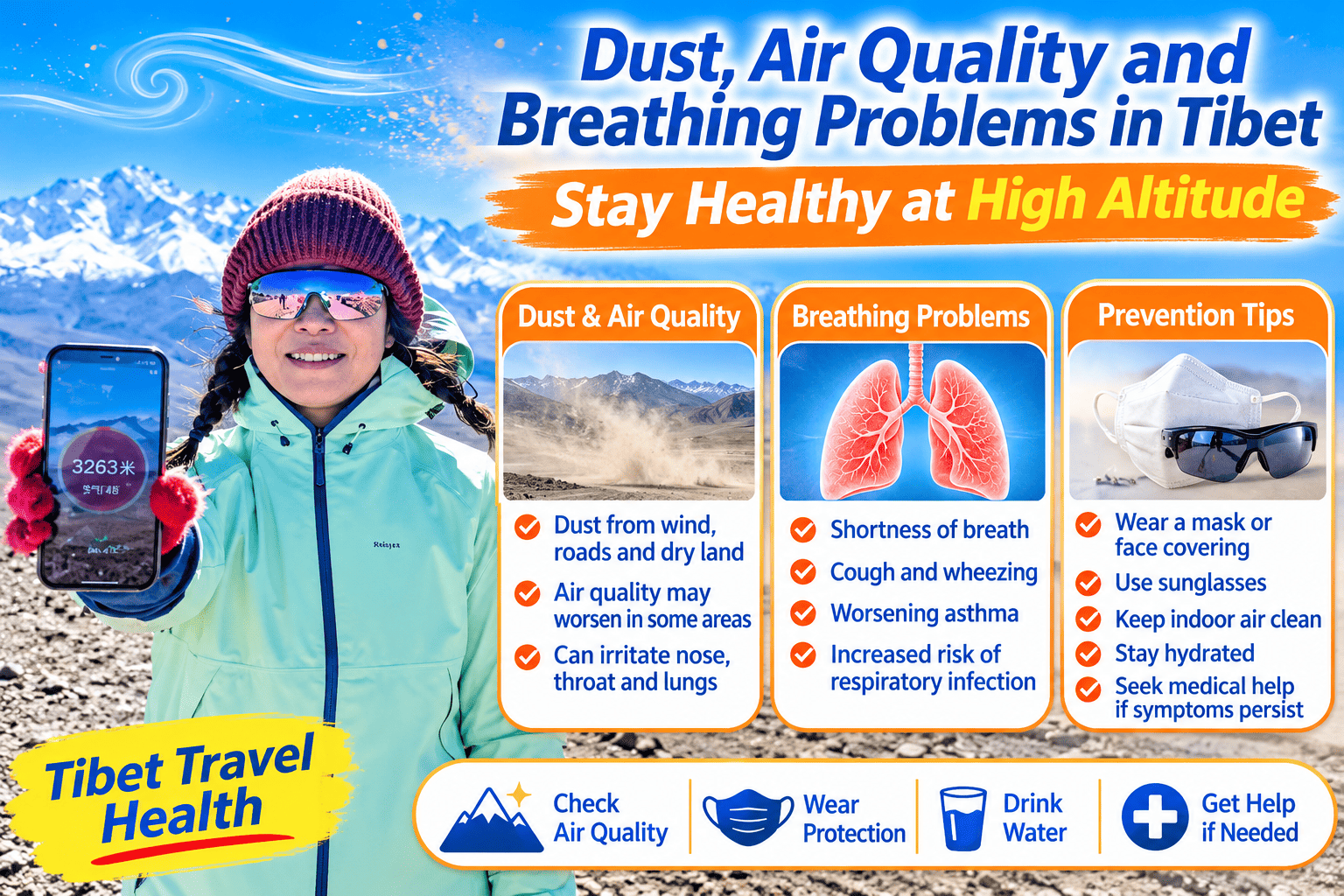
Travelers may notice dust when driving along unpaved roads, visiting construction areas or spending time in dry and windy environments. People with asthma, allergies or chronic lung conditions may be more sensitive to these exposures. At high altitude, the lower oxygen pressure already places additional demands on the body. Breathing irritation caused by dust or smoke can make outdoor activities more uncomfortable.
This guide explains common sources of airborne particles, possible symptoms and practical ways to reduce exposure during a Tibet journey.
What affects air quality in Tibet?
Air quality varies by location, season, weather, traffic and local activity. Some destinations have open surroundings and relatively little local pollution, while urban areas, busy roads and enclosed indoor spaces may have different conditions.
1. Road dust
Dust can be raised by vehicles traveling on dry or unpaved roads. Construction activity and passing traffic may also increase airborne particles. Travelers may notice dust during long drives through remote areas, particularly when windows are open or several vehicles are traveling together.
2. Vehicle emissions
Cars, buses and trucks produce exhaust emissions. Exposure may be higher near busy roads, traffic queues, tunnels and poorly ventilated parking areas. Avoid standing directly behind running vehicle exhausts whenever possible.
3. Construction and building activity
Construction sites can release dust from soil, concrete, stone and other materials. Avoid unnecessary time near active construction areas, particularly on windy days.
4. Heating and cooking smoke
Indoor air quality can be affected by combustion sources such as solid-fuel heating, cooking appliances, tobacco smoke and incense. Poor ventilation can allow smoke and other pollutants to accumulate indoors.
5. Natural dust and dry weather
Dry ground and strong winds can carry soil and fine particles into the air. This can temporarily increase dust exposure even in areas far from large cities.
What is particulate matter?
Particulate matter is a mixture of tiny solid particles and liquid droplets suspended in the air.
It is commonly described according to particle size:
- PM10: Particles with an aerodynamic diameter of 10 micrometres or less.
- PM2.5: Fine particles with an aerodynamic diameter of 2.5 micrometres or less.
PM2.5 particles are particularly important because they can travel deep into the respiratory system. Airborne particles may include dust, smoke, soot and other substances. Their health effects depend on size, chemical composition, concentration and duration of exposure.
How can dust and poor air quality affect your health?
Short-term exposure may cause irritation, especially in people with sensitive airways.
Possible symptoms include:
- Sneezing
- Coughing
- Dry or irritated throat
- Runny nose
- Eye irritation
- Chest discomfort
- Wheezing
- Shortness of breath
People with asthma or chronic obstructive pulmonary disease (COPD) may experience worsening symptoms during periods of poor air quality. Longer or repeated exposure to air pollution is associated with respiratory and cardiovascular health risks. The level of risk depends on the pollutant, exposure and individual health.
Is breathing difficulty in Tibet caused by air pollution or altitude?
Not necessarily. Several different conditions can cause breathing discomfort during a Tibet journey.
| Possible cause | Common features |
|---|---|
| Dust irritation | Sneezing, coughing, irritated throat or eyes |
| Allergies | Sneezing, itchy eyes, runny nose |
| Asthma | Wheezing, chest tightness, coughing and shortness of breath |
| Respiratory infection | Cough, fever, sore throat and general illness |
| Altitude-related breathlessness | Reduced exercise tolerance and increased breathing effort |
| High-altitude pulmonary edema (HAPE) | Worsening breathlessness, including at rest, cough and reduced exercise ability |
These symptoms can overlap. A person with new or worsening breathlessness should not assume that dust or dry air is responsible.
Breathlessness at rest, worsening cough, chest tightness or marked weakness at high altitude requires urgent medical assessment because HAPE and other serious conditions may be responsible.
How to reduce dust exposure during Tibet travel
1. Keep vehicle windows closed in dusty areas
- When traveling along dry or unpaved roads, keeping the windows closed can reduce dust entering the vehicle.
- Use the vehicle’s ventilation or air-conditioning system as appropriate, and follow the driver’s guidance.
2. Avoid standing near vehicle exhaust
- Move away from running engines and avoid waiting directly behind buses or trucks.
- Never remain in a poorly ventilated area with a running engine because exhaust can contain dangerous carbon monoxide.
3. Wear a suitable respirator when necessary
- If dust or particulate pollution is heavy, a properly fitted particulate respirator may reduce exposure.
- Examples include certified N95, KN95 or FFP2 respirators. The exact standard and certification should be checked rather than relying only on the name printed on the packaging.
- A respirator works best when it fits closely around the nose and mouth. Facial hair, gaps and poor fit can reduce protection.
- A loose cloth covering or ordinary neck scarf is not equivalent to a properly fitted particulate respirator.
4. Reduce strenuous activity during poor air quality
- If local air quality is poor, shorten outdoor activities and avoid unnecessary strenuous exercise.
- People with asthma, COPD or heart disease may need to be more cautious and should follow their clinician’s advice.
5. Keep indoor air clean
- Choose well-ventilated accommodation and avoid rooms with heavy smoke or strong combustion fumes.
- Where appropriate, a properly maintained air purifier with a suitable high-efficiency particle filter can help reduce airborne particles indoors.
6. Check local air-quality information
- Air quality can change from day to day. Check available local air-quality reports or forecasts when possible.
- The Air Quality Index (AQI) can help people understand whether outdoor pollution may pose a health concern.
What should travelers with asthma know before visiting Tibet?
People with asthma can often travel safely with appropriate preparation, but they should discuss their itinerary with a healthcare professional before departure.
Useful preparation includes:
- Carrying prescribed inhalers.
- Keeping medicines in accessible hand luggage.
- Bringing enough medication for the entire trip, plus an appropriate reserve.
- Knowing how to use an inhaler correctly.
- Avoiding known triggers where possible.
- Carrying a written list of medicines and allergies.
- Knowing where to seek medical help along the route.
Do not change prescribed asthma treatment without medical advice.
If asthma symptoms worsen, follow your personal asthma action plan and seek medical assistance when needed.
What if dust irritates your nose or throat?
For mild irritation:
- Move away from the dusty area.
- Drink water normally.
- Use saline nasal spray if appropriate.
- Avoid rubbing your eyes.
- Wash your face and hands after heavy dust exposure.
- Rest in a clean, well-ventilated place.
Persistent coughing, wheezing, chest tightness or breathing difficulty needs medical assessment rather than simple home treatment.
When should you seek medical attention?
Seek medical advice for:
- Persistent or worsening cough
- New wheezing
- Chest tightness
- Repeated breathing discomfort
- Fever with respiratory symptoms
- Worsening asthma or COPD symptoms
Get urgent medical help for severe breathlessness, breathlessness at rest, chest pain, blue or grey lips, confusion or reduced consciousness.
At high altitude, rapidly worsening breathing symptoms should be treated as an emergency.
Frequently asked questions
Is Tibet’s air always clean?
No. Air quality varies by location, weather, traffic, construction and indoor fuel use. Conditions can change from one day to another.
Can road dust cause coughing?
Yes. Airborne dust can irritate the nose, throat and airways, especially in people with sensitive respiratory systems.
Is a normal surgical mask enough for dust?
A surgical mask may provide some protection against larger droplets and particles but generally does not offer the same particulate filtration as a properly fitted N95, KN95 or FFP2 respirator.
Should people with asthma travel to Tibet?
Some people with asthma can travel, but high altitude, cold air and dust may affect symptoms. Discuss the itinerary and emergency plan with a healthcare professional before departure.
Does altitude make air pollution more dangerous?
The effects depend on the person’s health, the pollutant and the exposure. High altitude also reduces oxygen availability, so people with existing heart or lung disease may need additional medical planning.
Can I exercise outdoors when air quality is poor?
It is sensible to reduce strenuous outdoor activity when air quality is poor, especially if you have asthma, COPD or heart disease.
Is a cough always caused by dust?
No. A cough can result from dust irritation, infection, asthma, altitude-related illness or other medical conditions. A worsening cough or cough with breathlessness needs assessment.
Final advice
Air quality in Tibet varies, and dust or smoke exposure can occur during both city visits and remote road journeys. Most travelers will not need special equipment for ordinary conditions, but people with asthma or sensitive lungs should prepare carefully. Keep vehicle windows closed in dusty areas, avoid exhaust fumes, use a properly fitted particulate respirator when exposure is heavy and reduce strenuous activity when air quality is poor.
Most importantly, do not attribute significant breathlessness to dust or altitude alone. New or worsening breathing difficulty at high altitude needs prompt medical assessment.
Medical disclaimer: This article provides general health information and is not a substitute for professional medical advice. Travelers with asthma, COPD or heart disease should discuss high-altitude travel with their healthcare professional. Severe breathing difficulty requires emergency care.
Suggested internal links
- High-Altitude Pulmonary Edema (HAPE): Symptoms, Causes and Emergency Treatment
- Colds, Flu and Respiratory Infections in Tibet: Prevention and Care
- Dry Air in Tibet: Effects on Skin, Eyes, Nose and Throat
- Altitude Sickness in Tibet: Complete Guide for Travelers
- Tibet Travel Checklist: Essential High-Altitude Gear and Safety Tips
References
- CDC Yellow Book 2026, Air Quality and Ionizing Radiation During Travel.
- CDC, Particle Pollution Tips.
- World Health Organization (WHO), Air Pollution: Personal Interventions and Risk Communication.
- CDC Yellow Book 2026, Post-Travel Respiratory Infections.