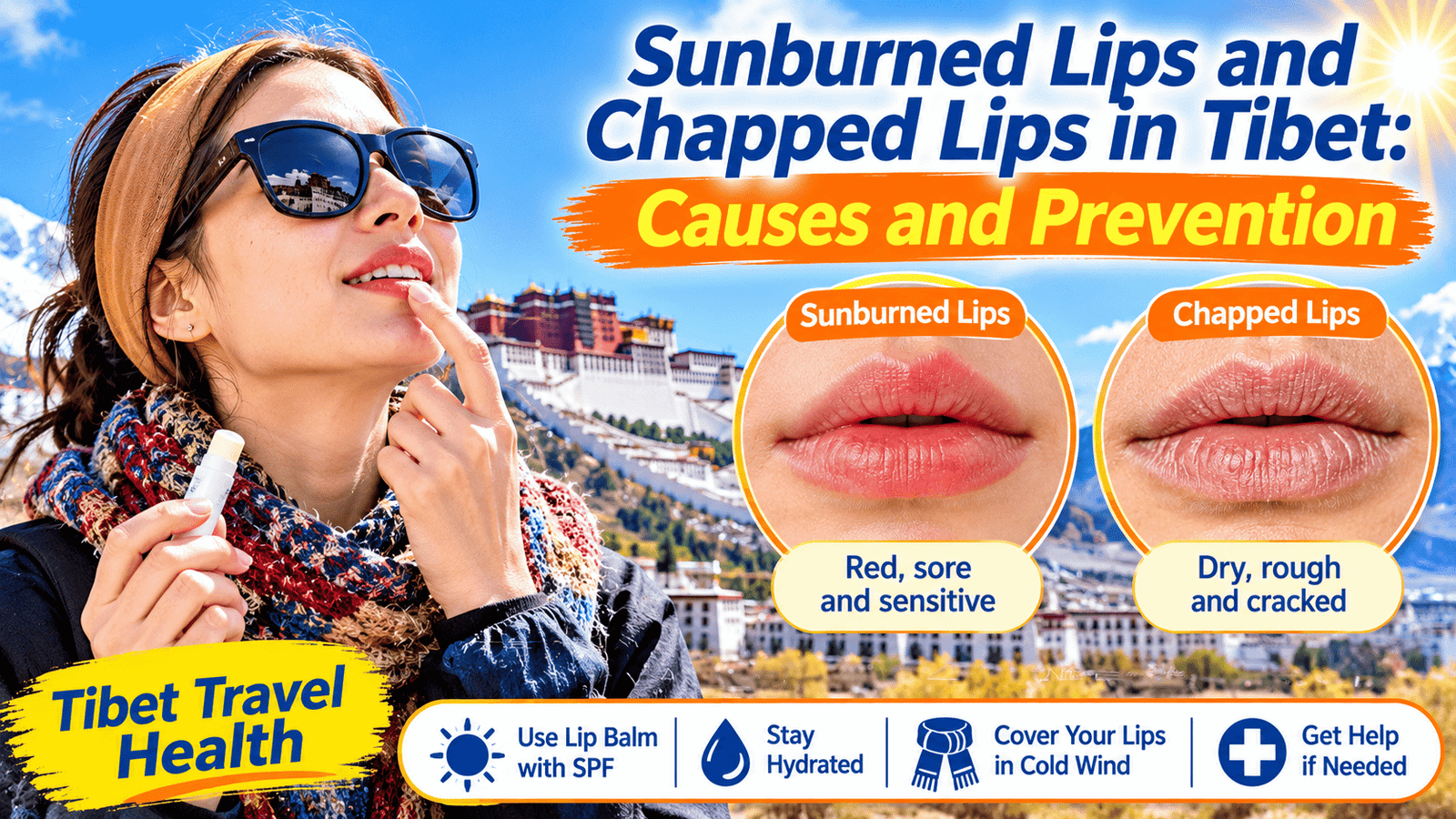
Dry, cracked and sunburned lips are common discomforts for travelers visiting Tibet. The combination of high-altitude UV exposure, low humidity, cold air and strong wind can quickly affect the delicate skin of the lips.
Visitors may notice dryness after arriving in Lhasa, while long outdoor journeys to Everest Base Camp, Namtso Lake or Mount Kailash can make the problem worse.
Unlike many other parts of the body, the lips have a relatively delicate outer surface and little natural protection against sunlight. Ordinary moisturizing lip balm can help with dryness, but it may not protect against UV radiation.
The best approach is to use an SPF lip balm regularly, protect the lips from wind and avoid licking or picking at dry skin.
Why do lips become dry in Tibet?
Several environmental conditions contribute to dry lips.
1. Low humidity
Tibet’s dry atmosphere can increase moisture loss from the surface of the lips. This may cause tightness, roughness and cracking.
2. Strong UV radiation
UV exposure can damage the lips just as it damages other exposed skin. The lower lip is particularly vulnerable because it often receives direct sunlight.
3. Cold air and strong wind
Wind increases discomfort and can worsen dryness. Cold conditions may also encourage people to breathe through their mouths, which can further dry the lips.
4. Dehydration
Insufficient fluid intake can contribute to dry mouth and general discomfort. However, dry lips do not always mean that someone is dehydrated.
Drink according to thirst and activity, and avoid trying to treat chapped lips by drinking excessive amounts of water.
5. Repeated licking or biting
Licking the lips may briefly make them feel moist, but saliva evaporates and can leave them drier. Biting or peeling the skin can cause further irritation.
Symptoms of dry and sunburned lips
Common symptoms include:
- Dryness and tightness
- Flaking or peeling
- Small cracks
- Redness and tenderness
- Burning or stinging
- Swelling after significant sun exposure
- Pain when eating or opening the mouth
Sunburned lips may become red, swollen and painful. In more severe cases, blisters can appear.
Persistent crusting, sores or changes that do not heal should be assessed by a healthcare professional, particularly when they affect the lower lip.
How to choose the right lip balm for Tibet
For high-altitude travel, choose a lip balm that provides both moisture and UV protection.
Look for:
- SPF 30 or higher: Helps protect the lips against UVB-related sunburn.
- Broad-spectrum protection: Where available, choose a product that protects against both UVA and UVB.
- Moisturizing ingredients: Products containing petrolatum, ceramides or other suitable emollients can help reduce moisture loss.
- A comfortable texture: Choose a product you are willing to reapply throughout the day.
- A fragrance-free formula if sensitive: Fragrances and flavourings may irritate some people.
Ordinary petroleum jelly can help protect dry lips from moisture loss, but it does not provide reliable UV protection unless the product is specifically formulated and labelled with an SPF rating.
How to protect your lips during a Tibet trip
1. Apply SPF lip balm before going outdoors
Use SPF 30 or higher lip balm before outdoor sightseeing, driving through exposed areas or starting a trek.
Cover the entire surface of the lips rather than applying only to the centre.
2. Reapply regularly
Reapply according to the product instructions, especially after eating, drinking, wiping your mouth or spending time outdoors.
Do not wait until your lips feel painful or dry before applying it again.
3. Protect your face from wind
A scarf, neck gaiter or suitable face covering can help protect the lips during cold and windy conditions.
Make sure the material is clean and does not repeatedly rub against cracked skin.
4. Avoid licking and picking
Try not to lick, bite or peel the lips. These habits can prolong irritation and cause small cracks to become more painful.
5. Use a simple moisturizer at night
Before sleeping, apply a suitable fragrance-free lip ointment or moisturizer. A plain protective ointment can help reduce moisture loss overnight.
If you have a history of reactions to skincare products, choose a simple formula and stop using it if irritation develops.
How to treat chapped or sunburned lips
For ordinary dry lips, use a protective lip ointment regularly and reduce exposure to wind and sunlight.
If the lips are sunburned:
- Stop further direct sun exposure.
- Use a clean cool compress for comfort.
- Apply a gentle, fragrance-free protective ointment.
- Avoid picking peeling skin.
- Avoid spicy or acidic foods if they cause stinging.
- Continue using SPF lip protection once the skin can tolerate it.
Do not apply irritating products, strong exfoliants or unprescribed steroid creams to the lips.
If blisters, severe swelling, spreading redness or signs of infection develop, seek medical advice.
When should you see a doctor?
Seek medical assessment if:
- The lips develop extensive or painful blisters.
- Swelling is severe or worsening.
- Cracks bleed repeatedly or do not heal.
- There is pus, spreading redness or increasing pain.
- A persistent sore or crusted area develops, especially on the lower lip.
- Symptoms continue despite avoiding irritation and using appropriate protection.
Sudden swelling of the lips together with tongue or throat swelling, difficulty breathing or difficulty swallowing may indicate a serious allergic reaction. Seek emergency help immediately.
Why lip protection matters at Everest Base Camp and Mount Kailash
Some of Tibet’s most popular travel routes expose visitors to long periods outdoors.
Everest Base Camp: Cold wind, high elevation and strong sunlight can dry and damage the lips. Carry SPF lip balm in an easily accessible pocket.
Mount Kailash: The kora involves long walking days and exposed mountain terrain. Reapply lip balm during breaks and protect the face from wind.
Namtso Lake: Bright surroundings and high elevation make UV protection important even during a short visit.
Yamdrok Lake: Outdoor sightseeing at exposed viewpoints can lead to prolonged sun exposure. Apply lip protection before leaving the vehicle.
Frequently asked questions
Can your lips get sunburned in Tibet?
Yes. The lips are exposed to UV radiation and can become red, swollen, painful or blistered after excessive sun exposure.
What SPF lip balm should I use in Tibet?
Choose SPF 30 or higher. Broad-spectrum protection is preferable where available.
Is ordinary petroleum jelly enough?
Petroleum jelly can help reduce moisture loss, but it does not provide dependable UV protection unless the product has a suitable SPF rating.
Why do my lips crack after arriving in Lhasa?
Dry air, wind, UV exposure, mouth breathing and repeated licking can all contribute to cracked lips.
Should I peel dry skin from my lips?
No. Pulling off loose skin can cause bleeding and further irritation. Allow it to heal naturally while using a suitable protective ointment.
Can I use sunscreen on my lips?
Use a product specifically formulated and labelled for the lips, such as an SPF lip balm. Avoid ordinary facial sunscreen if it causes irritation or is not intended for lip use.
Do I need lip balm during winter in Tibet?
Yes. Cold weather does not eliminate UV exposure, and wind and low humidity can make dryness worse.
Final advice
Lip care is a small but useful part of preparing for Tibet. Strong UV radiation, cold air, wind and low humidity can quickly cause discomfort.
Pack an SPF 30 or higher lip balm, reapply it throughout the day and use a simple moisturizer at night. Protect your face during windy conditions, and avoid licking or picking dry skin.
Medical disclaimer: This article provides general health information and is not a substitute for professional medical advice, diagnosis or treatment. Seek medical assessment for persistent sores, severe swelling, extensive blistering or signs of infection. Sudden lip or tongue swelling with breathing difficulty requires emergency care.
Suggested internal links
- Ultraviolet (UV) Radiation in Tibet: Why Sun Exposure Is Stronger at High Altitude
- Best Sun Protection for Tibet: Sunscreen, Clothing and Daily Prevention
- Sunburn in Tibet: Symptoms, Prevention and Treatment
- Dry Skin, Dry Nose and Nosebleeds in Tibet: Causes and Care
- Tibet Travel Checklist: Essential High-Altitude Gear and Safety Tips
References
- CDC Yellow Book 2026, Sun Exposure in Travelers.
- U.S. Food and Drug Administration (FDA), Sunscreen: How to Help Protect Your Skin from the Sun.
- World Health Organization (WHO), Ultraviolet Radiation.