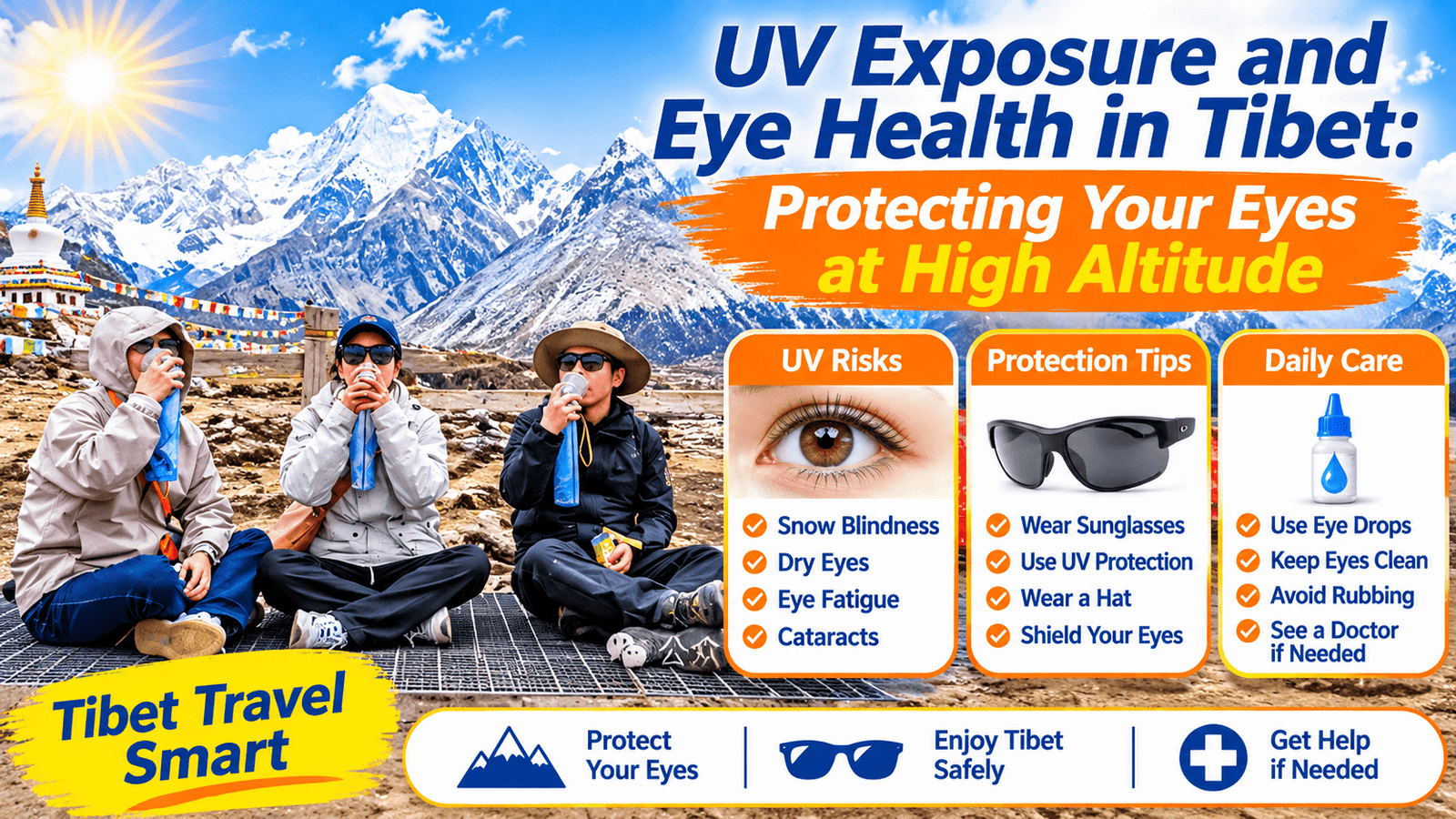
Tibet’s bright sunshine and high-altitude landscapes are beautiful, but they create an environment in which eye protection is especially important.
At high elevations, more ultraviolet radiation can reach the ground because the atmosphere absorbs less of it. Snow, ice and water can reflect additional UV radiation toward the eyes. Travelers may therefore experience strong exposure while visiting mountain viewpoints, walking around high-altitude lakes or trekking on snow-covered routes. The eyes are sensitive to UV radiation. A short period of intense exposure can cause photokeratitis, commonly known as snow blindness. Repeated exposure over time can also contribute to long-term eye damage.
The good news is that much of this exposure can be reduced with suitable sunglasses, mountain goggles and sensible outdoor habits.
How does UV radiation affect the eyes?
Ultraviolet radiation is invisible, so people cannot judge eye exposure simply by how bright or uncomfortable the sunlight feels. UVA and UVB can affect different structures of the eye and the surrounding tissues.
Photokeratitis: short-term UV injury
Photokeratitis is an acute injury to the cornea caused by excessive UV exposure. It is often called snow blindness because it can occur in snowy mountain environments.
Symptoms may include:
- Eye pain or a gritty sensation
- Redness
- Excessive tearing
- Sensitivity to light
- Blurred vision
- Swollen eyelids
Symptoms may not appear immediately. A person can feel comfortable outdoors and develop painful symptoms several hours later.
Photokeratitis is discussed in more detail in the separate article on snow blindness.
Cataracts and long-term eye damage
Cataracts involve clouding of the eye’s natural lens. UV exposure is one of several factors associated with cataract development.
Long-term sunlight exposure is also linked to other eye and eyelid conditions. The degree of risk depends on many factors, including age, lifetime exposure and individual susceptibility. Wearing UV-blocking eyewear consistently is a practical way to reduce avoidable exposure.
UV exposure around the eyelids
The skin around the eyes is delicate and can also receive substantial sunlight exposure. Sunglasses with good coverage, a wide-brimmed hat and sunscreen applied carefully to surrounding skin can help protect this area. Avoid getting sunscreen directly into the eyes.
Why are the eyes exposed to stronger UV radiation in Tibet?
Several environmental factors increase the need for eye protection.
High elevation
As altitude increases, the atmosphere absorbs less incoming UV radiation. This is relevant in Lhasa and even more important at higher destinations such as Namtso Lake, Everest Base Camp and the Mount Kailash kora route.
Snow and ice reflection
Snow can reflect a large proportion of incoming UV radiation. The eyes may receive exposure from above and from the surrounding ground.
This is why ordinary front-facing sunglasses may not provide enough coverage during snow trekking.
Bright water and open landscapes
Water and other reflective surfaces can add to UV exposure. At lakes and exposed mountain viewpoints, sunlight may reach the eyes from different directions.
Wind and dryness
Tibet’s dry air and strong winds can irritate the eyes. Dust and airborne particles may also contribute to discomfort.
Dryness and irritation are not the same as UV injury, but both can occur during the same journey.
How to choose sunglasses for Tibet
The most important feature is verified UV protection, not the brand, price or lens colour.
Look for sunglasses that:
- State UV400 or equivalent protection.
- Block 99–100% of UVA and UVB radiation.
- Fit comfortably and close to the face.
- Provide side coverage or a wraparound design.
- Have lenses suitable for the expected brightness.
- Are durable enough for outdoor travel.
Dark lenses are not automatically safer. If sunglasses are dark but do not filter UV radiation adequately, they may reduce visible light without providing the protection your eyes need.
Polarized lenses can reduce reflected glare from water and other surfaces. However, polarization is not the same as UV protection. Check both features separately.
Are ordinary sunglasses enough for Tibet?
For everyday city sightseeing, well-fitting sunglasses with verified UV protection may be suitable. For snow-covered terrain, glaciers and very bright mountain environments, more protective eyewear may be appropriate.
Consider:
- Wraparound sunglasses
- Sunglasses with side shields
- Mountain goggles designed for high-glare environments
- Eyewear that also reduces wind and dust exposure
For activities on snow, choose equipment designed for the conditions rather than relying on fashion sunglasses.
What lens category should I choose?
Sunglass lens categories describe how much visible light is transmitted through the lens. They do not independently describe UV protection.
A simplified guide:
| Lens category | Typical use |
|---|---|
| Category 0 | Very light tint; mainly fashion or indoor use |
| Category 1 | Low-light or limited sunlight |
| Category 2 | Ordinary sunlight |
| Category 3 | Bright sunlight and many outdoor conditions |
| Category 4 | Very intense glare, such as some glacier and high-mountain environments |
Category 4 lenses are not suitable for driving because they transmit too little visible light. Always check the manufacturer’s intended use and relevant safety standards.
For high-altitude snow environments, suitable mountain eyewear with strong UV filtering and adequate side protection is important.
Contact lenses and prescription glasses
Travelers who wear contact lenses should still use UV-protective sunglasses. Some contact lenses offer limited UV filtering, but they do not protect the entire eye or the surrounding skin.
People who need prescription glasses can consider:
- Prescription sunglasses with UV protection
- Fit-over sunglasses
- Prescription inserts designed for compatible mountain goggles
- Photochromic lenses with verified UV protection, while checking their performance in the intended conditions
Do not assume that every photochromic or tinted lens offers adequate UV protection.
How to protect your eyes during a Tibet tour
1. Wear sunglasses outdoors during daylight
Use UV-blocking eyewear consistently, including on cloudy days. UV radiation can still reach the eyes through cloud cover.
2. Add a hat
A wide-brimmed hat or suitable cap can reduce direct sunlight reaching the eyes. It should complement, not replace, sunglasses.
3. Use mountain goggles in snowy conditions
When walking across snow or spending extended time near glaciers, choose protective eyewear designed to reduce reflected light and shield the eyes from wind.
4. Protect your eyes from dust and wind
Wraparound eyewear can help reduce exposure to dust and wind. If your eyes feel dry, consider asking a pharmacist or clinician about suitable lubricating eye drops.
5. Take breaks from bright exposure
Rest in shade when practical, especially during long outdoor activities. Keep sunglasses accessible rather than packed away in your luggage.
What should you do if your eyes become painful after sun exposure?
Eye pain, redness, tearing and light sensitivity after prolonged UV exposure may indicate photokeratitis. Stop further UV exposure and seek medical assessment, particularly if pain is significant, vision is blurred or symptoms are worsening.
Do not rub your eyes. Avoid wearing contact lenses until symptoms have resolved and a healthcare professional advises that it is appropriate. Do not use leftover prescription eye drops or numbing drops unless directed by an eye-care professional. Some eye medications can cause harm when used incorrectly.
Sudden vision loss, severe eye pain, an eye injury or marked visual changes require urgent medical assessment.
Tibet destinations where eye protection is especially important
- Lhasa: Strong sunlight can affect visitors during long walks around the Potala Palace, monasteries and Barkhor Street.
- Yamdrok Lake: Open water and bright surroundings can increase glare and reflected exposure at viewpoints.
- Namtso Lake: High elevation and an exposed lakeside environment make sunglasses important even when the air is cold.
- Everest Base Camp: Bright sunlight, mountain wind and reflective surfaces make protective eyewear essential.
- Mount Kailash: Pilgrims spend long hours outdoors. Sunglasses should be comfortable, secure and suitable for changing weather and terrain.
Frequently asked questions
Can you get snow blindness in Tibet?
Yes. Photokeratitis can occur when the eyes receive excessive UV radiation, especially from reflected sunlight on snow and ice.
Are expensive sunglasses better for Tibet?
Not necessarily. Properly tested, affordable sunglasses with verified UV protection can be effective. Fit, coverage and correct UV filtering matter more than the brand name.
Is UV400 enough for Tibet?
A genuine UV400 rating indicates protection against UV wavelengths up to 400 nanometres. Choose eyewear with reliable labeling and adequate coverage for the conditions.
Do polarized sunglasses block UV?
Not automatically. Polarization reduces glare, but UV protection must be checked separately.
Can I wear contact lenses in Tibet?
Many people can, but dry air, dust and wind may cause discomfort. Follow normal contact-lens hygiene and wear UV-blocking sunglasses as well.
Do I need sunglasses on cloudy days?
Yes. Clouds do not block all UV radiation, so eye protection remains important outdoors.
Are category 4 sunglasses suitable for driving?
No. Category 4 lenses are intended for very intense glare and are too dark for driving. Use eyewear approved for driving conditions.
Final advice
Protecting your eyes is an essential part of preparing for Tibet. Strong UV exposure, snow reflection, wind and dry air can all affect eye comfort and health.
Choose sunglasses with verified UVA and UVB protection, use suitable mountain eyewear in snowy conditions and wear a hat for additional coverage. If you develop eye pain, severe light sensitivity or blurred vision after outdoor exposure, seek medical assessment rather than assuming it will disappear on its own.
Medical disclaimer: This article provides general health information and is not a substitute for professional medical advice, diagnosis or treatment. Seek prompt medical assessment for eye pain, persistent redness, blurred vision, light sensitivity or suspected photokeratitis.
Suggested internal links
- Snow Blindness: Symptoms, First Aid and Prevention in Tibet
- Ultraviolet (UV) Radiation in Tibet: Why Sun Exposure Is Stronger at High Altitude
- Best Sun Protection for Tibet: Sunscreen, Clothing and Daily Prevention
- Tibet Travel Checklist: Essential High-Altitude Gear and Safety Tips
- Sunburn in Tibet: Symptoms, Prevention and Treatment
References
- CDC Yellow Book 2026, Sun Exposure in Travelers.
- World Health Organization (WHO), Ultraviolet Radiation.
- American Academy of Ophthalmology (AAO), Snow Blindness.