
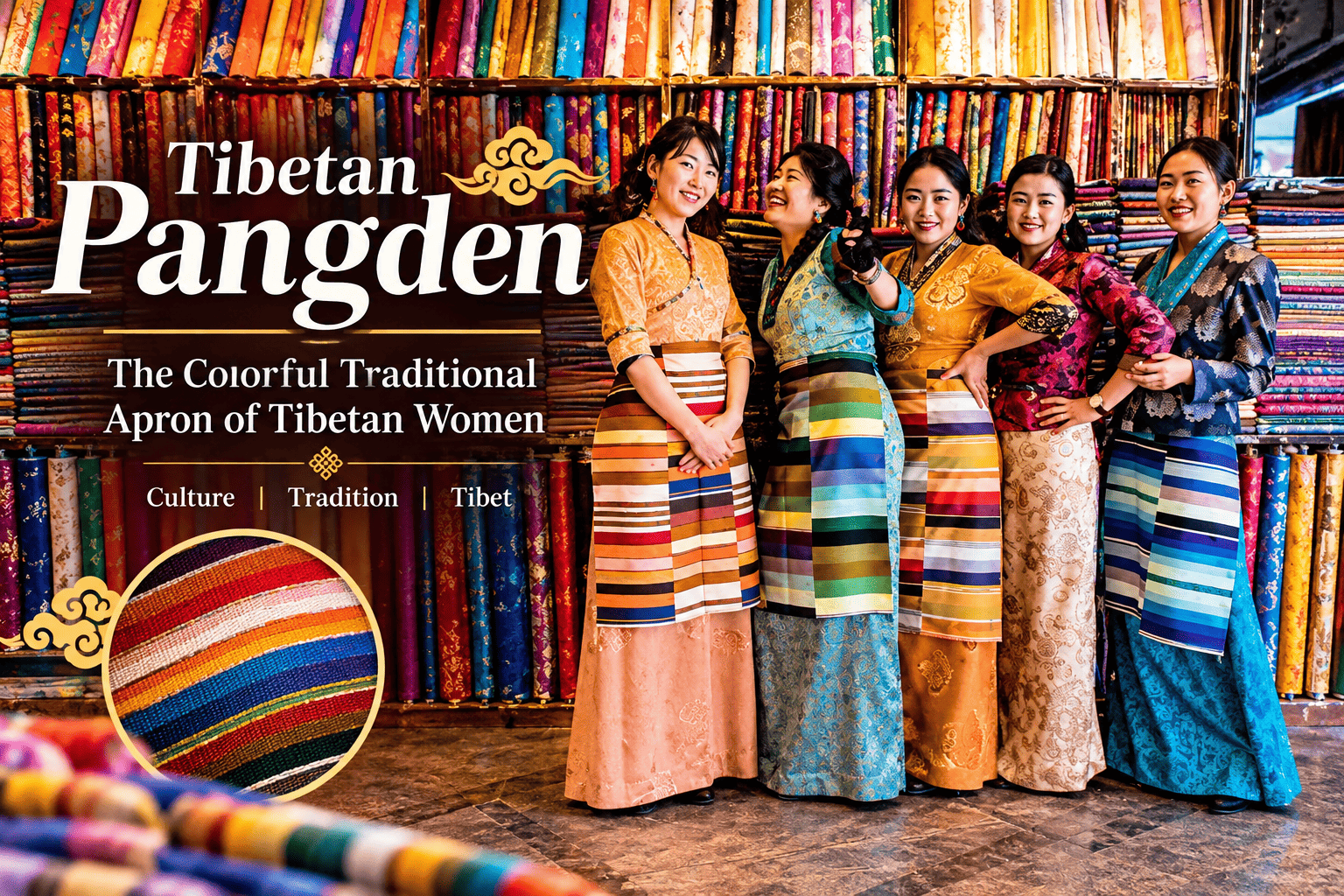
The Tibetan Pangden (邦典) is one of the most recognizable elements of traditional Tibetan clothing. With its colorful horizontal stripes and handwoven wool fabric, this traditional apron is more than a decorative garment. It represents Tibetan craftsmanship, cultural identity, and the everyday life of Tibetan women.
At first glance, its bright combination of red, blue, yellow, green, and white may resemble a rainbow woven into fabric. However, behind these distinctive patterns lies a long tradition of Tibetan textile-making, regional customs, and cultural symbolism.
Whether you encounter Pangden in the streets of Lhasa, traditional Tibetan villages, or local handicraft markets, it offers a fascinating glimpse into the living culture of the Tibetan Plateau.
What Is a Tibetan Pangden?
Pangden is a traditional colorful woolen apron worn by Tibetan women, particularly in central Tibet. It is usually woven from wool using traditional handweaving techniques and features distinctive horizontal stripes in different colors.
The apron is traditionally worn around the waist, covering the front and lower part of the body. It is commonly paired with a Tibetan robe, known as a Chuba, creating one of the most recognizable traditional Tibetan female outfits.
Beyond its practical function, Pangden is an important expression of Tibetan cultural identity. Its patterns, colors, and weaving styles reflect local traditions and the craftsmanship passed down through generations.
In Tibetan communities, traditional Pangden has also been associated with women’s social status and marital customs. In some areas, married women traditionally wear Pangden as part of their everyday clothing, although customs vary between regions and generations.
The Colorful Stripes: A Rainbow Woven into Fabric
One of the most striking features of Tibetan Pangden is its colorful horizontal stripes.
Traditional designs often combine five prominent colors: red, yellow, blue, green, and white. These colors create vibrant patterns that stand out against the darker tones of traditional Tibetan robes.
The arrangement of stripes varies according to local weaving traditions, personal preferences, and the style of the apron. Some Pangden feature bold, contrasting color combinations, while others have more delicate and intricate patterns.
The result is a distinctive textile that combines practical craftsmanship with a strong sense of Tibetan aesthetics.
For many visitors to Tibet, Pangden is an instantly recognizable symbol of traditional Tibetan dress.
The Cultural Meaning of the Five Colors
The colors commonly seen in Tibetan Pangden are closely connected with the natural environment and traditional Tibetan Buddhist culture.
Although the meaning of individual colors can vary depending on the cultural and religious context, the five-color combination is often associated with the landscapes and spiritual traditions of Tibet.
- White: Often associated with snow-covered mountains, clouds, purity, and auspiciousness.
- Blue: Represents the vast Tibetan sky and sacred lakes, suggesting peace and spaciousness.
- Red: Associated with fire, warmth, vitality, and celebration.
- Yellow: Often connected with sunlight, the earth, prosperity, and auspiciousness.
- Green: Symbolizes grasslands, vegetation, and the vitality of nature.
Together, these colors evoke the natural beauty of the Tibetan Plateau, from its snow-covered mountains and deep-blue lakes to its vast grasslands and sunlit valleys.
The five colors also have important associations in Tibetan Buddhism. However, their specific religious meanings should not be confused with the symbolism of every Pangden design. The colors of traditional aprons are also shaped by local artistic preferences and textile traditions.
Pangden and Tibetan Women’s Traditional Clothing
Pangden is traditionally worn as part of women’s Tibetan clothing, especially in central Tibetan areas such as Lhasa and Shigatse.
A traditional outfit often consists of several elements:
- Chuba: The traditional Tibetan robe, generally made from wool, cotton, or other suitable fabrics depending on the season and region.
- Pangden: The colorful striped apron worn around the waist.
- Shirt or blouse: Usually worn underneath the robe.
- Traditional accessories: Silver jewelry, turquoise, coral, and other ornaments may complete the outfit.
In some traditional communities, Pangden has also carried social significance. Its association with married women is particularly well known in central Tibet, where wearing an apron can be part of traditional women’s clothing after marriage.
Today, however, Pangden is worn in different ways. Some women continue to wear it in everyday life, while others reserve traditional clothing for festivals, weddings, religious celebrations, and cultural events.
Younger generations and contemporary designers have also introduced new styles, combining traditional Tibetan patterns with modern clothing.
Traditional Handweaving: The Craftsmanship Behind Pangden
The beauty of Pangden comes not only from its colors but also from the traditional weaving techniques used to produce it.
Wool has long been an important material in Tibetan life. The high-altitude environment of the Tibetan Plateau supports extensive pastoral traditions, and wool from local livestock has historically been used to make clothing, blankets, carpets, and other household textiles.
Traditional Pangden weaving requires skill, patience, and an understanding of color combinations and patterns.
Depending on the local tradition, artisans prepare woolen yarn, select different colored threads, and weave them into tightly arranged horizontal stripes. The finished textile is then made into an apron suitable for everyday use.
Although modern production methods and materials are also available today, traditional handwoven Pangden remains an important example of Tibetan textile craftsmanship.
Pangden as an Important Part of Tibetan Intangible Cultural Heritage
Traditional Pangden weaving is an important part of Tibet’s cultural heritage. Its production preserves traditional knowledge, weaving techniques, aesthetic preferences, and local customs.
Tibetan Pangden weaving was included in China’s first national-level list of intangible cultural heritage in 2006, recognizing its cultural and traditional value.
Today, local artisans and cultural heritage practitioners continue to preserve and develop this traditional craft.
Pangden can also be found in Tibetan handicraft shops and traditional markets, where visitors can appreciate the different patterns and colors. Buying locally made textiles can be a meaningful way to support traditional craftsmanship and local artisans.
Where Can You See Traditional Pangden in Tibet?
If you travel to Tibet, you may see Pangden in several places, particularly in areas where traditional Tibetan clothing remains part of everyday life.
Lhasa: Around Barkhor Street and the old city, you may see local women wearing traditional Tibetan clothing, including colorful Pangden. Local handicraft shops also offer a variety of woven textiles.
Shigatse: Traditional clothing and textile craftsmanship remain important parts of local Tibetan culture. You may encounter different regional clothing styles during local festivals and cultural celebrations.
Tibetan villages: In rural communities, traditional clothing is sometimes still worn as part of everyday life, especially during special occasions, festivals, and family gatherings.
For travelers interested in Tibetan culture, observing traditional clothing is a wonderful way to understand how local customs and craftsmanship continue to shape everyday life.
More Than an Apron: A Symbol of Tibetan Cultural Identity
The Tibetan Pangden is much more than a colorful piece of clothing. It represents generations of traditional weaving skills, the creativity of Tibetan women, and the cultural heritage of the Tibetan Plateau.
Its colorful stripes reflect the landscapes of Tibet, while its traditional patterns connect modern generations with the customs of their ancestors.
Today, even as clothing styles continue to change, Pangden remains an enduring symbol of Tibetan identity and traditional craftsmanship.
The next time you see a Tibetan woman wearing a brightly striped apron, take a closer look. Behind those beautiful colors is a story of culture, tradition, and the remarkable artistry of Tibetan textile-making.