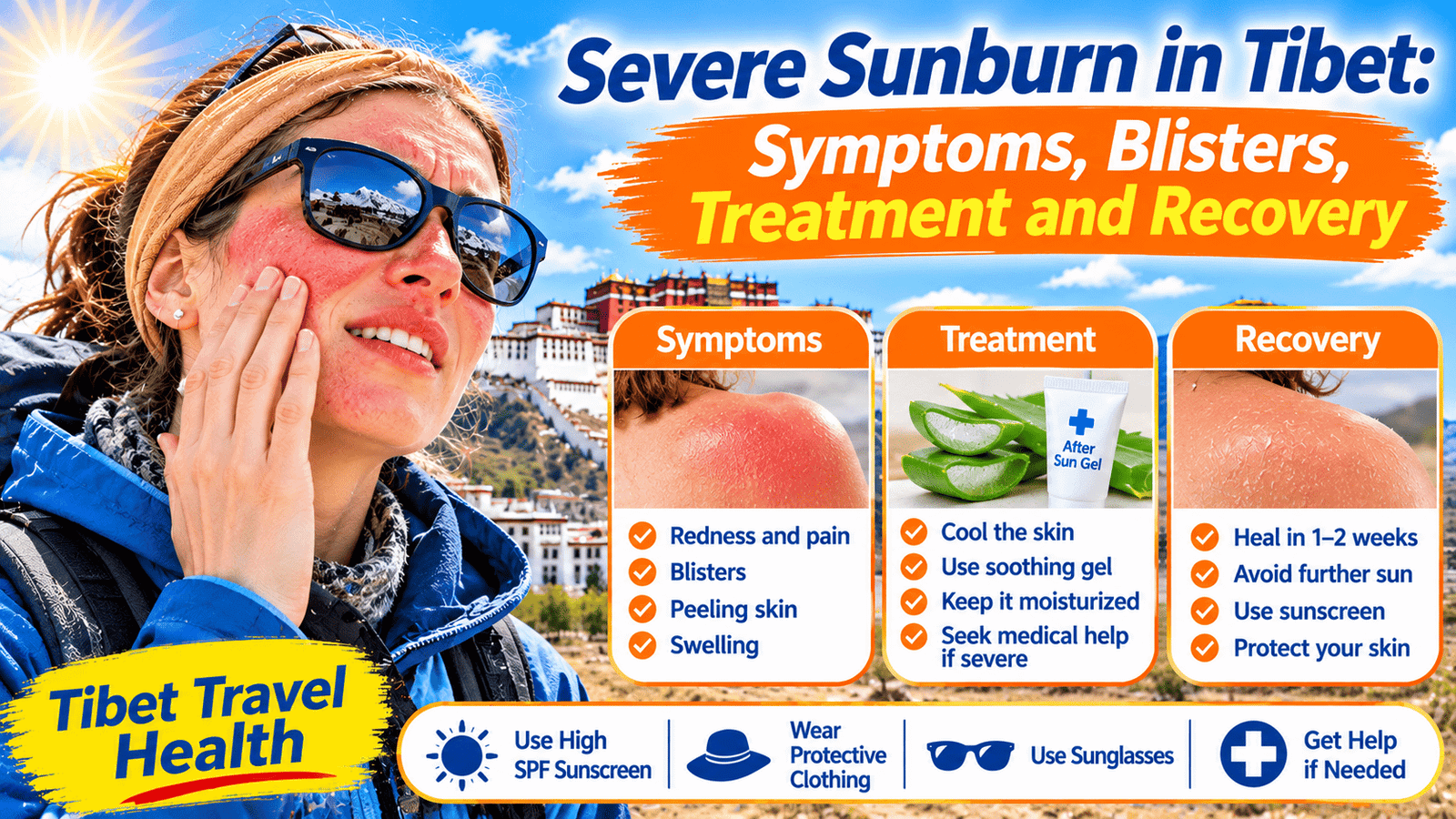
Sunburn is a common but preventable problem for travelers visiting Tibet. The Tibetan Plateau has high elevations, strong sunshine and many exposed landscapes. Visitors can receive substantial ultraviolet (UV) radiation while walking around Lhasa, stopping at mountain viewpoints or trekking near Everest and Mount Kailash.
Cold temperatures do not prevent sunburn. A traveler may spend hours outdoors in cool, windy weather without realizing how much UV exposure their skin is receiving.
Mild sunburn usually causes redness, warmth and discomfort. More severe burns can cause swelling, intense pain and blisters. Extensive sunburn may also be accompanied by fever, chills, headache, nausea or dehydration.
This guide explains how to recognize sunburn, what to do when it happens and when medical attention is necessary.
Why can sunburn be severe in Tibet?
UV radiation increases with altitude because less atmosphere is available to absorb it. The amount of UV reaching the ground also depends on the season, time of day, cloud cover and surrounding surfaces.
Several features of Tibet can increase exposure:
- High elevation
- Long periods outdoors
- Clear skies and strong sunshine
- Reflection from snow, water and bright ground
- Wind and cold temperatures that make sunlight feel less intense
- Inadequate sunscreen or protective clothing
Sunburn can occur on the face, nose, ears, neck, hands and other exposed areas. The nose and cheeks are particularly vulnerable because they receive direct sunlight.
Symptoms of sunburn
Sunburn symptoms may not appear immediately. Skin damage can become noticeable several hours after exposure and may continue to develop over the following day.
Mild sunburn
Common symptoms include:
- Pink or red skin
- Warmth when touching the affected area
- Mild swelling
- Tenderness or discomfort
- Skin that feels tight or dry
Moderate sunburn
More noticeable symptoms may include:
- Strong redness
- Significant tenderness
- Swelling
- Pain when clothing touches the skin
- Headache or general discomfort if a large area is affected
Severe sunburn
Severe sunburn can involve:
- Blisters
- Extensive swelling
- Intense pain
- Large areas of damaged skin
- Fever or chills
- Nausea or vomiting
- Dizziness or weakness
Blistering indicates a more significant skin injury. Extensive blistering, severe pain or systemic symptoms require medical assessment.
What should you do immediately after getting sunburned?
The first priority is to stop further UV exposure and cool the affected skin gently.
1. Get out of direct sunlight
Move indoors or into reliable shade. Cover the affected area with loose clothing and avoid further sun exposure while the skin is healing.
Do not continue sightseeing or trekking simply because the skin initially feels manageable. Additional UV exposure can worsen the injury.
2. Cool the skin gently
Use a cool shower, bath or clean cool compress to help reduce heat and discomfort.
Avoid placing ice or frozen packs directly on the skin. Extreme cold can cause additional tissue injury.
Pat the skin gently with a soft towel rather than rubbing it.
3. Apply a gentle moisturizer
After cooling, a simple fragrance-free moisturizer may help reduce dryness and discomfort.
A light moisturizer containing aloe vera or soy may be soothing for some people. Avoid products that sting, contain strong fragrances or irritate damaged skin.
Do not apply heavy or irritating products to open blisters.
4. Drink fluids normally
Sunburn can occur alongside heat exposure, sweating and dehydration. Drink water regularly according to thirst.
If you have vomiting, dizziness or difficulty keeping fluids down, seek medical advice. People with heart or kidney conditions who have fluid restrictions should follow their clinician’s guidance.
5. Avoid further irritation
During recovery:
- Wear loose, soft clothing.
- Avoid rubbing or scratching the skin.
- Do not peel loose skin.
- Avoid harsh exfoliants and strong skin treatments.
- Keep the affected area protected from sunlight.
How should you treat sunburn blisters?
Blisters form when damage to the skin causes fluid to collect beneath the surface.
If blisters appear:
- Do not deliberately break or squeeze them.
- Keep the area clean.
- Protect it from friction.
- Avoid pulling off loose skin.
- Seek medical advice if blisters are extensive, very painful or appear infected.
A clinician may recommend appropriate dressings or treatment depending on the severity and location of the burn.
Signs of possible infection include increasing redness, warmth, swelling, worsening pain, pus or fever.
Can you use painkillers for sunburn?
Some people use over-the-counter pain relievers to manage discomfort.
However, not every medicine is suitable for every traveler. Anti-inflammatory medicines such as ibuprofen can have risks for people with kidney disease, stomach ulcers, dehydration or certain other medical conditions.
Ask a pharmacist or healthcare professional which pain relief is appropriate, particularly if you take regular medicines or have an underlying condition.
Do not apply topical anesthetic products or strong creams to extensive damaged skin without medical advice.
How long does sunburn take to heal?
Recovery depends on the severity and extent of the burn.
- Mild sunburn: Symptoms often improve over several days.
- Moderate sunburn: Redness and discomfort may last longer, and peeling may occur.
- Blistering sunburn: Healing may take longer and can require medical care.
Do not deliberately expose peeling or healing skin to sunlight. New skin can remain sensitive.
When should you seek medical attention?
Seek medical advice for extensive blistering, severe pain or burns affecting a large area.
Get urgent medical assessment if sunburn is accompanied by:
- Fever or chills
- Severe headache
- Repeated vomiting
- Marked dizziness or fainting
- Confusion
- Signs of dehydration
- Severe weakness
Confusion, fainting or reduced consciousness should be treated as an emergency. On a Tibet trip, these symptoms should not automatically be blamed on sunburn. Heat illness, dehydration, altitude illness and other medical conditions may also be responsible.
If a person has a painful eye, blurred vision or severe light sensitivity after sun exposure, seek medical assessment for possible eye injury.
Sunburn and altitude sickness: How can you tell the difference?
Sunburn and altitude sickness can occur during the same trip, but they are different conditions.
| Feature | Sunburn | Acute mountain sickness |
|---|---|---|
| Main cause | Excessive UV exposure | Rapid ascent to high altitude |
| Typical signs | Red, warm, painful skin | Headache, nausea, dizziness, fatigue |
| Blisters | Can occur | Not a typical symptom |
| Timing | Often develops hours after sun exposure | Often develops within hours after ascent |
| Main response | Stop UV exposure and cool the skin | Stop ascent, assess symptoms and seek medical advice |
The two conditions can overlap with dehydration or general fatigue. Do not assume that a headache or nausea is caused only by sunburn when you are at high altitude.
How to prevent sunburn during a Tibet tour
Prevention is easier than treating a painful burn during a remote journey.
- Apply broad-spectrum SPF 30 or higher sunscreen to exposed skin.
- Reapply according to the product label, generally at least every two hours outdoors.
- Wear long sleeves and long trousers.
- Use a wide-brimmed hat or protective sun cap.
- Wear UV-blocking sunglasses.
- Protect the nose, ears, neck and lips.
- Seek shade when available.
- Check the UV Index forecast when possible.
- Continue protection during cold and cloudy weather.
Travelers taking photos at scenic viewpoints often remove hats or sunglasses for long periods. Keep protective equipment on whenever practical.
Frequently asked questions
Can you get sunburned in Tibet in winter?
Yes. UV radiation remains present in winter, and snow can reflect additional sunlight. Cold weather does not prevent sunburn.
Why does my face burn even when I do not feel hot?
Sunburn is caused by UV radiation rather than heat. The air may feel cold while UV exposure is still strong.
Should I put ice on sunburn?
No. Use cool water or a clean cool compress. Do not place ice directly on damaged skin.
Should I pop sunburn blisters?
No. Do not deliberately break blisters. They help protect the injured skin underneath and should be assessed if extensive or painful.
Can sunburn cause fever?
A severe sunburn may be accompanied by fever, chills and other systemic symptoms. These symptoms need medical assessment, especially when combined with vomiting, dizziness or weakness.
Can I continue my Tibet tour with sunburn?
Mild sunburn may not prevent all travel activities, but the affected skin should be protected from further sunlight and friction. Severe or blistering sunburn may require rest and medical assessment.
Does sunscreen prevent all sunburn?
No. Sunscreen reduces UV exposure when applied correctly, but it does not block all radiation. Combine it with clothing, hats, sunglasses and shade.
Final advice
Sunburn can make a Tibet journey uncomfortable and, in severe cases, require medical treatment. High altitude and strong sunshine mean travelers should protect exposed skin even when the weather is cold.
If you develop a burn, stop further sun exposure, cool the skin gently and avoid breaking blisters. Seek medical care for severe pain, extensive blistering or systemic symptoms.
Medical disclaimer: This article provides general health information and is not a substitute for professional medical advice, diagnosis or treatment. Seek medical assessment for severe or extensive sunburn, blistering, infection or symptoms such as fever, vomiting, confusion or fainting.
Suggested internal links
- Ultraviolet (UV) Radiation in Tibet: Why Sun Exposure Is Stronger at High Altitude
- Best Sun Protection for Tibet: Sunscreen, Clothing and Daily Prevention
- Sunburn in Tibet: Symptoms, Prevention and Treatment
- UV Exposure and Eye Health in Tibet
- Dry Skin, Dry Nose and Nosebleeds in Tibet: Causes and Care
References
- CDC Yellow Book 2026, Sun Exposure in Travelers.
- U.S. Food and Drug Administration (FDA), Sunscreen: How to Help Protect Your Skin from the Sun.
- World Health Organization (WHO), Ultraviolet Radiation.