Sun protection should be part of every Tibet traveler’s daily routine. The Tibetan Plateau sits at high elevation, where UV radiation can be stronger than at lower altitudes. Clear skies, long outdoor sightseeing days and reflection from snow, water and bright ground surfaces can increase exposure.
A traveler may feel cold while visiting a mountain pass or walking around a lake, yet still receive enough UV radiation to cause sunburn. Even a short visit to a viewpoint can expose the face, ears, lips and hands.
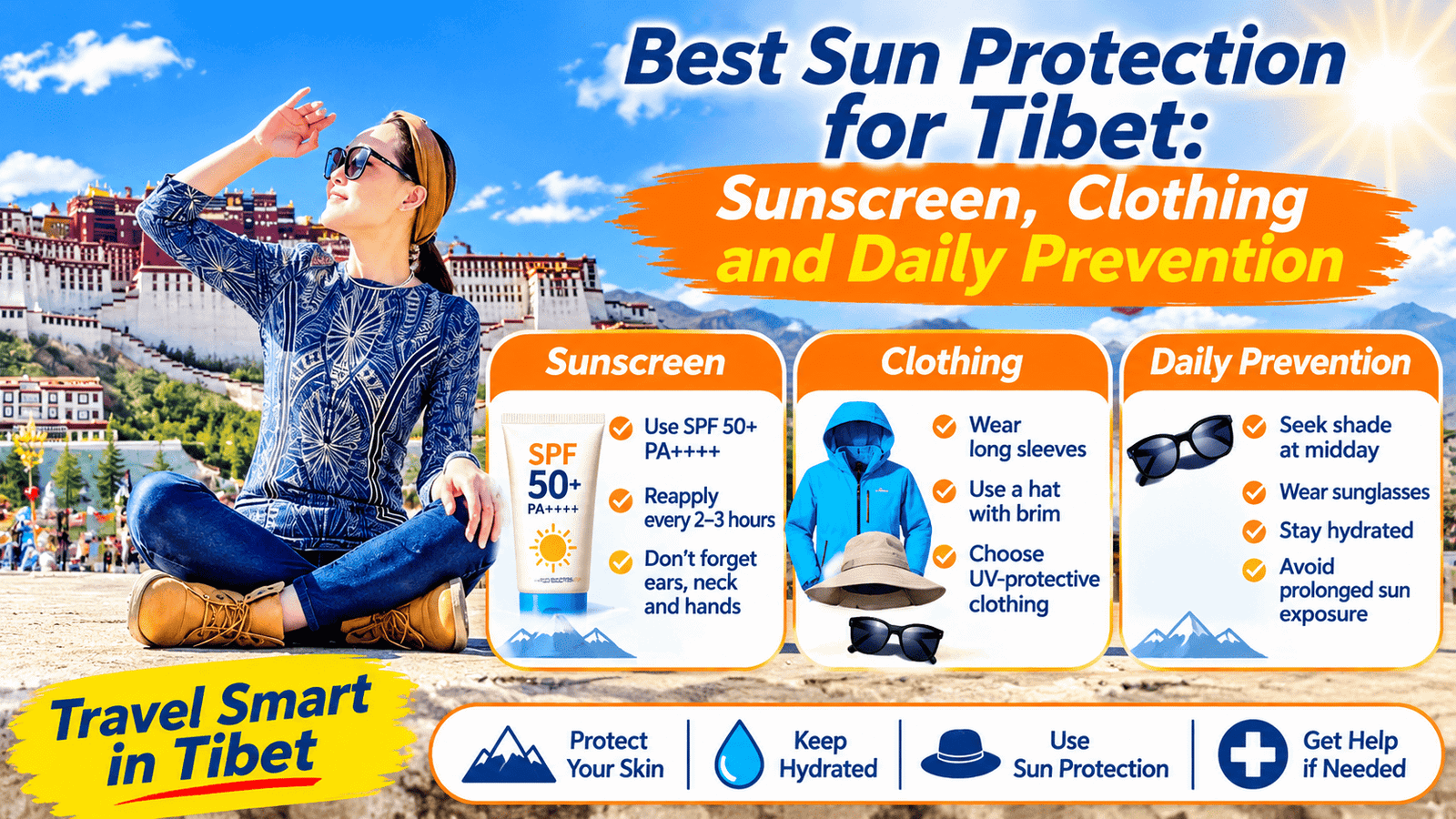
The most effective approach is to combine sunscreen with suitable clothing, a protective hat, sunglasses and sensible outdoor habits. This guide explains what to pack and how to use each item during a Tibet tour.
Choose the right sunscreen
For a Tibet trip, choose a sunscreen with these features:
- Broad-spectrum protection: The label should indicate protection against both UVA and UVB.
- SPF 30 or higher: This is a practical minimum for regular outdoor protection.
- Water resistance: Useful when sweating or during active walks, although it does not mean the sunscreen stays effective indefinitely.
- A texture you will use consistently: Creams and lotions can be easier to apply evenly than sprays in windy conditions.
SPF mainly describes protection against UVB-related sunburn under standardized testing conditions. It does not tell you everything about UVA protection, so look for the words broad spectrum or the appropriate UVA rating used in your country.
A higher SPF does not mean unlimited protection or permission to stay in the sun longer.
2. How to apply sunscreen correctly
Applying too little sunscreen is a common reason people receive less protection than the label suggests.
Follow these practical steps:
- Apply sunscreen to all exposed skin before going outdoors, following the product’s instructions.
- Use enough to create an even layer rather than applying only a very thin coating.
- Cover the face, ears, neck, hands and other exposed areas.
- Do not forget the nose, hairline, back of the neck and tops of the feet.
- Reapply at least every two hours when outdoors, and more often according to the label after sweating, wiping or swimming.
The CDC’s traveler guidance recommends broad-spectrum SPF 30 or higher and reapplication every 2–4 hours, with more frequent application when sweating or after water exposure. Following the specific product label is important.
Commonly missed areas
| Area | Why it is often missed |
|---|---|
| Ears | Not fully covered by many hats |
| Nose | Protrudes and receives direct sunlight |
| Lips | Often protected with ordinary moisturizer rather than SPF balm |
| Neck | Exposed when wearing a short collar |
| Hands | Exposed while walking and taking photographs |
| Hairline and scalp | Vulnerable where hair is thin or absent |
| Tops of feet | Exposed in open footwear |
3. Wear protective clothing
Clothing provides a useful physical barrier against UV radiation. It can be particularly helpful during long sightseeing days and trekking.
Choose:
- Lightweight, long-sleeved shirts
- Long trousers
- Closely woven fabrics
- Clothing with a stated Ultraviolet Protection Factor (UPF)
- A neck covering or sun scarf when appropriate
UPF describes how effectively fabric blocks UV radiation. A higher UPF rating indicates greater protection under the relevant testing standard. Fabric protection varies with weave, material, colour, stretching and whether the clothing becomes wet. Ordinary thin clothing may provide less protection than travelers expect.
For Tibet, clothing should also provide warmth and wind protection. A practical layering system can cover the skin while allowing you to adjust to changing temperatures.
Choose a suitable sun hat
A hat helps protect the face, ears and neck, but not all hats offer the same coverage. A wide-brimmed hat is generally more useful than a standard baseball cap because it shades more of the head and face.
Look for:
- A brim that shades the face and ears
- A neck flap or full-coverage design for exposed routes
- A secure fit in windy conditions
- Breathable material for warmer days
- UPF-rated fabric where available
A baseball cap can protect part of the face, but it leaves the ears and neck exposed. If you prefer one, add a neck covering and apply sunscreen to uncovered areas.
5. Protect your eyes with UV-blocking sunglasses
Sunglasses are essential in bright high-altitude environments. UV radiation can reach the eyes directly and reflect from snow, water and other surfaces.
Choose sunglasses that:
- Block 99–100% of UVA and UVB radiation, or carry a UV400 rating.
- Fit close to the face.
- Provide side coverage where possible.
- Are comfortable enough to wear for long periods.
- Have suitable lens darkness for the conditions.
Lens colour alone does not determine UV protection. Dark lenses without proper UV filtering can be a poor choice. Polarization reduces glare from reflective surfaces, but it is not a substitute for UV protection. Check the UV rating separately.
For snowy trekking and glacier environments, consider wraparound sunglasses or suitable mountain goggles that protect against reflected light and wind.
6. Protect your lips
The lips are frequently overlooked during outdoor travel. Their delicate surface can become dry, cracked and sunburned. Carry a lip balm specifically labelled with SPF 30 or higher. Reapply it regularly, especially after eating, drinking or wiping your lips.
Ordinary petroleum jelly or moisturizing lip balm can reduce dryness, but it does not necessarily protect against UV radiation unless it has a stated SPF.
7. Use shade and plan outdoor activities sensibly
Sunscreen and clothing are important, but reducing direct exposure is also useful.
Whenever practical:
- Take breaks in shaded areas.
- Avoid prolonged direct sunlight during the strongest UV hours, generally around 10 a.m. to 4 p.m.
- Use an umbrella or portable shade when suitable.
- Plan longer outdoor activities for times with lower UV exposure where the itinerary allows.
- Check the UV Index forecast rather than judging exposure by temperature.
Tibet tours often involve open landscapes where shade is limited. On routes to Everest, Namtso and Mount Kailash, protective clothing and eyewear become especially important.
8. Does sun protection matter on cloudy or cold days?
Yes. Cloud cover does not eliminate UV exposure, and some UV radiation can pass through clouds. Cold temperatures are also not a reliable indication of low UV levels. Travelers visiting snowy mountain regions may receive significant reflected UV exposure even when the air is freezing.
Continue using sunscreen and sunglasses in winter, on cloudy days and during short stops at high-altitude viewpoints.
Special precautions for Tibet destinations
- Lhasa: Apply sunscreen before walking around the Potala Palace, Jokhang Temple and Barkhor Street. A hat and sunglasses are useful even during relatively short sightseeing stops.
- Yamdrok Lake: The open landscape and reflective water make eye protection important. Cover exposed skin during long stops at viewpoints.
- Namtso Lake: The high elevation and exposed lakeside environment call for broad-spectrum sunscreen, protective clothing and suitable sunglasses.
- Everest Base Camp: Strong sunlight, cold wind and high elevation can occur together. Carry sunscreen, SPF lip balm, sunglasses and a warm face covering.
- Mount Kailash: Pilgrims spend long periods outdoors. Reapply sunscreen during the kora and protect the face, neck, ears and hands.
Check whether your medicines increase sun sensitivity
Some medicines can make the skin more sensitive to UV radiation. These include certain antibiotics, anti-inflammatory medicines, diuretics, retinoids and some cancer treatments.
The reaction varies by medicine and person. Do not stop a prescribed medicine because of a possible sun-sensitivity warning.
Before departure, check the patient information leaflet and ask a doctor or pharmacist whether additional precautions are needed.
Tibet sun-protection packing checklist
- Broad-spectrum SPF 30 or higher sunscreen
- SPF 30 or higher lip balm
- UV400 or equivalent UVA/UVB-blocking sunglasses
- Wide-brimmed hat
- Lightweight long-sleeved shirts
- Long trousers
- UPF-rated clothing where practical
- Neck covering or sun scarf
- Mountain goggles for appropriate snow conditions
- Small sunscreen container for day trips
Keep sunscreen out of prolonged direct heat and follow its storage instructions.
Frequently asked questions
What SPF sunscreen should I use in Tibet?
Broad-spectrum SPF 30 or higher is a practical choice for regular outdoor protection. Apply enough and reapply according to the label.
Is SPF 50 better than SPF 30?
SPF 50 offers somewhat greater UVB protection under test conditions, but no sunscreen blocks all UV radiation. Correct application, reapplication, clothing and shade remain important.
How often should I reapply sunscreen in Tibet?
At least every two hours during outdoor exposure is a useful general rule. Reapply sooner after sweating, wiping your face or swimming, and follow the product label.
Are ordinary sunglasses enough for Tibet?
Only if they provide proper UV protection. Look for a UV400 rating or a clear statement that the lenses block 99–100% of UVA and UVB.
Do I need sunscreen in Tibet during winter?
Yes. Snow reflection and high elevation can create significant UV exposure even in cold weather.
Can I use a baseball cap for sun protection?
A baseball cap provides some shade but leaves the ears and neck exposed. A wide-brimmed hat or a cap with neck and ear coverage offers more protection.
Is sunscreen alone enough?
No. Sunscreen works best as part of a combination of protective clothing, a hat, sunglasses, shade and sensible exposure habits.
Final advice
The best sun protection for Tibet is simple and practical: use broad-spectrum sunscreen, wear a hat and protective clothing, protect your eyes and cover your lips.
Prepare these items before departure rather than waiting until you arrive. High-altitude sunlight can be intense even when the air feels cold, and a consistent routine is more reliable than trying to treat sunburn after it happens.
Medical disclaimer: This article provides general health information and is not a substitute for professional medical advice. Ask a doctor or pharmacist about photosensitizing medicines or medical conditions that increase UV sensitivity. Seek medical assessment for severe blistering sunburn, signs of infection or significant eye symptoms.
Suggested internal links
- Ultraviolet (UV) Radiation in Tibet: Why Sun Exposure Is Stronger at High Altitude
- Sunburn in Tibet: Symptoms, Prevention and Treatment
- Snow Blindness: Symptoms, First Aid and Prevention in Tibet
- Dry Skin, Dry Nose and Nosebleeds in Tibet: Causes and Care
- Tibet Travel Checklist: Essential High-Altitude Gear and Safety Tips
References
- CDC Yellow Book 2026, Sun Exposure in Travelers.
- U.S. Food and Drug Administration (FDA), Sunscreen: How to Help Protect Your Skin from the Sun.
- World Health Organization (WHO), Ultraviolet Radiation.