Tibet is famous for its clear skies, dramatic mountain scenery and strong sunshine. Visitors often notice the bright sunlight soon after arriving, even when the air feels cold. This is more than a matter of comfort: ultraviolet (UV) radiation can be particularly intense on the Tibetan Plateau.
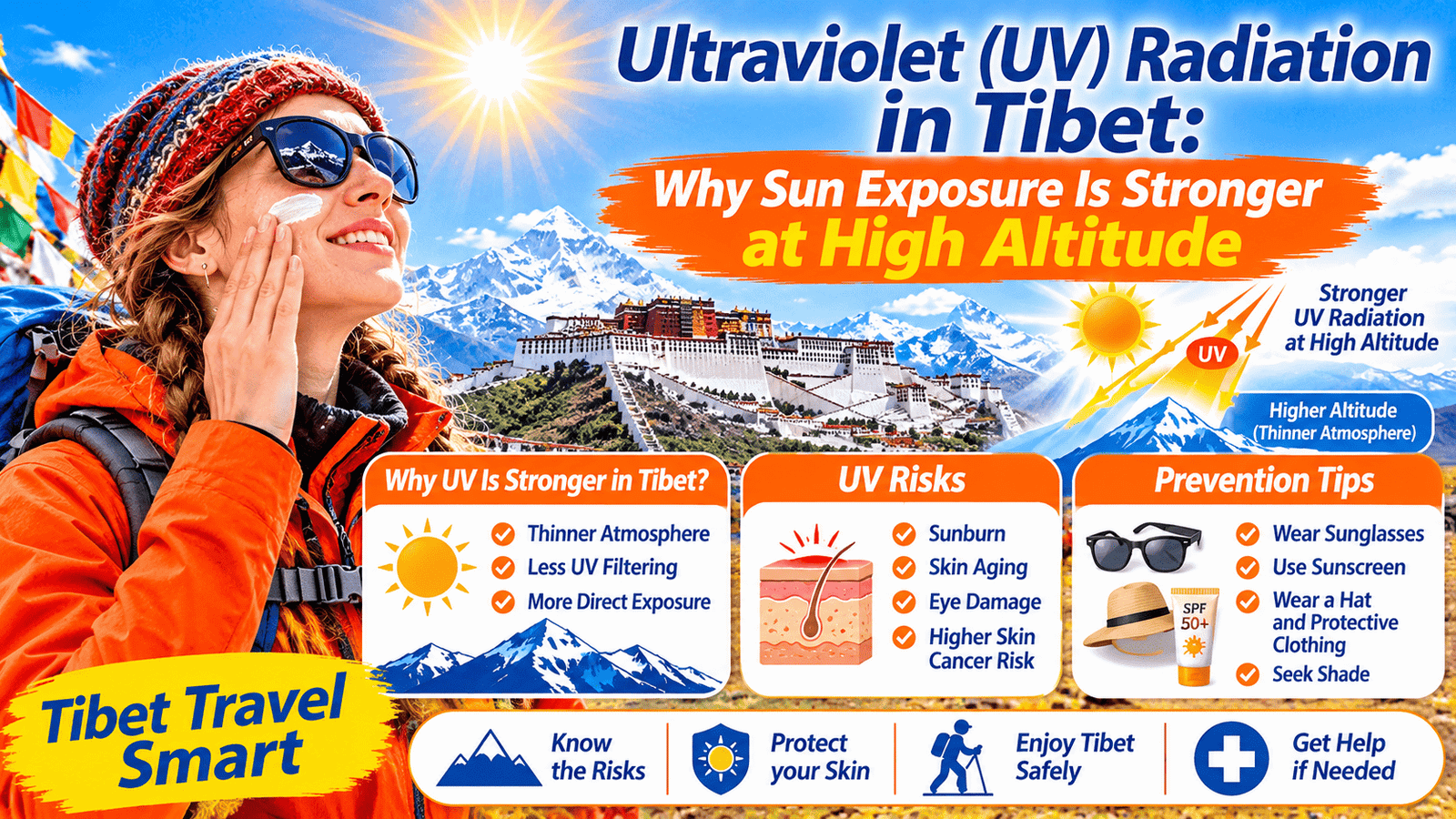
At high altitude, there is less atmosphere above the ground to absorb and scatter incoming solar radiation. As a result, UV exposure generally increases with elevation. Snow, water and other reflective surfaces can add to the amount of UV radiation reaching exposed skin and eyes.
This means travelers can experience sun damage while sightseeing in Lhasa, driving across the plateau, visiting Everest Base Camp or trekking around Mount Kailash. Sun protection is important in every season, not only during hot summer weather. Understanding UV radiation helps travelers protect their skin, eyes and lips throughout a Tibet journey.
What is ultraviolet radiation?
Ultraviolet radiation is an invisible part of sunlight. It has a shorter wavelength than visible light and is commonly divided into three categories: UVA, UVB and UVC.
UVA radiation
UVA has the longest wavelength of the three types and reaches the Earth’s surface in substantial amounts. It penetrates more deeply into the skin than UVB and contributes to premature skin aging, wrinkles and long-term skin damage. UVA can also pass through some types of glass.
UVB radiation
UVB is a major cause of sunburn. It also contributes to skin cancer and other forms of skin damage. UVB intensity changes with the time of day, season, latitude, altitude and atmospheric conditions. It is generally strongest around midday.
UVC radiation
UVC is the shortest-wavelength category. Most solar UVC is absorbed by the atmosphere before reaching the Earth’s surface, so it is not usually the main concern for ordinary outdoor travelers. For Tibet visitors, the practical priority is protection against UVA and UVB.
Why is UV radiation stronger in Tibet?
Several environmental factors influence how much UV radiation reaches a person outdoors.
1. High altitude
As elevation increases, there is less atmosphere between the sun and the ground. Less UV radiation is absorbed or scattered before reaching the surface. The World Health Organization explains that UV levels generally increase by approximately 10% for every 1,000 metres of altitude. This is a broad estimate, not a fixed rule for every location or day.
Lhasa is approximately 3,650–3,700 metres above sea level. Many Tibet destinations are higher, including Namtso Lake, the Everest visitor area and the Mount Kailash kora route. The increased UV exposure is one reason why sun protection matters even when temperatures are low.
2. Strong sunlight and clear skies
The Tibetan Plateau often has clear, open skies and long periods of sunshine. When the sun is high, more UV radiation reaches the ground. The UV level is generally strongest around solar midday. However, exposure is not limited to the hottest hours of the day.
3. Reflection from snow, water and other surfaces
UV radiation can reach the skin and eyes directly from the sun and indirectly after reflecting off the environment. Fresh snow is especially reflective and can substantially increase exposure. Water, sand and other bright surfaces also reflect some UV radiation. This matters around snowy mountain viewpoints, glaciers, high mountain passes and lakes such as Namtso and Yamdrok.
4. Cloud cover does not eliminate UV exposure
Clouds can reduce UV radiation, but the amount of protection varies. Thin or scattered clouds may allow substantial UV to pass through. A cool, cloudy day in Tibet can still produce enough UV exposure to damage unprotected skin and eyes.
What health problems can UV radiation cause?
UV exposure can cause both immediate and long-term health effects.
Sunburn
Sunburn is an inflammatory reaction caused mainly by excessive UVB exposure. Skin may become red, warm, painful or swollen. More severe burns can blister.
Sunburn can develop after outdoor sightseeing, driving with exposed skin or spending time at a high mountain viewpoint.
Premature skin aging
Repeated exposure to UVA and UVB contributes to cumulative skin damage. Over time, this can lead to wrinkles, uneven pigmentation, rough texture and other visible changes.
Skin cancer
UV radiation is a recognized human carcinogen. Excessive exposure increases the risk of several types of skin cancer, including melanoma and non-melanoma skin cancers.
Avoiding sunburn is important, but preventing repeated exposure over many years is also essential.
Eye damage
UV exposure can affect the eyes. Short-term exposure to intense reflected UV radiation can cause photokeratitis, commonly called snow blindness. Long-term UV exposure is also associated with eye conditions such as cataracts and other forms of ocular damage.
Photosensitivity reactions
Some medicines and medical conditions can make a person more sensitive to sunlight. A traveler taking certain antibiotics, anti-inflammatory medicines, diuretics, retinoids or other photosensitizing medicines may develop a stronger skin reaction than expected.
Check medication information before departure and ask a doctor or pharmacist if you are unsure.
Is UV exposure dangerous in winter?
Yes. Cold weather does not mean low UV exposure.
During winter, travelers may spend time outdoors surrounded by snow, which reflects UV radiation. The combination of high altitude, bright snow and prolonged outdoor activity can expose skin and eyes to significant UV levels.
People visiting Everest, Namtso or other snowy destinations should use sunscreen, protective clothing and UV-blocking eyewear even when temperatures are below freezing.
Understanding the UV Index
The Ultraviolet Index (UVI) is a scale used to communicate the strength of sunburn-producing UV radiation at a particular place and time.
| UV Index | Exposure category | General advice |
|---|---|---|
| 0–2 | Low | Ordinary protection may be sufficient for most people |
| 3–5 | Moderate | Use sun protection |
| 6–7 | High | Reduce direct exposure and use protection |
| 8–10 | Very high | Avoid prolonged exposure and use strong protection |
| 11+ | Extreme | Take extra precautions and minimize direct exposure |
The UV Index is a guide, not a guarantee of safety. Individual risk also depends on skin type, exposure duration, reflection, clothing and medication use.
Check a local UV forecast when available, but do not rely on temperature, cloud cover or how bright the sky looks to judge UV risk.
How to protect yourself from UV radiation in Tibet
The best protection combines several methods rather than relying on sunscreen alone.
- Use broad-spectrum sunscreen with SPF 30 or higher on exposed skin.
- Wear long-sleeved clothing and trousers.
- Choose clothing with a UPF rating where available.
- Wear a wide-brimmed hat that shades the face, ears and neck.
- Use sunglasses that block both UVA and UVB.
- Wear close-fitting eyewear or side protection in bright mountain environments.
- Seek shade when practical, especially around midday.
- Reapply sunscreen according to the label, particularly after sweating or wiping your face.
- Use SPF lip balm to protect the lips.
Snow and water reflection mean that shade alone may not provide complete protection.
Which Tibet destinations need extra UV protection?
UV protection is important throughout Tibet, but it is especially relevant during outdoor activities at exposed, high-altitude locations.
Lhasa: Visitors spend time walking between monasteries, temples and open squares. The high elevation makes daily sunscreen and eye protection sensible.
Yamdrok Lake: Bright water and exposed viewpoints can increase reflected sunlight. Wear sunglasses and protect exposed skin.
Namtso Lake: High elevation, open terrain and bright surfaces make protection important, even on cool days.
Everest Base Camp: Strong sunlight, cold wind and high elevation can combine to create substantial skin and eye exposure.
Mount Kailash: Pilgrims spend long periods outdoors, often on exposed trails with limited shade. Sunscreen, sunglasses, a hat and protective clothing should be part of the walking kit.
Frequently asked questions
Is UV radiation stronger in Tibet than at sea level?
UV radiation generally increases with altitude because less atmosphere is available to absorb it. The actual UV level also depends on season, time of day, cloud cover, ozone and ground reflection.
Can you get sunburned in Tibet when it is cold?
Yes. Sunburn is caused by UV radiation, not by hot air temperature. Cold weather does not prevent UV damage.
Can you get sunburned on a cloudy day in Tibet?
Yes. Clouds do not block all UV radiation. Thin cloud and haze can still allow significant exposure.
Does altitude increase the risk of skin cancer?
Higher altitude can increase UV exposure, but an individual’s long-term skin cancer risk depends on cumulative exposure, skin type, sunburn history, genetics and other factors. Protecting skin from excessive UV exposure is important.
Is sunscreen enough for Tibet?
Sunscreen is useful but should be combined with protective clothing, a hat, sunglasses and shade. No sunscreen blocks all UV radiation.
Do I need sunglasses in Tibet during winter?
Yes. Snow and ice can reflect UV radiation, increasing exposure to the eyes. Choose eyewear that blocks both UVA and UVB.
Final advice
Strong sunlight is part of the Tibetan Plateau environment. High altitude, clear skies and reflective surfaces can increase UV exposure even when the weather feels cold.
Make sun protection a daily habit. Use sunscreen, cover exposed skin, protect your lips and wear proper sunglasses. These simple precautions help reduce both immediate sun damage and the effects of repeated exposure over time.
Medical disclaimer: This article provides general health information and is not a substitute for professional medical advice, diagnosis or treatment. Seek medical advice for severe sunburn, unusual skin changes, persistent eye symptoms or suspected medication-related photosensitivity.
Suggested internal links
- Sunburn in Tibet: Symptoms, Prevention and Treatment
- Best Sun Protection for Tibet: Sunscreen, Clothing and Daily Prevention
- Snow Blindness: Symptoms, First Aid and Prevention in Tibet
- UV Exposure and Eye Health in Tibet
- Tibet Travel Checklist: Essential High-Altitude Gear and Safety Tips
References
- World Health Organization (WHO), Ultraviolet Radiation.
- WHO, Radiation: Ultraviolet (UV) Radiation — Questions and Answers.
- CDC Yellow Book 2026, Sun Exposure in Travelers.
- U.S. Food and Drug Administration (FDA), Ultraviolet (UV) Radiation.